



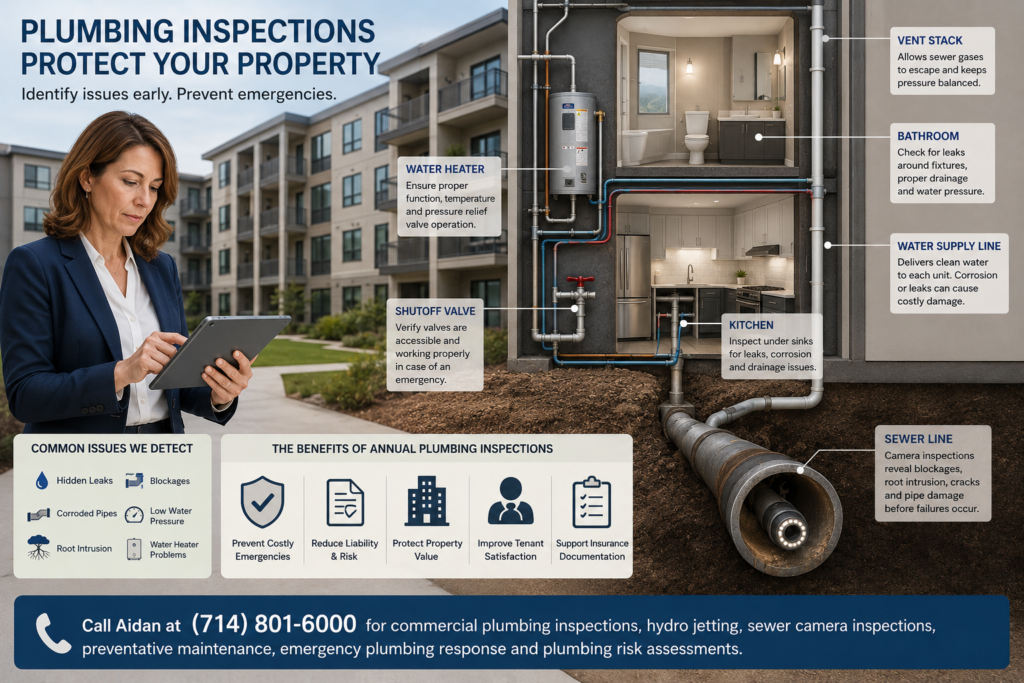
Why Annual Plumbing Inspections Matter in Anaheim Homes
Annual plumbing inspections in Anaheim homes reduce emergency repairs, prevent hidden water damage, protect property value, lower liability exposure, and improve long-term infrastructure reliability—especially in aging Southern California properties.
For property owners, facility managers, HOA boards, and asset managers across Anaheim, Orange County, and Southern California, plumbing isn’t just maintenance—it’s risk management.
When plumbing systems fail, the damage is rarely minor. It’s operational, financial, and reputational.
The Reality of Aging Plumbing Infrastructure in Anaheim
Many residential and mixed-use properties across Anaheim were built between the 1950s and early 1990s. That means:
- Aging copper and galvanized supply lines
- Cast iron sewer laterals nearing end-of-life
- Slab leak vulnerability
- High mineral content from Southern California water
- Increasing water pressure irregularities
Over time, these systems don’t just “wear out.” They quietly degrade.
And most failures give warning signs long before catastrophic damage occurs.
Annual inspections create visibility into plumbing infrastructure health before problems escalate into emergency events.
Why Annual Plumbing Inspections Are a Risk Reduction Strategy
1. Emergency Plumbing Prevention
In Orange County, a burst supply line can:
- Flood multiple units
- Shut down tenant occupancy
- Trigger insurance claims
- Cause mold growth within 24–48 hours
- Interrupt business operations
Routine inspections identify:
- Corroded fittings
- Weak pressure regulators
- Hidden slab leaks
- Sewer blockages forming
- Failing shut-off valves
Emergency plumbing prevention isn’t about reacting faster. It’s about avoiding the call altogether.
2. Liability Reduction for Property Owners
Water damage claims are among the most frequent insurance claims in California.
Without documented preventative maintenance, liability exposure increases.
Annual plumbing inspections support:
- Insurance documentation
- Maintenance verification
- Due diligence records
- Asset protection reporting
- Tenant complaint response documentation
In litigation scenarios, documentation matters.
A documented plumbing risk assessment demonstrates operational responsibility.
3. Hidden Damage Detection Before It Becomes Visible
Not all plumbing failures are obvious.
Many begin with:
- Slow pinhole leaks inside walls
- Micro-cracks in aging cast iron sewer lines
- Gradual slab seepage
- Moisture accumulation under flooring
- Subsurface root intrusion
By the time drywall stains appear, damage is already significant.
Professional inspections use:
- Moisture detection tools
- Sewer camera inspections
- Water pressure testing
- Fixture performance evaluations
- Drainage flow assessment
Early detection = lower restoration costs and minimal disruption.
Plumbing Infrastructure Intelligence: Moving From Reactive to Strategic
Annual inspections allow property managers to build plumbing asset intelligence.
Instead of “fixing what breaks,” you begin tracking:
- Pipe material lifespan
- Recurring clog patterns
- Water pressure trends
- Sewer line integrity
- Fixture wear cycles
This supports structured preventative maintenance planning.
Plumbing Asset Management Includes:
- Sewer camera baseline documentation
- Hydro jetting scheduling for high-use lines
- Water heater performance review
- Shut-off valve accessibility checks
- Supply line inspection logs
When you know the condition of your infrastructure, you can plan capital expenditures instead of reacting to emergencies.
Water Pressure Issues in Southern California Properties
In Anaheim and surrounding Orange County communities, municipal pressure fluctuations can create:
- Stress on aging pipes
- Increased risk of slab leaks
- Fixture damage
- Appliance failure
- Tenant complaints
Unchecked high pressure shortens plumbing lifespan.
Annual inspections test:
- PSI levels
- Pressure regulator performance
- Thermal expansion control
- Backflow devices (where applicable)
Water pressure issues are silent system stressors.
Sewer Camera Inspections: A Critical Preventative Tool
Sewer failures are among the most disruptive plumbing events in Southern California properties.
Common Causes in Anaheim:
- Root intrusion
- Scale buildup in cast iron lines
- Offset joints
- Grease accumulation
- Partial collapses
A sewer camera inspection provides:
- Visual documentation
- Early collapse detection
- Insurance reporting support
- Capital planning insight
- Liability defense documentation
Without a camera inspection, sewer risk remains invisible.
Hydro Jetting as Preventative Maintenance
Many property owners wait until backups occur.
Hydro jetting on a scheduled basis:
- Removes grease buildup
- Clears mineral scale
- Reduces emergency backups
- Improves flow efficiency
- Extends pipe lifespan
Especially in multi-unit properties, preventative hydro jetting significantly lowers emergency plumbing response calls.
Resident Satisfaction and Tenant Retention
Plumbing problems directly impact resident experience.
Common tenant complaints include:
- Low water pressure
- Slow drains
- Sewer odors
- Intermittent hot water
- Noisy pipes
These issues affect:
- Online reviews
- Lease renewals
- Property reputation
- Management credibility
Preventative inspections reduce complaint frequency and demonstrate proactive management.
In competitive Orange County rental markets, operational reliability matters.
Insurance-Related Concerns in California
Insurance carriers increasingly evaluate:
- Maintenance documentation
- Loss history
- Aging infrastructure
- Water mitigation plans
Annual plumbing inspections provide:
- Written inspection reports
- Photo documentation
- Sewer camera recordings
- Risk assessment summaries
- Maintenance logs
This supports underwriting reviews and may help prevent coverage disputes after a loss.
Property Damage Prevention in High-Value Southern California Markets
Anaheim and surrounding communities include:
- High-density residential buildings
- HOA-managed properties
- Mixed-use commercial/residential assets
- Hospitality properties
- Retail centers
Water damage spreads vertically and laterally.
One failed supply line can impact:
- Multiple floors
- Electrical systems
- Elevator shafts
- Fire-rated assemblies
- Adjacent units
Annual inspections reduce multi-unit exposure.
Operational Continuity for Commercial and Multi-Unit Properties
If you manage:
- Apartment communities
- HOAs
- Office buildings
- Retail centers
- Hospitality properties
Plumbing failures affect:
- Revenue
- Occupancy
- Safety
- Business operations
- Emergency response budgets
Preventative plumbing inspections support uninterrupted operations.
Operational continuity is not accidental. It is planned.
What Is Included in an Annual Plumbing Risk Assessment?
A comprehensive commercial plumbing inspection typically includes:
Water Supply System Review
- Pipe material condition
- Visible corrosion
- Leak detection
- Pressure testing
Drain and Sewer Evaluation
- Flow performance
- Blockage indicators
- Sewer camera inspection
- Root intrusion assessment
Fixture and Equipment Assessment
- Water heater inspection
- Shut-off valve testing
- Backflow considerations
- Commercial fixture performance
Moisture and Damage Detection
- Wall and flooring moisture checks
- Slab leak indicators
- Drain pan inspection
- Crawlspace evaluation
Documentation & Reporting
- Photo documentation
- Video files (if camera used)
- Maintenance recommendations
- Risk prioritization grading
FAQs: Annual Plumbing Inspections in Anaheim
How often should commercial properties in Orange County schedule plumbing inspections?
At minimum, once per year. High-usage properties may require bi-annual assessments.
Are plumbing inspections worth the cost?
Yes. Preventative inspections cost significantly less than emergency water damage restoration and insurance deductibles.
What are signs a property needs a plumbing inspection?
- Recurring clogs
- Low water pressure
- Sewer odors
- Aging cast iron pipes
- Unexplained moisture
Do inspections help with insurance claims?
Yes. Documented maintenance can support claim legitimacy and demonstrate responsible ownership.
Is hydro jetting necessary every year?
It depends on property usage, pipe material, and buildup history. Annual evaluation determines need.
Local Insight: Why This Matters in Anaheim & Orange County
Southern California properties face unique stressors:
- Hard water mineral buildup
- Drought-related soil shifts
- Aging post-war construction
- Tree root intrusion
- High occupancy density
Ignoring plumbing infrastructure is not neutral—it increases exposure.
Annual inspections convert uncertainty into structured prevention.
Preventative Guidance for Property Owners
To reduce plumbing risk:
- Schedule annual plumbing inspections
- Perform sewer camera inspections for properties over 20 years old
- Monitor water pressure annually
- Document maintenance
- Address small leaks immediately
- Use hydro jetting strategically
- Maintain accessible shut-offs
Preventative maintenance is less expensive than reactive repair.