



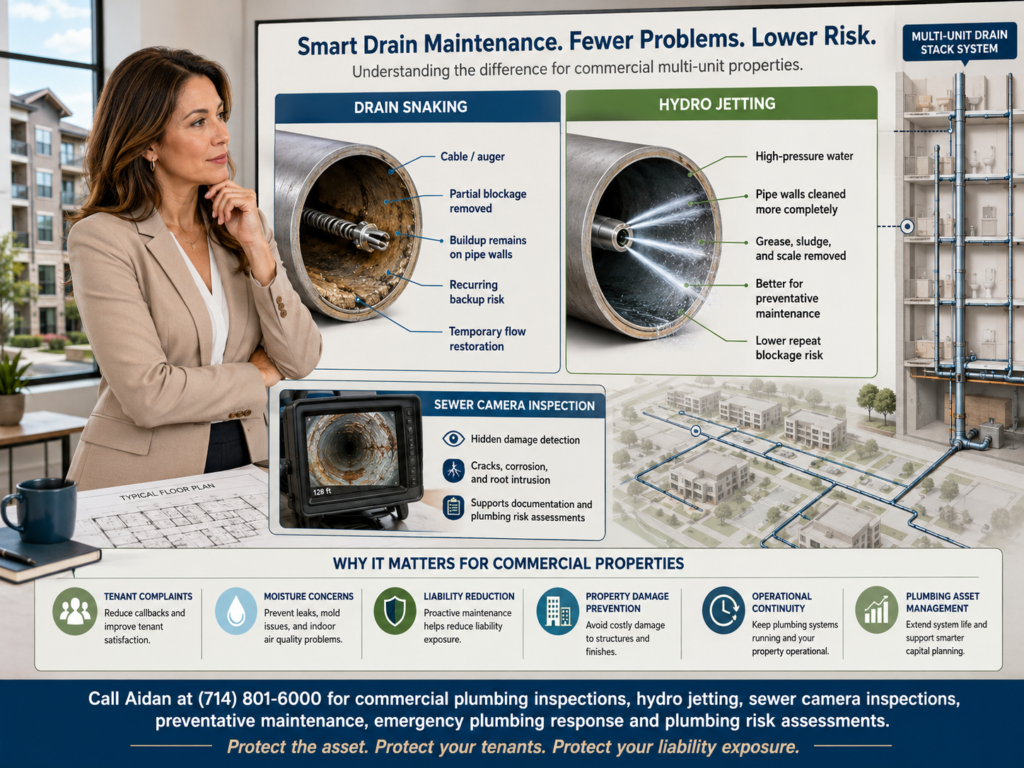
Drain Snaking vs Hydro Jetting: Which One Solves the Real Problem?
For commercial properties in Anaheim and Orange County, drain snaking removes immediate blockages, but hydro jetting solves the underlying buildup that causes recurring backups, liability exposure, and tenant complaints. If your goal is emergency plumbing prevention and long-term infrastructure protection, hydro jetting typically provides the more complete solution.
Commercial property managers, facility directors, HOA boards, and asset managers across Anaheim, Orange County, and Southern California are dealing with aging plumbing infrastructure, rising tenant expectations, and increasing insurance scrutiny.
A clogged drain isn’t just a plumbing issue.
It’s:
- A liability event waiting to happen
- A moisture concern that can escalate into mold
- A resident satisfaction issue
- A potential insurance claim
- An operational disruption
So the real question isn’t just “Which tool clears the line?”
It’s “Which approach protects the asset?”
Understanding the Core Difference
What Is Drain Snaking?
Drain snaking uses a mechanical auger to break through or bore a hole in a blockage. It restores temporary flow by punching through:
- Hair clogs
- Paper buildup
- Minor grease obstructions
- Small localized debris
It’s fast. It’s targeted. It’s often appropriate for isolated incidents.
But here’s the operational reality:
Snaking does not fully remove pipe wall buildup. It simply creates a pathway through it.
In aging plumbing infrastructure common across older Anaheim multifamily, retail, and mixed-use properties, that distinction matters.
What Is Hydro Jetting?
Hydro jetting uses high-pressure water to scour the full interior diameter of the pipe.
It removes:
- Grease accumulation
- Sludge
- Scale
- Soap residue
- Organic buildup
- Sediment
- Mineral deposits from hard Southern California water
- Intrusive root growth
Instead of “punching a hole,” hydro jetting restores the pipe closer to original internal diameter.
That difference directly impacts:
- Emergency plumbing prevention
- Liability reduction
- Long-term maintenance costs
- Plumbing asset management strategy
Why This Decision Matters for Commercial Properties
If you manage:
- Multifamily housing
- HOAs
- Retail centers
- Office buildings
- Medical facilities
- Hospitality properties
You’re not just solving clogs. You’re managing risk.
Risk Reduction: The Real Comparison
Drain Snaking — Short-Term Relief
Best For:
- Single fixture backup
- First-time clog
- Emergency response to restore service quickly
Limitations:
- Leaves residue on pipe walls
- Does not address systemic grease buildup
- Higher likelihood of recurring backups
- Minimal documentation value without inspection
Recurring clogs often signal underlying buildup, partial collapse, or root intrusion — issues snaking alone won’t reveal.
Hydro Jetting — Systemic Prevention
Best For:
- Repeated tenant complaints
- Restaurant grease lines
- Multifamily vertical stacks
- Older cast iron systems
- Properties with water pressure issues
- Preventative maintenance programs
Benefits:
- Full internal cleaning
- Improved flow rates
- Reduced odor complaints
- Better wastewater velocity
- Lower risk of surprise backups
- Stronger documentation for insurance files
Hydro jetting paired with sewer camera inspections provides visual confirmation of pipe condition — critical for plumbing risk assessments and insurance documentation.
Hidden Damage Detection: Why Camera Inspections Matter
Hydro jetting should often follow or be paired with sewer camera inspections.
Camera inspections allow documentation of:
- Cracks
- Offset joints
- Corrosion
- Root intrusion
- Scale thickness
- Collapsed sections
In Orange County’s aging plumbing infrastructure, especially buildings built before the 1980s, cast iron deterioration is common.
Without visual inspection, you’re guessing.
With documentation, you’re managing.
This matters for:
- Insurance-related concerns
- Claim defense
- Capital planning
- Plumbing asset management
- Reserve study planning
Emergency Plumbing Prevention vs Emergency Response
Let’s talk operational continuity.
Emergency plumbing calls often result from:
- Grease accumulation in commercial kitchens
- Stacked vertical line blockages in multifamily
- Deferred maintenance
- Inadequate cleaning methods
- Root intrusion in older sewer laterals
Drain snaking restores service.
Hydro jetting reduces the likelihood of the next call.
For facility directors balancing budget constraints against liability exposure, that difference is critical.
Liability Reduction and Insurance Protection
Water damage claims don’t start with floods.
They start with:
- Slow backups
- Floor drain overflows
- Minor seepage
- Toilet overflows
- Moisture migration into drywall
In Southern California, insurers are increasingly scrutinizing:
- Maintenance logs
- Inspection records
- Preventative programs
- Known infrastructure weaknesses
Hydro jetting with documented sewer camera inspections provides:
- Timestamped condition reporting
- Before-and-after visual documentation
- Evidence of proactive maintenance
- Risk mitigation proof
That documentation can make the difference during a claim review.
Tenant Complaints and Reputation Risk
Recurring plumbing issues damage more than pipes.
They damage:
- Online reviews
- Tenant retention
- Lease renewals
- HOA board confidence
- Brand reputation
Property managers in Anaheim frequently report:
- Repeated slow drains
- Odor complaints
- Overflow anxiety
- Water pressure inconsistencies
Snaking may stop today’s complaint.
Hydro jetting helps prevent next month’s.
Plumbing Infrastructure Intelligence
Smart commercial property management includes plumbing asset intelligence.
That means understanding:
- Pipe material
- Age
- Diameter
- Flow efficiency
- Buildup rate
- Root vulnerability
- Corrosion levels
Hydro jetting combined with scheduled inspections supports:
- Preventative maintenance planning
- Budget forecasting
- Capital improvement timing
- Reduced surprise failures
That’s not just plumbing service.
That’s plumbing risk assessment.
When Drain Snaking Is Appropriate
To be clear — snaking absolutely has a place.
It’s appropriate when:
- The clog is isolated
- The pipe system is newer
- There’s no history of recurring blockage
- Emergency flow restoration is the primary goal
- Camera inspection shows minimal buildup
The key is not defaulting to snaking for chronic issues.
When Hydro Jetting Is the Smarter Operational Decision
Hydro jetting is typically recommended when:
- There are recurring backups
- Grease buildup is confirmed
- Root intrusion is detected
- Pipes are partially restricted
- Odors persist
- Preventative maintenance schedules are being established
- Insurance documentation is needed
- Asset protection is a priority
For many commercial properties in Anaheim and Orange County, hydro jetting becomes part of an annual or bi-annual maintenance program.
Preventative Maintenance Strategy for Southern California Properties
A smart commercial plumbing plan often includes:
- Scheduled sewer camera inspections
- Risk-based hydro jetting frequency
- Grease line monitoring
- Root intrusion evaluation
- Moisture concern assessment
- Documentation archiving
- Emergency response protocol
This approach supports:
- Emergency plumbing prevention
- Liability reduction
- Property damage prevention
- Operational continuity
Frequently Asked Questions (SEO & Voice Search Optimized)
Is hydro jetting better than snaking for commercial properties?
For recurring or systemic issues, yes. Hydro jetting removes full pipe wall buildup and reduces repeat blockages, while snaking typically creates temporary flow through the obstruction.
Does hydro jetting damage old pipes?
When properly evaluated with sewer camera inspections, hydro jetting is safe for structurally sound pipes. Severely deteriorated systems should be assessed before high-pressure cleaning.
How often should commercial drains be hydro jetted in Orange County?
Most multifamily and commercial properties benefit from annual or bi-annual hydro jetting, depending on usage, grease load, and pipe condition.
Is hydro jetting worth the cost?
When factoring in avoided emergency calls, tenant dissatisfaction, water damage risk, and insurance scrutiny, hydro jetting often lowers total operational costs over time.