



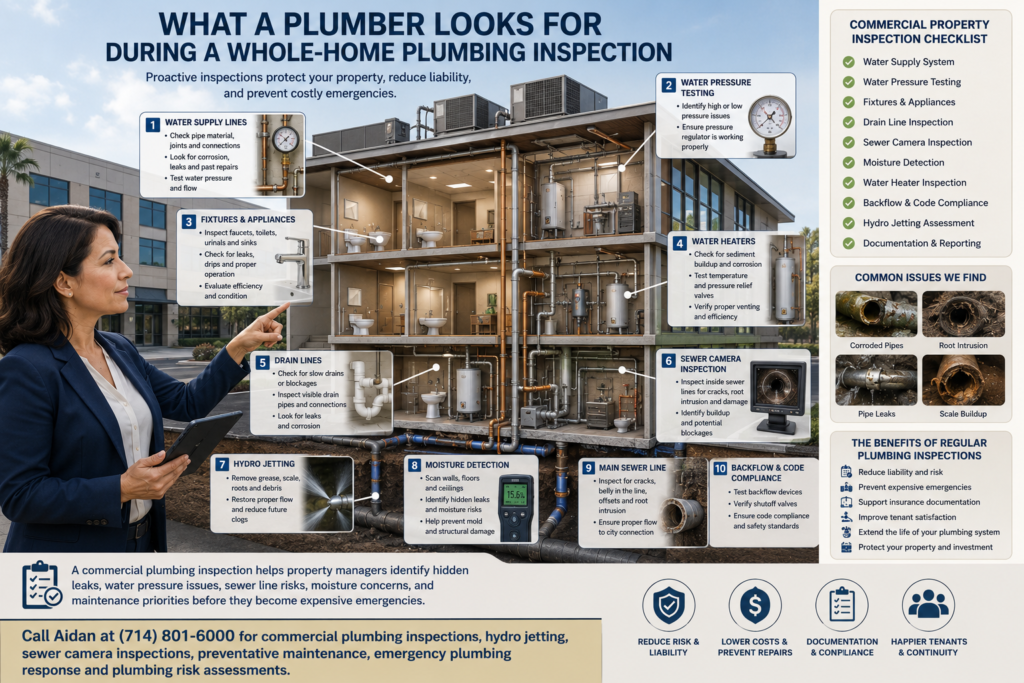
What a Plumber Looks for During a Whole-Home Plumbing Inspection
A whole-home plumbing inspection identifies hidden leaks, sewer line defects, water pressure issues, aging plumbing infrastructure, and code risks before they become emergencies. For commercial property owners and managers in Anaheim and Orange County, inspections are about risk reduction, liability prevention, insurance documentation, and operational continuity—not just fixing leaks.
Why Whole-Home Plumbing Inspections Matter in Anaheim & Orange County
In Southern California, commercial buildings face unique plumbing stressors:
- Aging plumbing infrastructure in multi-tenant properties
- Hard water mineral buildup
- Slab leak risks
- Sewer line root intrusion
- High water usage from mixed-use occupancy
- Drought-driven system strain
- Insurance scrutiny on water damage claims
For property managers, facility directors, HOA boards, and asset managers, plumbing isn’t just maintenance—it’s asset protection.
A proactive plumbing inspection reduces:
- Emergency plumbing incidents
- Tenant complaints
- Property damage claims
- Insurance disputes
- Repair downtime
- Capital expense surprises
What Does a Plumber Actually Inspect?
A comprehensive whole-home or commercial plumbing inspection in Anaheim includes a systematic review of the entire plumbing ecosystem.
1. Water Supply Lines & Distribution System
Plumbers evaluate:
- Pipe material (copper, galvanized, PEX, PVC)
- Signs of corrosion or pinhole leaks
- Pressure irregularities
- Joint integrity
- Evidence of previous patchwork repairs
- Isolation valves functionality
Why It Matters
Water pressure issues are common in older Orange County buildings. High pressure stresses fixtures and appliances; low pressure indicates restrictions or hidden leaks.
Unchecked pressure imbalance leads to:
- Premature pipe failure
- Flood damage
- Appliance damage
- Mold growth
- Insurance claims
Pressure testing provides plumbing infrastructure intelligence that helps forecast replacement timelines.
2. Drain & Sewer Lines
A key focus area during inspections is the drainage system.
Plumbers assess:
- Drain flow speed
- Blockage patterns
- Grease buildup
- Root intrusion
- Pipe offsets or bellies
- Cracks and separations
Sewer Camera Inspections
Using high-resolution sewer camera inspections, plumbers identify:
- Hidden pipe damage
- Tree root intrusion
- Pipe collapse risks
- Scale buildup
- Misaligned joints
For commercial properties, this documentation becomes critical for:
- Liability reduction
- Insurance documentation
- Capital planning
- Emergency plumbing prevention
In older Southern California neighborhoods, clay sewer lines are particularly vulnerable.
3. Hydro Jetting Assessment
If buildup is discovered, hydro jetting may be recommended.
Hydro jetting:
- Removes grease
- Clears scale
- Eliminates roots
- Restores pipe diameter
- Prevents emergency backups
This preventative maintenance tool reduces tenant complaints and after-hours service calls.
4. Leak Detection & Moisture Concerns
Hidden damage detection is a priority.
Plumbers look for:
- Slab leaks
- Wall cavity moisture
- Ceiling staining
- Baseboard warping
- Mold indicators
- Meter movement with fixtures off
In Anaheim commercial buildings, slab leaks are especially costly because they:
- Disrupt tenants
- Require flooring demolition
- Increase mold risk
- Trigger insurance investigations
Early detection protects both structure and reputation.
5. Fixtures, Appliances & High-Use Areas
Inspections include:
- Toilets (flappers, seals, wax rings)
- Faucets and supply lines
- Water heaters
- Commercial kitchen plumbing
- Laundry connections
- Hose bibs
Plumbers evaluate:
- Age
- Manufacturer recall risks
- Efficiency
- Code compliance
- Signs of fatigue
Minor fixture failures are one of the leading causes of property damage claims.
6. Water Heater & Boiler Systems
Water heaters are a frequent failure point in Southern California properties.
Inspection includes:
- Sediment buildup
- Pressure relief valve function
- Expansion tank condition
- Venting integrity
- Corrosion at fittings
- Temperature calibration
Neglected heaters can cause:
- Flooding
- Carbon monoxide risk
- Tenant displacement
- Liability exposure
Preventative flushing and scheduled replacement planning are part of plumbing asset management strategy.
7. Backflow & Code Compliance
Commercial properties in Orange County must comply with municipal regulations.
Plumbers check:
- Backflow prevention devices
- Pressure regulators
- Shutoff accessibility
- ADA fixture compliance
- Recent code updates
Non-compliance increases:
- Liability
- Fines
- Insurance complications
Inspections provide documentation for regulatory compliance and risk assessments.
Hidden Damage: The Biggest Risk Factor
Most catastrophic plumbing losses begin as small, invisible issues.
Examples:
- Hairline slab leak under tile
- Slow sewer line separation
- Tiny pinhole leak behind drywall
- Gradual corrosion under insulation
These silent failures escalate into:
- Mold remediation
- Reconstruction
- Tenant relocation
- Litigation
Routine plumbing risk assessments transform unknown risk into manageable data.
How Inspections Support Insurance Documentation
Insurance carriers increasingly request:
- Maintenance records
- Inspection reports
- Photo documentation
- Proof of preventative maintenance
A structured inspection creates a defensible maintenance record.
If water damage occurs, documented proactive care supports claims processing and reduces disputes.
For commercial property owners in Anaheim and surrounding Southern California communities, documentation is protection.
Plumbing Asset Management: A Strategic Approach
Forward-thinking property managers treat plumbing as an asset category.
Whole-home plumbing inspections provide:
- System condition reports
- Risk forecasting
- Budget planning guidance
- Replacement prioritization
- Preventative maintenance schedules
This reduces reactive spending and improves capital planning accuracy.
Operational Continuity: Why Prevention Wins
Emergency plumbing failures cause:
- Tenant dissatisfaction
- Business interruption
- Revenue loss
- Reputation damage
- Overtime labor costs
Emergency plumbing prevention is significantly less expensive than remediation.
In Orange County’s competitive commercial landscape, operational continuity matters.
Signs You Need a Whole-Home Plumbing Inspection
You should schedule an inspection if:
- Your building is over 20 years old
- You’ve had recurring drain backups
- Tenants report fluctuating water pressure
- You’ve experienced one leak in the past year
- You’re purchasing or refinancing property
- Insurance carrier requests documentation
- You manage multi-unit housing
- You want to prevent emergency plumbing calls
Frequently Asked Questions (FAQs)
How often should a commercial property in Anaheim schedule a plumbing inspection?
Annually for most properties. High-use or aging plumbing infrastructure may require biannual inspections.
Do sewer camera inspections prevent backups?
Yes. Sewer camera inspections identify root intrusion, pipe damage, and buildup before full blockages occur, allowing preventative maintenance like hydro jetting.
Is hydro jetting safe for older pipes?
When properly evaluated first. A camera inspection determines pipe condition before recommending hydro jetting.
Can plumbing inspections reduce insurance premiums?
While not guaranteed, documented preventative maintenance and plumbing risk assessments may strengthen your position during underwriting or claims.
What is included in a plumbing risk assessment?
A plumbing risk assessment evaluates supply lines, drainage systems, pressure regulation, moisture risks, fixture condition, water heaters, compliance, and hidden damage detection.
Commercial Example: Anaheim Multi-Tenant Retail Center
A retail center in Anaheim experienced minor restroom leaks over 18 months.
Inspection findings revealed:
- Elevated water pressure
- Corroded supply lines
- Partial sewer root intrusion
- Aging water heaters
Preventative measures included:
- Pressure regulation
- Targeted pipe replacement
- Hydro jetting
- Scheduled water heater replacement
Result:
- Zero emergency plumbing incidents over 24 months
- Reduced tenant complaints
- Lower long-term repair costs
- Documented insurance compliance
That’s property damage prevention in action.
The Cost of Waiting
Delayed inspections often lead to:
- Major water loss
- Mold growth
- Structural damage
- Litigation
- Six-figure remediation bills
Preventative maintenance protects not just plumbing systems—but asset value, tenant trust, and operational stability.
Southern California’s Aging Infrastructure Reality
Across Anaheim, Orange County, and nearby Southern California communities, many properties were built decades ago.
Galvanized lines deteriorate. Clay sewer lines crack. Hard water accelerates corrosion.
Ignoring aging plumbing infrastructure increases:
- Liability exposure
- Emergency response frequency
- Insurance claim scrutiny
- Property depreciation
Inspection converts uncertainty into measurable insight.
Risk Management Summary
A whole-home plumbing inspection provides:
- Hidden damage detection
- Sewer camera diagnostics
- Hydro jetting assessment
- Water pressure testing
- Moisture identification
- Code compliance review
- Insurance documentation
- Preventative maintenance planning
- Plumbing asset management intelligence
- Emergency plumbing prevention
For commercial property stakeholders, it’s not about reacting—it’s about anticipating.