



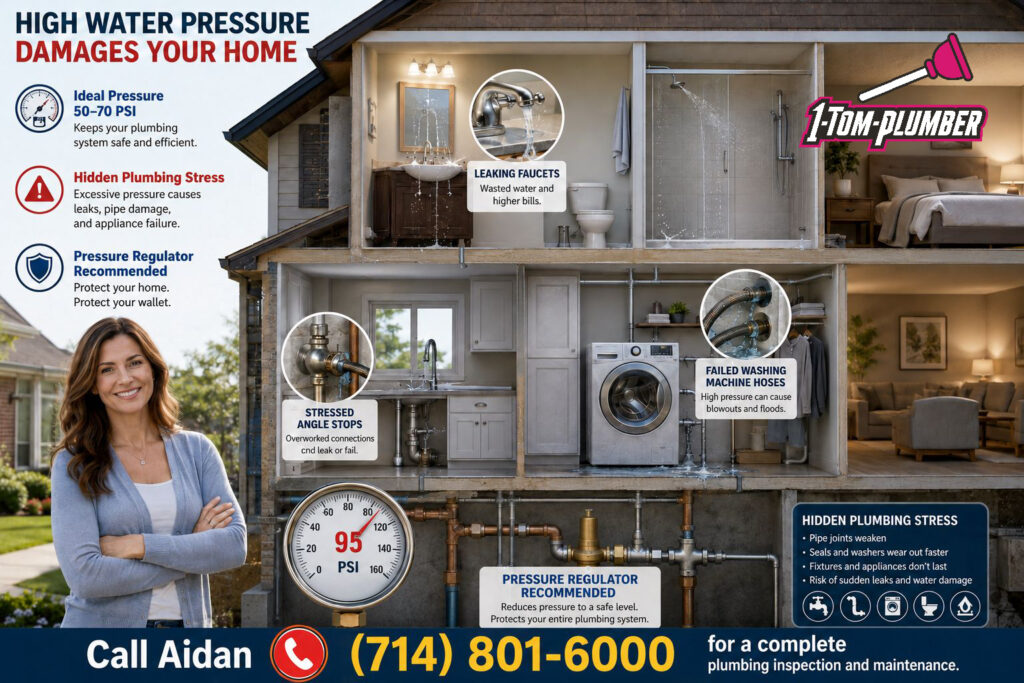
High Water Pressure Anaheim: The Hidden Cost of Excessive Water Pressure
High Water Pressure Anaheim homeowners experience can quietly damage plumbing pipes, water heaters, faucets, toilets, and appliances without obvious warning signs. While strong water pressure may seem beneficial, excessive pressure creates constant stress on plumbing systems and can lead to leaks, fixture failures, and costly repairs over time.
The Hidden Cost of High Water Pressure
Many homeowners in Anaheim and across Orange County never realize their plumbing system is under dangerous pressure until something suddenly fails.
A washing machine hose bursts overnight.
A water heater starts leaking.
A toilet supply line cracks.
A faucet begins dripping nonstop.
The problem often starts with one hidden issue: high water pressure.
In many Southern California homes, especially older ones with aging plumbing, excessive pressure gradually damages pipes, water heaters, and fittings, often without immediate signs.
That is why regular plumbing inspections and pressure testing are essential for homeowners in Anaheim who want to feel confident they are proactively protecting their property and avoiding costly surprises.
Why High Water Pressure Is a Big Deal
Water pressure is measured in PSI (pounds per square inch).
Most homes operate safest around:
- 50–70 PSI
When pressure rises above:
- 80 PSI
The plumbing system begins experiencing unnecessary stress.
Think about constantly overinflating a balloon. It may not burst immediately, but the material weakens over time. Plumbing systems behave the same way.
High water pressure affects:
- Pipes
- Water heaters
- Faucets
- Toilets
- Refrigerator water lines
- Ice makers
- Washing machine hoses
- Dishwasher supply lines
- Angle stop valves
- Shower valves
- Appliance connections
Many homeowners in Anaheim love strong shower pressure, but extremely high pressure often causes hidden damage inside walls, beneath sinks, and behind appliances.
Common Signs of High Water Pressure
Here are some warning signs homeowners should recognize to feel more aware and empowered to address potential pressure issues early.
Faucets Dripping Constantly
If faucets keep dripping shortly after repairs, excessive pressure may be damaging internal seals.
Banging or Noisy Pipes
Loud pipe noises, also called “water hammer,” may signal pressure problems.
Running Toilets
High pressure can wear out toilet fill valves and flappers faster than normal.
Washing Machine Hose Problems
One of the most common emergency plumbing failures in Southern California homes is a burst washing machine hose.
Water Heater Leaks
High pressure stresses water heater tanks, connectors, and internal components.
Shortened Appliance Life
Dishwashers, refrigerators, and tankless water heaters can fail earlier under excessive pressure.
Sudden Pipe Leaks
Older copper pipes, galvanized pipes, and aging fittings are especially vulnerable.
Extremely Strong Shower Pressure
Many homeowners assume stronger pressure means better plumbing. In reality, it may indicate dangerous pressure levels.
What High Pressure Damages First
Some plumbing parts fail faster than others.
1. Washing Machine Hoses
Rubber hoses are extremely vulnerable to pressure spikes.
Over time, they weaken, bulge, crack, and eventually burst.
A burst hose can release massive amounts of water into a home within minutes.
2. Angle Stop Valves
Angle stops are the small shutoff valves beneath sinks and behind toilets.
In Anaheim homes with hard water and aging plumbing, these valves often corrode internally, while high-pressure stresses the seals and stems.
This combination frequently causes leaks.
3. Toilet Components
Fill valves and internal seals wear out faster under excessive pressure.
Homeowners may notice:
- Phantom flushing
- Running toilets
- Constant refill sounds
4. Water Heater Connections
High pressure creates stress inside water heaters every day.
Combined with Southern California’s hard water mineral buildup, this can significantly shorten water heater life.
5. Faucets and Shower Valves
High pressure damages cartridges, seals, washers, and internal moving parts.
That leads to:
- Dripping faucets
- Leaking shower valves
- Reduced fixture lifespan
6. Supply Lines
Flexible braided supply lines are strong, but no plumbing component lasts forever under constant overpressure.
The Role of Pressure in Preventing Costly Repairs.
Many homes in Anaheim and nearby Orange County cities have a device called a:
- Pressure Regulator Valve (PRV)
- Water Pressure Regulator
This device helps reduce incoming city water pressure to safer levels inside the home.
Without a properly functioning regulator, homes may experience dangerously high pressure from the municipal water supply.
What a PRV Does
A pressure regulator helps:
- Protect pipes
- Reduce plumbing stress
- Prevent leaks
- Extend appliance lifespan
- Lower emergency repair risks
- Improve long-term plumbing reliability
What Happens When a PRV Fails
Pressure regulators do not last forever.
As they age, they may:
- Stick open
- Fail internally
- Allow pressure spikes
- Lose adjustment capability
Many homeowners never realize their regulator has failed until damage begins appearing throughout the house.
Why Anaheim Homes Should Be Checked
Homes throughout Anaheim and surrounding Orange County face unique plumbing challenges.
Southern California Hard Water
Southern California water contains high mineral content.
This causes:
- Calcium buildup
- Corrosion
- Reduced pipe diameter
- Valve damage
- Water heater sediment accumulation
When hard water combines with high pressure, plumbing systems age even faster.
Aging Plumbing Systems
Many Anaheim neighborhoods contain older homes with:
- Aging copper pipes
- Galvanized plumbing
- Older shutoff valves
- Original water heaters
- Outdated supply lines
These systems are far more vulnerable to pressure-related failures.
Expensive Water Damage Risks
Even small plumbing leaks can cause:
- Cabinet damage
- Flooring damage
- Mold growth
- Drywall damage
- Insurance claims
- Business interruption for home offices
Preventive plumbing inspections are much less expensive than emergency restoration.
Preventing Expensive Water Damage
The good news is that most pressure-related plumbing problems are preventable.
Have Your Water Pressure Tested
A professional plumbing inspection, including pressure testing, can quickly identify unsafe pressure levels, helping you prevent costly water damage and repairs.
Replace Old Washing Machine Hoses
Older rubber hoses should be upgraded to braided stainless steel lines.
Inspect Angle Stops and Supply Lines
These small parts commonly fail in older homes.
Check the Water Pressure Regulator
Pressure regulators should be tested periodically, especially in aging homes.
Flush Water Heaters Regularly
Hard water sediment buildup combined with high pressure is especially damaging.
Regular maintenance helps protect:
- Tank water heaters
- Tankless systems
- Heating efficiency
- Internal components
Schedule Sewer and Plumbing Inspections
Many hidden plumbing problems can be identified early using:
- Camera inspections
- Pressure testing
- Leak inspections
- Preventative maintenance evaluations
How Plumbing Inspections Protect Your Property
Many homeowners only call a plumber after something fails.
But preventative inspections help identify:
- Hidden leaks
- Unsafe pressure
- Weak supply lines
- Aging shutoff valves
- Water heater issues
- Drain problems
- Sewer risks
Early detection helps homeowners:
- Avoid emergencies
- Protect property value
- Reduce insurance claims
- Prevent mold and water damage
- Save money long-term
FAQ
1. What water pressure is too high for a home?
Most homes operate safely around 50–70 PSI. Pressure above 80 PSI is generally considered too high and may damage plumbing systems over time.
2. Can high water pressure cause leaks?
Yes. Excessive pressure places constant stress on pipes, valves, faucets, supply lines, and appliances. Over time, this can lead to leaks, cracked hoses, and plumbing failures.
3. What does a pressure regulator do?
A pressure regulator, also called a PRV valve, reduces incoming city water pressure to safer levels for your home’s plumbing system.
4. How do I know if my home has high water pressure?
Common signs include:
- Loud pipes
- Dripping faucets
- Running toilets
- Strong shower pressure
- Frequent leaks
- Burst washing machine hoses
- Water heater problems
A professional plumber can accurately test pressure.
5. Can high pressure damage my water heater?
Yes. High pressure stresses the tank, connectors, heating system, and internal components. Combined with hard water buildup, this may significantly shorten the water heater’s lifespan.
6. Should I call a plumber to test water pressure?
Yes. A plumbing inspection can identify unsafe pressure, failing regulators, aging plumbing parts, and hidden risks before major damage occurs.
Summary
High water pressure is one of the most overlooked causes of plumbing damage in homes in Anaheim and Southern California.
While strong pressure may seem harmless, it can quietly damage:
- Water heaters
- Faucets
- Supply lines
- Washing machine hoses
- Angle stops
- Toilets
- Appliances
- Aging plumbing systems
Preventive plumbing inspections help homeowners catch small issues before they become major emergencies.
Protecting your home today can prevent thousands of dollars in future water damage repairs.