


How Thermal Expansion Damages Your Plumbing System
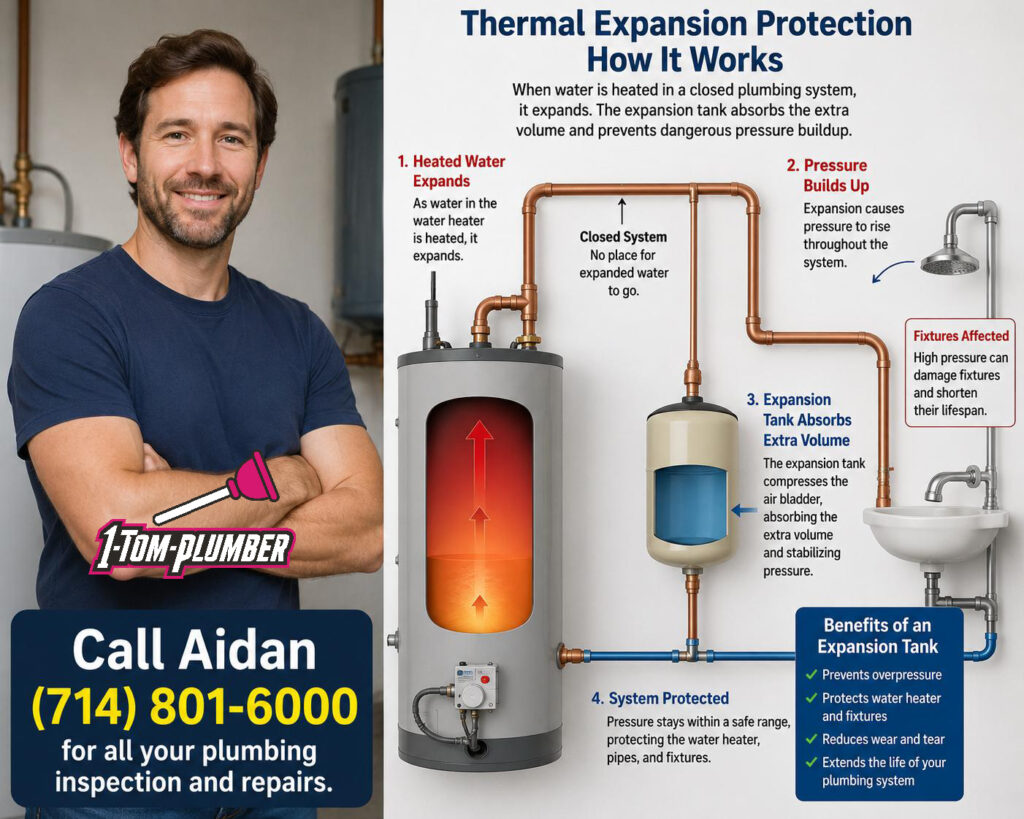
Thermal expansion happens when water heats up and expands inside your plumbing system. In a closed plumbing system, that extra pressure has nowhere to go. Over time, this pressure can damage water heaters, pipes, fittings, valves, appliances, and supply lines.
Many Anaheim homeowners never notice the problem until they experience leaking fixtures, dripping pressure relief valves, or premature water heater failure.
What Thermal Expansion Means
Water may seem stable, but it actually changes size when heated. As cold water enters your water heater and heats up, it naturally expands in volume.
That expansion creates pressure inside the plumbing system.
In older homes, some of this pressure could move backward into the city water supply. But many modern plumbing systems are now considered “closed systems” because they contain check valves, pressure regulators, or backflow prevention devices that stop water from flowing backward.
When the pressure cannot escape, it builds inside the home’s plumbing system.
Why Water Expands When Heated
As water temperature rises, water molecules move faster and spread apart slightly.
Even though the volume increase seems small, it can create significant pressure inside pipes and water heaters.
A typical residential water heater can raise water pressure dramatically during heating cycles if thermal expansion is not controlled properly.
This repeated pressure increase stresses:
- Water heater tanks
- Flexible supply lines
- Faucets
- Toilet fill valves
- Washing machine hoses
- Pipe fittings
- Appliance valves
Over time, repeated expansion and contraction can shorten the lifespan of plumbing components.
What Happens in a Closed Plumbing System
A closed plumbing system traps pressure inside the home.
This commonly happens when a home has:
- A pressure reducing valve (PRV)
- Backflow prevention device
- Check valve
- Newer municipal water meter systems
Without somewhere for expanding water to go, pressure spikes occur every time the water heater cycles on.
High pressure may lead to:
- Dripping temperature and pressure relief valves
- Leaking angle stops
- Pipe joint failures
- Appliance hose leaks
- Water heater damage
- Noisy pipes
- Premature plumbing wear
In some homes, homeowners may notice banging sounds or fluctuating water pressure during hot water use.
How Expansion Tanks Help
An expansion tank helps absorb excess pressure safely.
These small tanks are typically installed near the water heater and contain an internal air bladder that compresses when water expands.
This gives the expanding water somewhere to go instead of forcing pressure into pipes and fixtures.
Benefits of expansion tanks include:
- Reduced plumbing stress
- Longer water heater lifespan
- Better pressure control
- Protection for valves and appliances
- Reduced risk of leaks
A properly sized and properly charged expansion tank is an important safety component in many modern plumbing systems.
Warning Signs of Pressure Problems
Homeowners should watch for these common warning signs:
- Dripping water heater relief valve
- Sudden pipe noises or banging
- Water pressure that feels unusually high
- Faucet drips after hot water use
- Repeated appliance hose failures
- Leaking toilet supply lines
- Premature water heater problems
- Small leaks appearing around fittings
Some pressure problems develop slowly over years, while others may suddenly cause expensive water damage.
Why Water Heaters Should Be Inspected
Water heaters operate under both heat and pressure every day.
Regular plumbing inspections can help identify:
- Excessive water pressure
- Missing expansion tanks
- Failed expansion tanks
- Improper pressure regulator settings
- Corrosion around fittings
- Unsafe relief valve conditions
A professional inspection may help prevent major water damage and improve overall plumbing system safety.
In Southern California areas like Anaheim and Orange County, where many homes have pressure regulators and closed systems, thermal expansion protection is especially important.
FAQ
What is thermal expansion in plumbing?
Thermal expansion happens when water heats up and expands in volume, creating additional pressure inside plumbing pipes and water heaters.
What is a closed plumbing system?
A closed plumbing system prevents water from flowing backward into the city supply. This traps pressure inside the home.
Why is my water heater relief valve dripping?
A dripping pressure relief valve may indicate excessive pressure caused by thermal expansion or high water pressure.
Do all homes need an expansion tank?
Not every home requires one, but many modern homes with closed plumbing systems benefit from having an expansion tank installed.
Can high pressure damage plumbing?
Yes. High water pressure can damage pipes, fittings, appliances, supply lines, and water heaters over time.
How do plumbers test water pressure?
Plumbers use pressure gauges to measure static and dynamic water pressure and inspect for pressure fluctuations caused by thermal expansion.