



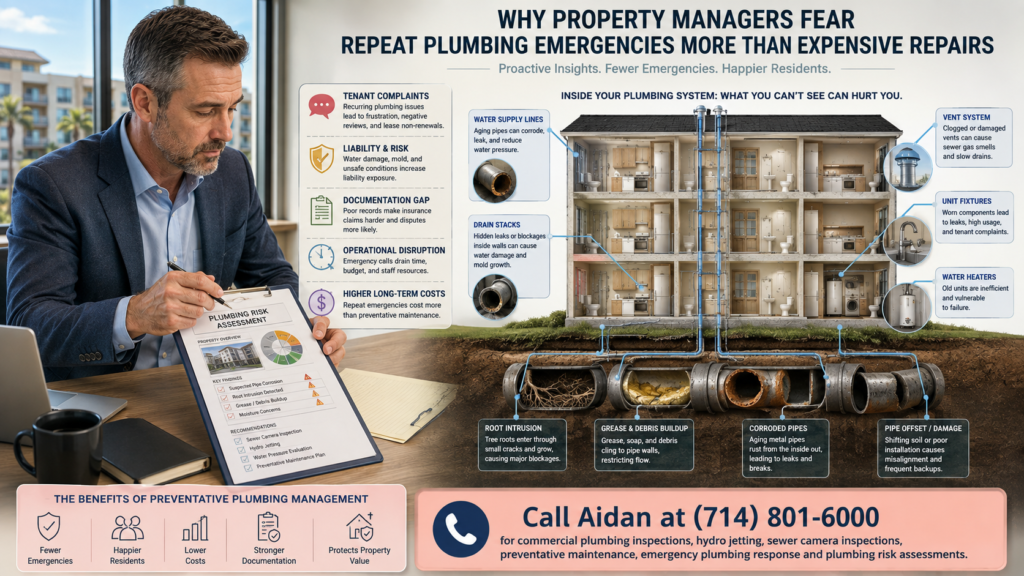
Why Property Managers Fear Repeat Plumbing Emergencies More Than High Repair Costs
Property managers across Anaheim, Orange County, and Southern California often worry less about the actual repair invoice and more about repeated plumbing emergencies that continue disrupting tenants, owners, vendors, maintenance teams, and daily operations.
A single plumbing issue can usually be explained.
Repeated plumbing emergencies create a different kind of problem:
loss of confidence.
For many property managers, the real stress comes from:
- late-night emergency calls
- angry residents
- recurring tenant complaints
- negative online reviews
- insurance documentation pressure
- owner frustration
- uncertainty about hidden plumbing damage
- coordinating multiple vendors repeatedly
- fear of preventable property damage
In aging Southern California commercial and multifamily properties, plumbing infrastructure problems often develop silently long before catastrophic failure occurs.
That is why modern commercial plumbing management is no longer just about fixing leaks.
It is about reducing operational risk.
Why Repeat Plumbing Emergencies Create Bigger Problems Than High Repair Costs
A major plumbing repair can sometimes be budgeted.
Recurring emergencies damage trust.
Property managers frequently describe the same frustrations:
- “We already fixed this.”
- “Why are tenants still complaining?”
- “Why does the same drain keep backing up?”
- “Why are we still getting moisture complaints?”
- “Why are residents posting negative reviews?”
- “Why are insurance carriers asking for more documentation?”
The emotional pressure becomes cumulative.
Every repeated plumbing issue creates:
- more tenant anxiety
- more owner scrutiny
- more vendor coordination
- more maintenance overtime
- more emergency dispatches
- more liability exposure
For multifamily communities, HOAs, retail centers, and commercial buildings throughout Anaheim and Orange County, repeated plumbing failures can begin affecting:
- lease renewals
- tenant retention
- resident satisfaction scores
- online reputation
- insurance claim history
- operational continuity
The Real Fear: Hidden Plumbing Problems That Were Never Fully Diagnosed
One of the biggest concerns property managers face is uncertainty.
Many repeat plumbing emergencies occur because the original root cause was never fully identified.
Temporary symptom relief is common.
Long-term plumbing intelligence is less common.
Examples include:
- drains repeatedly snaked without sewer camera inspections
- grease buildup partially cleared but never fully hydro jetted
- deteriorating cast iron pipes creating recurring backups
- slab leak moisture affecting surrounding building materials
- hidden water intrusion behind walls
- improperly documented repairs
- pressure irregularities stressing aging plumbing systems
In older Southern California buildings, aging plumbing infrastructure often contains:
- root intrusion
- pipe scaling
- corrosion
- offset joints
- collapsed sections
- grease accumulation
- sediment buildup
- hidden moisture conditions
Without proper diagnostics, property managers are forced into reactive operations instead of preventative management.
Why Tenant Complaints Escalate Faster Than Plumbing Failures
Most residents do not fully understand plumbing systems.
What they do understand is inconvenience.
A tenant dealing with:
- recurring drain backups
- foul odors
- water shutdowns
- wet flooring
- recurring leaks
- slow drains
- mold concerns
- damaged belongings
often views the issue emotionally, not mechanically.
Property managers then absorb the pressure from every direction:
- tenants
- ownership groups
- HOA boards
- maintenance teams
- insurance carriers
- online review platforms
In today’s environment, one unresolved plumbing issue can quickly become:
- a negative Google review
- a social media complaint
- a lease renewal issue
- a habitability concern
- an insurance escalation
- a legal documentation issue
That is why proactive plumbing asset management has become increasingly important for Orange County commercial properties.
How Preventative Plumbing Maintenance Reduces Operational Stress
Preventative plumbing maintenance is not just about pipes.
It is about predictability.
Property managers typically want:
- fewer emergencies
- fewer tenant complaints
- better vendor communication
- clearer documentation
- less uncertainty
- more control over building infrastructure
Preventative maintenance programs help create:
- scheduled inspections
- maintenance history documentation
- plumbing condition tracking
- recurring issue monitoring
- emergency prevention planning
- long-term budgeting visibility
For commercial properties in Anaheim and Southern California, preventative maintenance often includes:
- sewer camera inspections
- hydro jetting
- cleanout inspections
- water pressure evaluations
- leak detection
- moisture assessments
- plumbing risk assessments
- drain maintenance scheduling
Why Sewer Camera Inspections Matter for Commercial Properties
Direct Answer:
Sewer camera inspections help property managers identify hidden plumbing risks before they become expensive emergencies by visually inspecting drain and sewer lines for root intrusion, pipe damage, corrosion, buildup, and recurring blockage causes.
Many repeat plumbing emergencies occur because no one visually inspected the inside of the pipe.
Sewer camera inspections provide infrastructure intelligence.
This helps property managers:
- understand pipe conditions
- identify recurring problem areas
- document hidden defects
- reduce guesswork
- improve repair planning
- support insurance documentation
- justify preventative maintenance budgets
For aging Orange County buildings, sewer camera inspections are especially valuable because many systems contain decades-old plumbing infrastructure that may be deteriorating internally without obvious exterior symptoms.
How Hydro Jetting Helps Prevent Repeat Plumbing Emergencies
Hydro jetting is often misunderstood as simply “drain cleaning.”
Commercial hydro jetting is actually a preventative infrastructure maintenance strategy.
Unlike temporary clearing methods, hydro jetting uses high-pressure water to remove:
- grease buildup
- sludge accumulation
- scale
- debris
- roots
- biofilm
- recurring blockage material
This is particularly important for:
- multifamily properties
- restaurants
- mixed-use developments
- HOAs
- retail centers
- medical buildings
- older commercial properties
In Southern California properties with aging plumbing systems, hydro jetting can help reduce:
- recurring tenant drain complaints
- emergency backups
- sewer overflows
- foul odors
- operational interruptions
The Hidden Liability of Moisture and Water Intrusion
Property managers often focus on visible plumbing failures.
Hidden moisture concerns can become even more problematic.
Undetected moisture can affect:
- drywall
- flooring
- cabinetry
- insulation
- framing
- indoor air quality
- microbial growth conditions
In Southern California multifamily and commercial properties, hidden moisture frequently develops after:
- slab leaks
- recurring drain overflows
- unnoticed supply leaks
- improperly dried water intrusions
- failed plumbing components
These conditions can create:
- insurance complications
- remediation expenses
- tenant dissatisfaction
- habitability concerns
- property damage claims
That is why early leak detection and plumbing risk assessments are becoming increasingly important operational tools for property managers.
Why Documentation Matters in Commercial Plumbing Management
Documentation is often overlooked until a claim occurs.
Strong plumbing documentation helps property managers:
- demonstrate due diligence
- show preventative efforts
- track recurring issues
- improve vendor accountability
- support insurance claims
- justify capital improvement discussions
- reduce liability disputes
Helpful documentation often includes:
- sewer camera footage
- inspection reports
- hydro jetting service records
- moisture readings
- pressure testing results
- repair timelines
- before-and-after photos
- tenant incident records
For commercial properties, documentation becomes operational intelligence.
Plumbing Asset Management Is Becoming a Competitive Advantage
Modern property management increasingly relies on infrastructure visibility.
Buildings with unmanaged plumbing systems often experience:
- more emergency costs
- more resident dissatisfaction
- more operational disruptions
- more reactive maintenance spending
Properties with proactive plumbing asset management strategies often gain:
- better maintenance forecasting
- improved vendor coordination
- reduced emergency frequency
- stronger resident satisfaction
- more predictable operational planning
This is especially important in Anaheim and Orange County where many commercial and multifamily properties contain aging plumbing infrastructure under constant usage stress.
Common Warning Signs Property Managers Should Never Ignore
Recurring Tenant Complaints
Repeated complaints usually indicate unresolved root causes.
Slow Drains Across Multiple Units
This may suggest larger sewer system restrictions.
Frequent Emergency Dispatches
Repeated after-hours calls often indicate infrastructure deterioration.
Foul Odors
Sewer gas odors can signal drain system problems or trapped debris buildup.
Water Pressure Irregularities
Pressure issues may contribute to pipe stress and future failures.
Moisture Around Baseboards or Flooring
This may indicate hidden leaks or slab moisture concerns.
Repeated Temporary Repairs
Recurring “quick fixes” often become more expensive over time.
Commercial Example: The Cost of Repetition
A multifamily property may spend:
- $700 clearing a recurring drain backup
- another $900 for emergency after-hours service
- additional vendor coordination costs
- tenant concessions
- maintenance overtime
- online reputation damage
But the larger hidden cost becomes:
- staff stress
- owner frustration
- recurring complaints
- operational instability
A proper sewer camera inspection and hydro jetting program may ultimately reduce the repeated emergency cycle entirely.
That is why many property managers fear recurring plumbing emergencies more than a single expensive repair invoice.
Frequently Asked Questions
Why do plumbing emergencies keep happening in older multifamily buildings?
Older buildings throughout Anaheim and Orange County often contain aging plumbing infrastructure with corrosion, root intrusion, buildup, and deteriorating pipe systems that create recurring plumbing failures.
What causes recurring drain backups?
Common causes include grease buildup, root intrusion, pipe scaling, collapsed sections, and incomplete previous cleaning methods.
How often should commercial sewer lines be inspected?
Many commercial and multifamily properties benefit from annual sewer camera inspections and preventative hydro jetting schedules depending on usage and building age.
Can preventative plumbing maintenance reduce insurance risks?
Preventative maintenance and strong documentation may help demonstrate proactive property management and reduce long-term damage exposure.
Why are sewer camera inspections important?
Sewer camera inspections help identify hidden plumbing conditions before they escalate into costly emergencies or property damage situations.
What is hydro jetting?
Hydro jetting is a high-pressure water cleaning method used to remove buildup, grease, roots, and debris from commercial drain and sewer systems.
How does plumbing affect tenant satisfaction?
Recurring plumbing issues often create frustration, inconvenience, odor concerns, water interruptions, and negative online reviews.