


Hydro Jetting Multifamily Properties: Which Saves More Money?
Hydro Jetting Multifamily Properties is one of the most effective ways to reduce emergency drain calls, tenant complaints, sewer backups, and unexpected plumbing expenses. For apartment communities, HOAs, and property managers, preventive drain maintenance often costs significantly less than responding to repeated plumbing emergencies.
Why This Matters to Property Managers
For multifamily property managers, plumbing problems are rarely “just plumbing problems.”
A single drain backup can quickly become:
- a tenant satisfaction issue
- an online reputation issue
- an insurance documentation issue
- a vendor coordination issue
- a liability issue
- a moisture and mold concern
- an operational continuity issue
Many property managers experience the same frustrating cycle:
- Emergency drain call comes in late at night
- Vendor clears blockage temporarily
- Residents complain again weeks later
- Owners ask why the issue keeps happening
- Emergency invoices continue piling up
- Plumbing infrastructure slowly deteriorates unnoticed
In many Southern California multifamily properties, especially aging buildings throughout Anaheim and Orange County, recurring drain problems are symptoms of larger infrastructure conditions:
- grease accumulation
- root intrusion
- scaling buildup
- aging cast iron piping
- deteriorating sewer lines
- improper slope
- high-use common drain systems
- water pressure irregularities
Hydro jetting changes the conversation from reactive emergency response to proactive plumbing asset management.
What Is Hydro Jetting?
Hydro jetting is a professional plumbing process that uses highly pressurized water to clean the interior walls of drain and sewer lines.
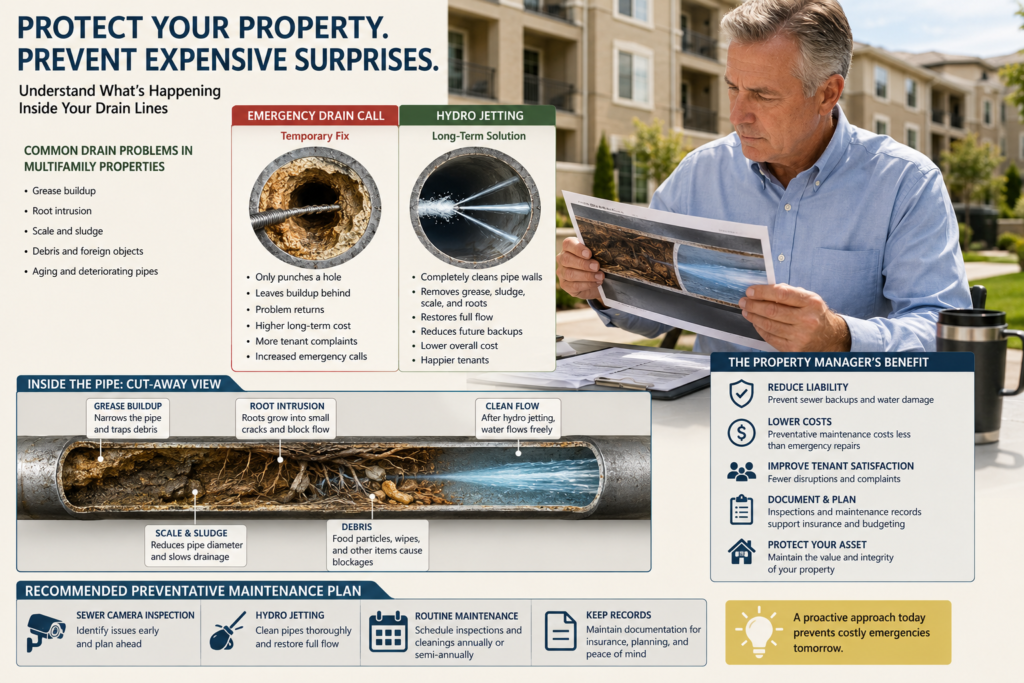
Unlike basic drain snaking, which often only punches a hole through a blockage, hydro jetting removes:
- grease buildup
- sludge
- debris
- scale accumulation
- soap residue
- organic buildup
- roots in some situations
This creates a more thorough cleaning of the pipe system.
For multifamily properties, hydro jetting is often paired with sewer camera inspections to help property managers understand the actual condition of their underground infrastructure.
What Are Emergency Drain Calls Really Costing Multifamily Properties?
The Hidden Costs Most Owners Never See
Emergency drain invoices are only part of the financial impact.
Repeated drain emergencies often create secondary losses that affect:
- tenant retention
- online reviews
- maintenance staff productivity
- insurance exposure
- moisture concerns
- flooring and drywall damage
- after-hours staffing costs
- vendor coordination fatigue
Common Hidden Costs of Repeat Drain Emergencies
Resident Frustration
Tenants remember recurring plumbing issues.
Repeated backups can lead to:
- negative online reviews
- lease non-renewals
- complaints to ownership
- increased management stress
After-Hours Emergency Premiums
Emergency drain calls often involve:
- overtime labor
- weekend rates
- holiday dispatches
- tenant relocation coordination
Water Damage Exposure
Overflowing drains can impact:
- flooring
- drywall
- cabinetry
- common areas
- adjacent units
Even “small” backups can create hidden moisture concerns behind walls and under flooring systems.
Insurance Documentation Pressure
Insurance carriers increasingly expect documentation showing:
- maintenance efforts
- preventative measures
- inspection records
- known infrastructure conditions
Without plumbing risk assessments and maintenance documentation, property managers may struggle defending repeat losses.
Operational Disruption
Every emergency pulls property managers and maintenance teams away from planned operational priorities.
Why Hydro Jetting Often Saves More Money Long-Term
Hydro Jetting Supports Preventative Maintenance
Preventative maintenance is usually less expensive than emergency restoration.
Hydro jetting helps multifamily properties:
- reduce emergency frequency
- extend drain system performance
- improve flow consistency
- reduce recurring stoppages
- support infrastructure planning
- document maintenance efforts
For many Orange County apartment communities and HOA properties, scheduled hydro jetting becomes part of a broader plumbing asset management strategy.
Hydro Jetting vs Drain Snaking
Understanding the Difference
Drain Snaking
Drain snaking:
- punches through blockages
- restores temporary flow
- may leave buildup attached to pipe walls
- often treats symptoms instead of root causes
This is why many multifamily properties experience repeat backups shortly after service.
Hydro Jetting
Hydro jetting:
- cleans the full pipe diameter
- removes grease and scale
- improves long-term flow
- helps reduce recurring issues
- supports preventative maintenance programs
When Multifamily Properties Should Consider Hydro Jetting
Common Warning Signs
Property managers should consider sewer camera inspections and hydro jetting when properties experience:
- recurring drain backups
- slow common-area drains
- frequent kitchen line stoppages
- tenant complaints about odors
- gurgling plumbing systems
- water pressure inconsistencies
- repeated emergency service calls
- older cast iron drain systems
- root intrusion history
- high-volume occupancy stress
These are especially common in aging plumbing infrastructure throughout Anaheim and older Southern California multifamily communities.
The Role of Sewer Camera Inspections
Plumbing Infrastructure Intelligence Matters
One of the biggest operational advantages of sewer camera inspections is visibility.
Property managers cannot manage what they cannot see.
Sewer camera inspections help identify:
- root intrusion
- pipe scaling
- offset joints
- cracks
- grease buildup
- collapsed sections
- recurring obstruction locations
This allows property managers to make more informed maintenance decisions instead of reacting blindly to emergencies.
Camera inspections also help with:
- owner reporting
- vendor accountability
- insurance documentation
- maintenance planning
- reserve study discussions
- capital improvement forecasting
Why Insurance Documentation Matters More Than Ever
Property Managers Need Maintenance Records
Insurance carriers increasingly evaluate whether reasonable preventative maintenance was performed.
Documented plumbing maintenance may help demonstrate:
- proactive risk management
- operational diligence
- infrastructure monitoring
- loss prevention efforts
This is especially important after:
- repeated water losses
- sewage backups
- moisture claims
- mold-related concerns
While no preventative program guarantees claim approval, organized plumbing documentation can strengthen operational defensibility.
Moisture Concerns and Hidden Damage
The Water You Don’t See Is Often the Biggest Risk
Many property managers focus on the visible overflow.
But hidden moisture concerns frequently create larger problems later.
Recurring drain issues can contribute to:
- hidden wall moisture
- microbial growth conditions
- flooring damage
- subfloor deterioration
- odor retention
- indoor environmental concerns
Emergency plumbing prevention is not only about stopping backups.
It is also about preventing secondary property damage.
Commercial Example: Multifamily Kitchen Stack Problems
A Common Anaheim Scenario
A multifamily property experiences:
- repeated kitchen backups
- tenant complaints
- weekend emergency dispatches
- recurring drain clearing invoices
Each emergency temporarily restores service.
But the underlying grease accumulation remains.
After repeated issues, sewer camera inspection reveals:
- heavy grease buildup
- restricted pipe diameter
- scaling in aging drain lines
Hydro jetting is performed to fully clean the system.
The property then implements:
- scheduled preventative maintenance
- annual camera inspections
- drain risk assessments
- tenant disposal education
The result is often:
- fewer emergency calls
- improved resident satisfaction
- lower overtime exposure
- reduced disruption to operations
Why Property Managers Are Moving Toward Plumbing Asset Management
Plumbing Systems Are Business Infrastructure
Many multifamily owners now view plumbing systems similarly to:
- roofing systems
- HVAC systems
- elevators
- fire systems
Waiting for catastrophic failure is expensive.
Proactive plumbing asset management helps:
- stabilize maintenance budgets
- reduce surprises
- improve operational continuity
- support long-term property value
Hydro Jetting and Resident Satisfaction
Plumbing Reliability Affects Retention
Residents may never notice preventative maintenance.
But they absolutely notice:
- sewage backups
- recurring odors
- unusable kitchens
- flooded bathrooms
- emergency water shutdowns
Reliable plumbing systems support:
- tenant satisfaction
- lease renewals
- online reputation
- operational confidence
For property managers already managing staffing shortages, vendor coordination, and owner expectations, preventing avoidable plumbing emergencies matters.
Emergency Plumbing Prevention Strategies for Multifamily Properties
Practical Preventative Recommendations
Schedule Routine Sewer Camera Inspections
Especially for:
- older multifamily buildings
- recurring backup properties
- high-occupancy communities
Implement Preventative Hydro Jetting
Particularly in:
- kitchen lines
- grease-heavy systems
- older cast iron piping
- high-use common drains
Maintain Plumbing Documentation
Track:
- inspection dates
- hydro jetting service
- emergency incidents
- tenant complaints
- repair history
Conduct Plumbing Risk Assessments
Identify:
- recurring problem areas
- infrastructure weaknesses
- high-risk lines
- preventative priorities
Address Water Pressure Issues
Excessive water pressure can accelerate plumbing wear and contribute to hidden leaks.
Direct Answer: Which Saves More Money?
Hydro Jetting Usually Wins Long-Term
For multifamily properties experiencing recurring drain issues, preventative hydro jetting often saves substantially more money over time than repeated emergency drain calls.
Why?
Because it helps reduce:
- emergency overtime
- tenant complaints
- water damage risk
- recurring service calls
- insurance complications
- operational disruption
- hidden infrastructure deterioration
Reactive plumbing maintenance often creates recurring expenses.
Preventative plumbing strategies aim to reduce them.
FAQs
How often should multifamily properties schedule hydro jetting?
It depends on occupancy levels, pipe age, and prior drain history. Many multifamily communities benefit from annual or semi-annual hydro jetting for high-use lines.
Is hydro jetting safe for older pipes?
Professional plumbers typically perform sewer camera inspections first to evaluate pipe condition before hydro jetting older systems.
Does hydro jetting help prevent sewer backups?
Yes. Hydro jetting removes buildup that commonly contributes to recurring sewer and drain backups.
Can preventative plumbing maintenance reduce insurance risk?
Preventative maintenance documentation may help demonstrate proactive property management and risk reduction efforts.
What causes recurring multifamily drain problems?
Common causes include:
- grease buildup
- root intrusion
- aging cast iron piping
- improper disposal habits
- scaling buildup
- deteriorating sewer infrastructure