



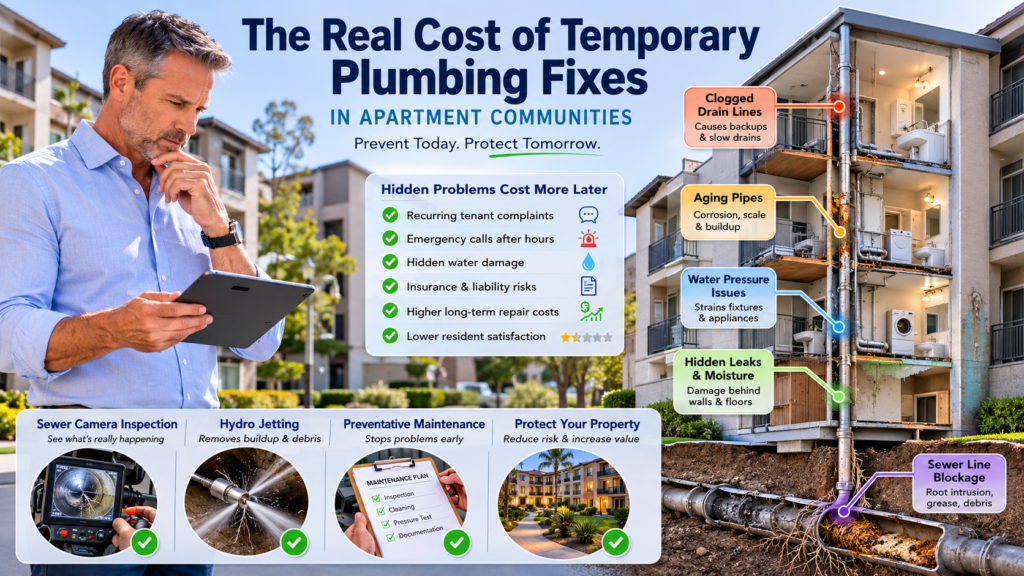
The Real Cost of “Temporary Plumbing Fixes” in Apartment Communities
Property managers often approve temporary plumbing repairs to quickly stop tenant complaints or avoid immediate expenses. However, short-term plumbing fixes frequently lead to repeat emergencies, hidden moisture damage, resident dissatisfaction, insurance complications, and larger capital repair costs later — especially in aging multifamily properties throughout Anaheim, Orange County, and Southern California.
Why Temporary Plumbing Repairs Become Expensive
Many apartment communities operate under constant operational pressure:
- residents demanding immediate solutions
- ownership groups controlling budgets
- maintenance teams stretched thin
- emergency calls happening after hours
- online reviews impacting leasing
- recurring plumbing issues frustrating tenants
In that environment, temporary plumbing repairs can feel practical.
Unfortunately, many “quick fixes” only address symptoms — not root causes.
Examples include:
- repeatedly snaking the same drain without inspection
- patching visible pipe leaks while hidden moisture remains
- ignoring pressure irregularities
- clearing sewer backups without sewer camera inspections
- delaying hydro jetting in aging drain systems
- replacing fixtures without diagnosing infrastructure conditions
The result is often a cycle of:
- repeat plumbing calls
- escalating tenant frustration
- growing hidden damage
- increased insurance exposure
- rising long-term costs
The Hidden Operational Cost Property Managers Feel Every Day
Tenant Complaints Never Truly Stop
One unresolved plumbing issue can affect an entire building’s reputation.
In multifamily housing, residents may tolerate one inconvenience. Repeated plumbing problems create distrust.
Common resident frustrations include:
- recurring drain backups
- foul odors
- intermittent hot water
- slow drains
- slab leak concerns
- water pressure issues
- ceiling stains
- moisture concerns
- noisy pipes
- repeated unit access requests
Even when maintenance teams respond quickly, repeated issues make tenants feel the property is poorly managed.
That directly impacts:
- lease renewals
- online reviews
- resident satisfaction
- occupancy stability
- owner confidence
For property managers, plumbing problems often become reputation management problems.
Temporary Fixes Often Hide Larger Infrastructure Problems
Aging Plumbing Infrastructure Across Southern California
Many apartment communities throughout Anaheim, Orange County, and Southern California are dealing with aging plumbing infrastructure.
Common issues include:
Galvanized Pipe Corrosion
Older piping systems may have internal buildup restricting flow and creating pressure inconsistencies.
Root Intrusion
Tree roots commonly invade older sewer lines throughout Southern California.
Scale Buildup
Hard water conditions in Orange County contribute to mineral accumulation inside drain and water lines.
Shifted Sewer Lines
Soil movement and aging infrastructure can create offsets and recurring backups.
Chronic Grease and Debris Accumulation
Multifamily kitchens create constant drain stress.
Without sewer camera inspections, many of these problems remain invisible until a major failure occurs.
Why “Just Snake the Drain Again” Becomes Expensive
Repeated Drain Cleaning Is Not Always Preventative Maintenance
Repeated cabling without diagnostics is one of the most common hidden cost drivers in multifamily plumbing.
If the same line repeatedly clogs, there is usually an underlying condition such as:
- root intrusion
- broken pipe sections
- grease accumulation
- scale buildup
- improper pitch
- deteriorated cast iron piping
- collapsed sewer sections
Hydro jetting combined with sewer camera inspections often identifies and addresses the actual cause.
Without infrastructure intelligence, properties can unknowingly spend thousands annually repeating temporary repairs.
The Insurance and Liability Risks Property Managers Often Overlook
Hidden Water Damage Creates Documentation Problems
Temporary plumbing fixes can create major insurance complications if hidden moisture damage develops later.
For example:
A maintenance team stops an active leak, but:
- moisture remains behind walls
- flooring absorbs water
- microbial growth begins
- secondary damage spreads slowly over time
Months later:
- tenants report odors
- visible staining appears
- mold concerns emerge
- insurance carriers request documentation
At that stage, lack of proper plumbing documentation may create challenges regarding:
- timelines
- causation
- mitigation efforts
- maintenance diligence
This is why plumbing risk assessments and documented inspections are becoming increasingly important for apartment communities.
Property Managers Are Being Asked to Prove Preventative Efforts
Documentation Is Becoming Operational Protection
Modern property management increasingly requires documentation, not assumptions.
Owners, insurers, and residents want evidence that:
- systems were inspected
- preventative maintenance occurred
- plumbing risks were identified
- recommendations were documented
- recurring issues were investigated properly
Professional plumbing documentation may include:
Sewer Camera Inspection Reports
Visual evidence of pipe conditions.
Hydro Jetting Service Records
Proof of preventative drain maintenance.
Pressure Readings
Documentation of abnormal pressure conditions.
Moisture Readings
Evidence that hidden moisture concerns were evaluated.
Plumbing Risk Assessments
Identification of vulnerable infrastructure areas.
Before-and-After Photos
Important for insurance-related documentation.
Emergency Plumbing Prevention Is Often Less Expensive Than Repeated Emergencies
The Cost Comparison Property Owners Rarely Calculate
Temporary plumbing fixes may appear cheaper initially.
However, many apartment communities eventually experience:
- emergency dispatch premiums
- after-hours repair costs
- water mitigation expenses
- mold remediation
- tenant relocation costs
- insurance deductibles
- business interruption
- unit vacancy losses
- negative online reviews
- repeated maintenance labor
One unresolved drain line can create years of recurring operational costs.
Preventative plumbing maintenance helps reduce:
- emergency frequency
- tenant disruption
- liability exposure
- deferred infrastructure deterioration
Commercial Example: The “Recurring Backup” Trap
A Common Orange County Multifamily Scenario
A multifamily property in Orange County experiences:
- recurring first-floor drain backups
- tenant complaints every few months
- repeated drain snaking
- occasional emergency overflows
Initially:
- each service call appears inexpensive
Over time:
- drywall damage develops
- flooring becomes affected
- insurance claims increase
- tenant dissatisfaction grows
- maintenance labor costs escalate
A sewer camera inspection later reveals:
- heavy root intrusion
- deteriorating cast iron piping
- severe scale buildup
The property ultimately spends substantially more because the underlying infrastructure issue was never properly documented early.
Plumbing Asset Management Is Becoming Critical for Multifamily Properties
Smart Property Managers Think Beyond Individual Service Calls
Leading apartment operators increasingly view plumbing systems as long-term operational assets.
That means:
- tracking recurring problem areas
- monitoring infrastructure aging
- budgeting proactively
- identifying high-risk drain lines
- documenting maintenance histories
- scheduling preventative hydro jetting
- conducting periodic sewer camera inspections
This approach supports:
- capital planning
- risk reduction
- insurance preparedness
- operational continuity
It also reduces the emotional stress property managers experience during emergencies.
Water Pressure Issues Often Signal Bigger Problems
Pressure Problems Can Quietly Damage Buildings
Many Southern California multifamily buildings experience water pressure irregularities.
Excessive pressure may contribute to:
- pipe stress
- fixture failures
- supply line leaks
- appliance damage
- recurring plumbing emergencies
Low pressure may indicate:
- corrosion
- hidden leaks
- infrastructure restrictions
- partially collapsed piping
Routine pressure evaluations are often overlooked until larger failures occur.
Hydro Jetting vs Temporary Drain Clearing
Why Hydro Jetting Is Often More Effective
Traditional drain snaking may temporarily open a blockage.
Hydro jetting helps remove:
- grease buildup
- sludge
- scale accumulation
- root intrusion debris
For multifamily properties, hydro jetting is frequently part of a larger preventative maintenance strategy designed to reduce recurring emergency calls.
Combined with sewer camera inspections, hydro jetting provides valuable infrastructure intelligence rather than temporary symptom relief alone.
How Preventative Plumbing Protects Resident Satisfaction
Residents Judge Reliability, Not Intentions
Tenants rarely distinguish between:
- maintenance delays
- vendor scheduling
- aging infrastructure
- ownership budgets
They simply remember:
- recurring disruptions
- water shutoffs
- sewer odors
- repeated access requests
- unresolved problems
Preventative maintenance helps properties create:
- smoother operations
- better resident experiences
- improved online reputation
- reduced conflict escalation
In competitive Orange County rental markets, operational reliability directly impacts retention.
Signs a Temporary Plumbing Fix May Be Hiding a Larger Issue
Property managers should pay attention when they notice:
- repeated backups in the same units
- multiple drain calls in similar locations
- recurring tenant complaints
- fluctuating water pressure
- sewer odors
- slow drains returning quickly
- unexplained moisture
- stained drywall or flooring
- rising water bills
- frequent emergency dispatches
These often indicate underlying infrastructure concerns requiring further inspection.
Preventative Plumbing Strategies for Apartment Communities
Recommended Multifamily Plumbing Risk Reduction Practices
Annual Sewer Camera Inspections
Identify developing problems before emergencies occur.
Scheduled Hydro Jetting
Reduce buildup in high-use drain systems.
Plumbing Risk Assessments
Document infrastructure vulnerabilities.
Pressure Monitoring
Detect abnormal system stress.
Moisture Evaluations After Leaks
Help reduce hidden damage risks.
Maintenance Documentation
Support operational accountability and insurance preparedness.
Infrastructure Mapping
Track recurring plumbing issues property-wide.
FAQ Section
Why are temporary plumbing repairs risky for apartment communities?
Temporary repairs may not address root causes such as pipe deterioration, root intrusion, hidden leaks, or scale buildup. Over time, this can lead to larger emergencies, insurance claims, resident dissatisfaction, and increased maintenance costs.
How do sewer camera inspections help property managers?
Sewer camera inspections provide visual documentation of pipe conditions, helping identify hidden damage, recurring blockage causes, root intrusion, and aging infrastructure before major failures occur.
Is hydro jetting better than snaking drains?
Hydro jetting is often more effective for removing grease, sludge, scale, and debris buildup from commercial drain systems. Snaking may temporarily restore flow without fully cleaning the pipe.
Why is plumbing documentation important for insurance purposes?
Documentation helps demonstrate that preventative maintenance, inspections, and mitigation efforts were performed, which may support operational accountability during insurance-related investigations.
What plumbing issues are common in older Orange County apartment communities?
Common issues include aging cast iron piping, root intrusion, hard water scale buildup, sewer line offsets, slab leaks, and pressure-related failures.