


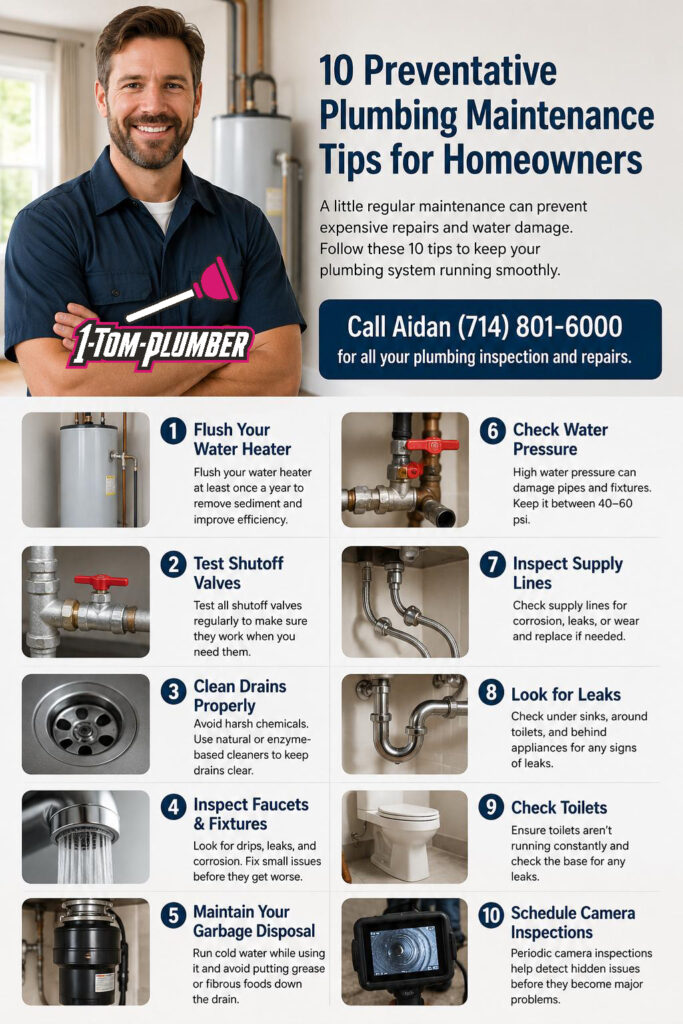
Top 10 Plumbing Maintenance Tips for Anaheim Homeowners
The best way to avoid expensive plumbing emergencies is through simple preventative maintenance. Anaheim homeowners should monitor water pressure, maintain water heaters, avoid grease and wipes in drains, inspect supply lines, watch for slow drains, and schedule professional plumbing inspections before small issues become major water damage problems.
Top 10 Plumbing Maintenance Tips for Anaheim Homeowners
Preventative plumbing maintenance helps homeowners avoid leaks, sewer backups, slab leaks, water heater failures, and expensive emergency repairs.
Many homes throughout Anaheim and nearby Orange County neighborhoods have aging plumbing systems, hard water buildup, older sewer lines, and high daily water usage. Small maintenance habits can dramatically extend the life of your plumbing system.
Whether your home is older or newly built, these plumbing maintenance tips can help protect your property year-round.
Why Anaheim Homes Need Preventative Plumbing Maintenance
Southern California homes often deal with:
- Hard water mineral buildup
- Aging clay sewer lines
- Root intrusion
- High water pressure
- Corroded shutoff valves
- Water heater sediment buildup
- Older supply lines and fittings
Preventative maintenance helps homeowners:
- Reduce emergency plumbing calls
- Prevent water damage
- Improve drain flow
- Extend equipment life
- Lower long-term repair costs
- Catch hidden problems early
Tip 1: Know Your Main Water Shutoff
Every homeowner should know exactly where the main water shutoff valve is located before an emergency happens.
Common shutoff locations include:
- Garage walls
- Side yards
- Utility rooms
- Near the water meter box
If a pipe bursts or a supply line fails, shutting off water quickly can prevent thousands of dollars in water damage.
Test valves carefully because older valves can sometimes stick or leak.
Tip 2: Check Your Water Pressure
High water pressure quietly damages plumbing systems over time.
Excessive pressure can strain:
- Water heaters
- Supply lines
- Faucets
- Toilets
- Washing machine hoses
- Shutoff valves
Ideal residential pressure is typically around 50–70 PSI.
Pressure above 80 PSI may increase the risk of leaks and premature plumbing failure.
A simple pressure gauge can help homeowners monitor their system.
Tip 3: Flush Tank Water Heaters
Sediment buildup is one of the biggest reasons tank water heaters fail early.
Anaheim’s hard water can leave mineral deposits inside the tank, reducing efficiency and creating popping or rumbling sounds.
Flushing the tank annually helps:
- Improve heating efficiency
- Reduce sediment accumulation
- Extend water heater lifespan
- Lower energy usage
If sediment buildup becomes severe, professional maintenance may be necessary.
Tip 4: Descale Tankless Water Heaters
Tankless water heaters also suffer from hard water mineral buildup.
Scale buildup inside the heat exchanger can:
- Reduce efficiency
- Restrict water flow
- Cause overheating
- Shorten equipment life
Most manufacturers recommend annual descaling service in hard water regions like Southern California.
Routine maintenance helps tankless systems operate properly for many years.
Tip 5: Avoid Pouring Grease Down Drains
Grease is one of the most common causes of kitchen drain clogs.
Even when grease looks liquid, it cools and hardens inside pipes.
Over time, grease traps food particles and creates stubborn blockages.
Avoid pouring these down drains:
- Bacon grease
- Cooking oils
- Butter
- Sauces
- Fatty food scraps
Instead:
- Let grease cool
- Place it in a container
- Dispose of it in the trash
Tip 6: Avoid Flushing Wipes
“Flushable” wipes often do not break down like toilet paper.
Wipes can collect inside sewer lines and combine with grease, roots, and debris to create major blockages.
Avoid flushing:
- Baby wipes
- Cleaning wipes
- Paper towels
- Feminine hygiene products
- Cotton swabs
Only human waste and toilet paper should go into toilets.
Tip 7: Test Shutoff Valves Carefully
Many homeowners discover a shutoff valve problem during an emergency.
Small fixture shutoff valves under sinks and behind toilets can seize over time if never used.
Check valves periodically for:
- Corrosion
- Stiff handles
- Leaks
- Drips
- Mineral buildup
Older valves should be handled gently to avoid breaking weakened components.
Tip 8: Inspect Supply Lines
Flexible supply lines connect plumbing fixtures to the home’s water system.
These are commonly found under:
- Sinks
- Toilets
- Washing machines
- Dishwashers
Supply lines can crack, corrode, or burst with age.
Watch for:
- Rust
- Bulging
- Moisture
- Dripping
- Corrosion around fittings
Braided stainless steel supply lines are generally more durable than older rubber hoses.
Tip 9: Watch for Slow Drains
Slow drains are early warning signs of developing plumbing problems.
Common causes include:
- Grease buildup
- Soap residue
- Hair accumulation
- Root intrusion
- Partial sewer blockages
Ignoring slow drains can eventually lead to complete backups.
Repeated drain problems usually mean deeper issues exist inside the plumbing system.
Tip 10: Schedule Camera Inspections for Recurring Drain Problems
If drains repeatedly clog, a sewer camera inspection can identify the real problem.
A sewer camera inspection may reveal:
- Root intrusion
- Cracked pipes
- Offset joints
- Grease buildup
- Pipe collapse
- Main sewer blockages
Camera inspections help plumbers diagnose problems accurately before recommending repairs or hydro jetting.
This is especially important for older Anaheim homes with aging clay sewer lines.
Monthly Homeowner Checklist
Use this simple monthly checklist:
- Check under sinks for leaks
- Listen for running toilets
- Monitor water bills for spikes
- Watch for slow drains
- Inspect washing machine hoses
- Check around water heaters
- Test faucets and shutoff valves gently
- Clean drain strainers
Annual Plumbing Inspection Checklist
A yearly professional plumbing inspection may include:
- Water pressure testing
- Water heater inspection
- Sewer camera inspection
- Drain flow testing
- Leak detection
- Supply line inspection
- Shutoff valve testing
- Thermal leak detection
- Toilet and fixture evaluation
Preventative inspections often identify problems before major damage occurs.
FAQ
How often should I inspect my plumbing?
Homeowners should visually inspect plumbing monthly and schedule a professional inspection annually.
How often should I flush my water heater?
Tank water heaters should typically be flushed once per year, especially in hard water areas like Anaheim.
What causes recurring drain clogs?
Recurring clogs are often caused by grease buildup, roots, damaged pipes, wipes, or partial sewer blockages.
What water pressure is too high?
Residential pressure above 80 PSI is generally considered excessive and may damage plumbing systems.
Should I get a sewer camera inspection?
Yes. Camera inspections are recommended for recurring drain problems, older homes, sewer backups, or before hydro jetting.
When should I call a plumber?
Call a plumber if you notice:
- Water leaks
- Sewer odors
- Slow drains
- Water pressure problems
- Recurring clogs
- Water heater issues
- Unexplained high water bills