



What Galvanized Pipes Do to Water Flow Over Time (And Why Commercial Properties in Anaheim Should Pay Attention)
Direct Answer:
Galvanized pipes corrode internally over time, narrowing water flow, reducing pressure, trapping sediment, and increasing the risk of leaks and pipe failure. In commercial properties across Anaheim and Orange County, this aging plumbing infrastructure can quietly escalate into costly water damage, tenant complaints, and insurance liability.
If you manage apartments, HOAs, retail centers, industrial buildings, schools, or medical offices in Southern California, this is not just a plumbing issue — it’s an operational risk issue.
Why Galvanized Pipes Become a Commercial Risk Over Time
Galvanized steel pipes were widely installed in properties built before the 1970s. The zinc coating was meant to prevent rust. Over decades, that coating breaks down.
Once corrosion starts, the damage progresses internally — out of sight.
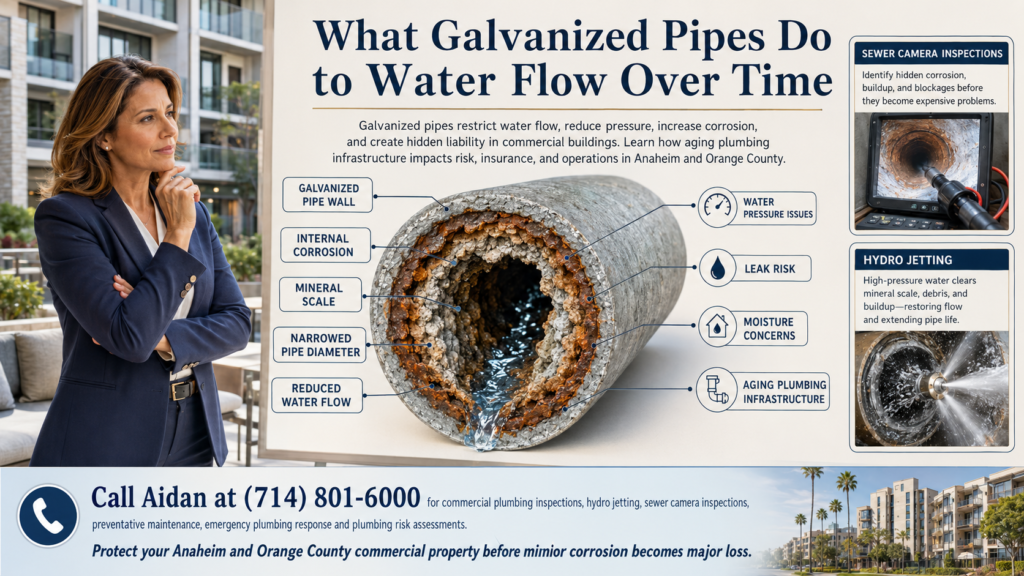
What Happens Inside the Pipe
- Rust builds up along pipe walls
- Mineral deposits narrow the internal diameter
- Sediment collects and hardens
- Flow turbulence increases
- Pressure becomes inconsistent
- Water discoloration develops
The result? A pipe that may look intact externally — but is compromised internally.
In aging plumbing infrastructure throughout Anaheim and Orange County, this deterioration often goes unnoticed until residents start calling.
Early Warning Signs Property Managers Should Never Ignore
If you oversee multi-unit or commercial properties in Southern California, these indicators should trigger immediate plumbing risk assessments:
Water Pressure Issues
- Uneven pressure between units
- Slow-fill fixtures
- Weak shower pressure complaints
- Pressure fluctuations during peak usage
Tenant Complaints
- Brown or rusty water
- Metallic taste
- Laundry staining
- Recurring plumbing service calls
Maintenance Red Flags
- Frequent localized pipe repairs
- Pin-hole leaks
- Increased moisture concerns in walls
- Unexplained water damage
These aren’t minor inconveniences. They are signals of internal pipe restriction.
The Hidden Operational Costs of Galvanized Pipes
When water flow narrows inside corroded pipes, several cascading risks develop:
1. Increased Emergency Plumbing Events
Restricted flow causes pressure irregularities. Pressure spikes stress weakened pipe walls, increasing the likelihood of sudden failure.
Emergency plumbing prevention begins with understanding flow restriction before rupture occurs.
2. Property Damage Prevention Failures
A small internal rust fracture can lead to:
- Wall cavity saturation
- Ceiling collapse
- Mold growth
- Electrical risk
- Flooring damage
In Orange County’s high-value commercial properties, even minor leaks can escalate into five-figure remediation events.
3. Insurance-Related Concerns
Insurance carriers increasingly scrutinize:
- Aging plumbing infrastructure
- Maintenance documentation
- Prior loss history
- Preventative maintenance programs
Failure to proactively address galvanized piping can complicate claims or increase premiums.
Proper documentation and plumbing asset management matter.
How Galvanized Pipes Reduce Water Flow Over Decades
Stage 1: Internal Scaling (Years 10–20)
Minor buildup begins. Slight pressure reduction.
Stage 2: Noticeable Flow Restriction (Years 20–40)
Diameter narrows significantly. Tenants begin noticing pressure issues.
Stage 3: Structural Weakening (40+ Years)
Corrosion penetrates pipe walls. Risk of rupture increases dramatically.
Many commercial buildings in Anaheim and throughout Orange County fall into Stage 2 or 3 right now.
Why Southern California Water Accelerates the Problem
Water quality in parts of Southern California contains minerals that contribute to scaling. Combined with:
- High occupancy commercial usage
- Continuous system demand
- Warm climate moisture cycling
Corrosion accelerates internally, even if exterior pipes appear intact.
This is where plumbing infrastructure intelligence becomes critical.
How Commercial Properties Should Respond
Reactive plumbing repairs are no longer sufficient for aging systems.
Implement Plumbing Risk Assessments
A structured assessment should include:
- Pressure testing
- Water quality evaluation
- Sewer camera inspections
- Pipe material mapping
- Moisture detection scans
Sewer camera inspections are particularly important to evaluate connected drain lines and detect secondary blockages.
The Role of Sewer Camera Inspections and Hydro Jetting
While galvanized supply lines restrict incoming water flow, older drain lines often experience:
- Scale buildup
- Grease accumulation
- Root intrusion
Sewer Camera Inspections
Allow visual confirmation of:
- Internal corrosion
- Offset joints
- Cracks
- Sediment buildup
Hydro Jetting
Removes internal debris and buildup in drain lines, restoring flow and reducing emergency backups.
Together, these services strengthen plumbing asset management programs and reduce emergency plumbing response frequency.
Liability Reduction Through Documentation
Commercial property owners and facility directors should maintain:
- Plumbing inspection logs
- Maintenance schedules
- Pressure readings
- Repair histories
- Risk assessment reports
Insurance documentation demonstrating proactive infrastructure oversight strengthens claims defensibility.
In liability cases involving water damage, documentation often determines financial outcome.
Emergency Prevention vs. Emergency Response
Emergency plumbing events disrupt:
- Business operations
- Tenant retention
- Resident satisfaction
- Lease renewals
- Public reputation
Preventative maintenance protects:
- Operational continuity
- Brand trust
- Budget forecasting
- Insurance standing
In competitive Orange County markets, reputation matters.
Moisture Concerns and Hidden Damage Detection
Galvanized pipe corrosion frequently causes slow leaks behind walls.
These hidden failures lead to:
- Mold amplification
- Structural deterioration
- Indoor air quality concerns
- Tenant health complaints
Hidden damage detection using moisture meters and thermal scanning identifies risk before visible damage appears.
Early detection equals property damage prevention.
Plumbing Asset Management Strategy for Commercial Buildings
Forward-thinking commercial property managers in Anaheim are implementing structured plumbing asset management plans:
Step 1: Infrastructure Mapping
Identify pipe material type, age, and vulnerable zones.
Step 2: Risk Prioritization
High-pressure areas, vertical risers, and main trunks are evaluated first.
Step 3: Preventative Maintenance Scheduling
- Routine inspections
- Hydro jetting cycles
- Pressure balancing checks
- Moisture assessments
Step 4: Phased Replacement Planning
Budgeted pipe upgrades reduce catastrophic failure risk.
Commercial Example: Multi-Unit Property in Anaheim
A 40-year-old apartment complex experienced:
- Ongoing water pressure complaints
- Recurring pin-hole leaks
- Insurance carrier inquiry after two water claims
Inspection revealed 60% internal pipe diameter reduction due to corrosion.
Phased replacement planning prevented a projected six-figure water loss event.
Frequently Asked Questions (Optimized for Voice Search & Featured Snippets)
Do galvanized pipes reduce water pressure over time?
Yes. Internal corrosion and mineral buildup narrow the pipe diameter, restricting water flow and causing noticeable pressure loss in commercial buildings.
How long do galvanized pipes last?
Typically 40–50 years. However, water quality and usage intensity in Southern California can shorten lifespan.
Are galvanized pipes a liability risk for commercial properties?
Yes. Aging galvanized plumbing increases the likelihood of leaks, water damage, tenant complaints, and insurance scrutiny.
Should commercial buildings replace galvanized pipes proactively?
If inspection shows advanced internal corrosion or recurring water pressure issues, phased replacement is strongly recommended to reduce emergency risk.
Can sewer camera inspections detect galvanized pipe corrosion?
Camera inspections are most effective in drain lines, but they help identify related infrastructure vulnerabilities and blockage risks.
Protecting Commercial Properties in Anaheim & Orange County
Aging plumbing infrastructure is not just about pipes.
It affects:
- Resident satisfaction
- Tenant retention
- Insurance stability
- Maintenance budgets
- Operational continuity
- Long-term asset value
Emergency plumbing prevention is always less expensive than emergency restoration.
Proactive plumbing risk assessments provide clarity and control.