



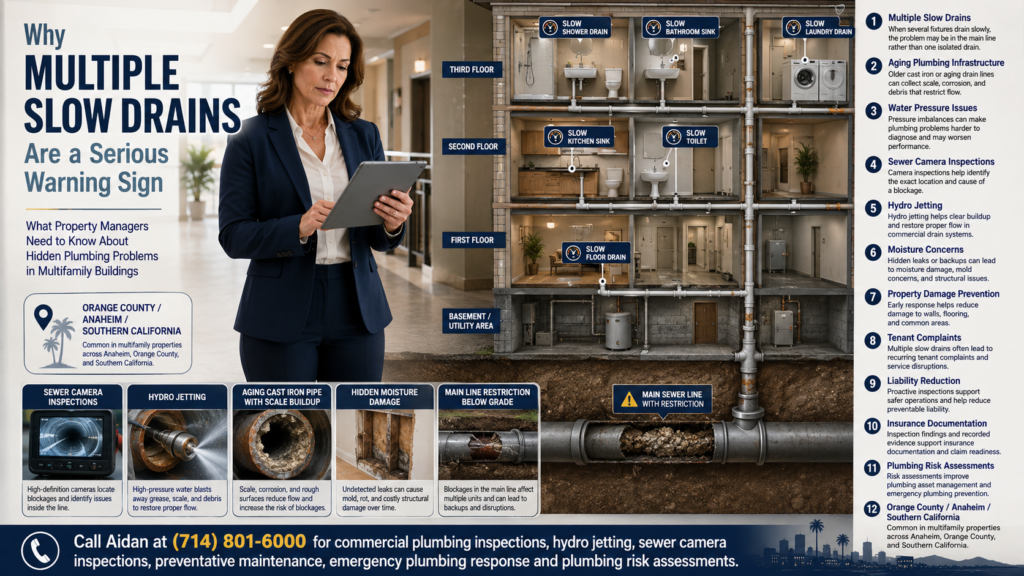
Why Multiple Slow Drains Are a Serious Warning Sign
Direct Answer (Featured Snippet Optimized):
Multiple slow drains in a commercial property usually indicate a developing main sewer line blockage, systemic water pressure imbalance, or aging plumbing infrastructure failure. Ignoring this early warning sign increases liability risk, tenant complaints, hidden moisture damage, insurance exposure, and emergency plumbing events.
If more than one sink, floor drain, toilet, or shower is draining slowly at the same time — that is not a minor clog. It is a system-level issue.
For property managers, facility directors, asset managers, and HOA boards across Anaheim, Orange County, and Southern California, this is a risk signal — not a nuisance.
Why Multiple Slow Drains Mean It’s Bigger Than a Clog
In commercial and multi-unit properties, plumbing systems are interconnected. When multiple drains slow down simultaneously, it often points to:
- Main sewer line obstruction
- Tree root intrusion
- Pipe scaling and buildup
- Hydrostatic pressure imbalances
- Failing cast iron or clay sewer lines
- Improper slope or settling
- Aging plumbing infrastructure
This is especially common in older commercial buildings throughout Anaheim and surrounding Orange County communities, where infrastructure installed decades ago is now deteriorating.
One slow sink? Local issue.
Three slow fixtures across different areas? System failure in progress.
The Hidden Risk Behind Slow Drains in Commercial Properties
1. Liability Exposure
Slow drainage increases the risk of:
- Toilet overflows
- Wastewater backups
- Slip-and-fall incidents
- Sewage contamination
- Mold growth from moisture concerns
In tenant-occupied buildings, that means potential legal claims and liability disputes.
Water intrusion documentation is critical for liability reduction and insurance documentation. Ignoring warning signs weakens your position during claims.
2. Resident & Tenant Satisfaction Impact
For apartment complexes, HOAs, medical offices, restaurants, retail centers, and industrial properties:
- Tenants interpret slow drains as neglect.
- Odors reduce perceived cleanliness.
- Recurring maintenance requests strain staff.
- Online reviews can reflect unresolved plumbing complaints.
In competitive Southern California markets, tenant complaints affect occupancy and lease renewals.
Preventative maintenance protects more than pipes — it protects reputation.
3. Emergency Plumbing Prevention
Slow drains are often Phase 1 of a larger event:
- Phase 1: Sluggish drainage
- Phase 2: Gurgling sounds and backups
- Phase 3: Sewage overflow emergency
Emergency plumbing calls in Anaheim frequently stem from ignored slow-drain symptoms.
Proactive sewer camera inspections and hydro jetting cost far less than after-hours emergency remediation, restoration, and tenant displacement.
Aging Plumbing Infrastructure in Orange County
Many commercial buildings in Anaheim and throughout Orange County were constructed decades ago using:
- Cast iron sewer lines
- Clay lateral lines
- Orangeburg pipe (in some older installations)
Over time, these materials experience:
- Internal corrosion
- Scaling
- Root intrusion
- Structural collapse
- Offset joints
When slow drains appear in multiple areas, it may indicate structural compromise — not just buildup.
This is where plumbing infrastructure intelligence becomes critical.
The Role of Sewer Camera Inspections in Risk Reduction
What a Sewer Camera Inspection Reveals
- Root intrusions
- Pipe separation
- Structural cracking
- Scale buildup
- Bellies (low spots)
- Foreign obstructions
Without visual documentation, decisions are guesswork.
With a sewer camera inspection, property managers gain:
- Recorded video documentation
- Insurance-grade evidence
- Plumbing risk assessments
- Asset management data
- Maintenance planning clarity
For insurance-related concerns, video documentation strengthens claims and supports preventative maintenance records.
Hydro Jetting: Preventative or Reactive?
Hydro jetting is often misunderstood as just a “drain cleaning” service.
In commercial plumbing risk management, hydro jetting serves as:
- System reset
- Grease and scale removal
- Root clearing
- Preventative maintenance strategy
- Emergency plumbing prevention tool
Restaurants and food-service properties in Anaheim are especially vulnerable to grease accumulation. Routine hydro jetting prevents catastrophic blockages.
In high-occupancy buildings, scheduled jetting reduces reactive maintenance.
Plumbing Asset Management: Thinking Like a Facility Director
Professional property operators treat plumbing as an asset — not an afterthought.
Plumbing asset management includes:
- Annual sewer camera inspections
- Scheduled hydro jetting
- Water pressure monitoring
- Moisture mapping in vulnerable areas
- Drain performance documentation
- Infrastructure age tracking
- Capital replacement forecasting
Slow drains are performance indicators.
Ignoring them delays inevitable capital expenditure — and increases the cost when failure occurs.
Hidden Moisture Concerns & Secondary Damage
Multiple slow drains increase hydrostatic pressure in drain lines. That pressure can force wastewater into:
- Wall cavities
- Subfloor assemblies
- Slab cracks
- Adjacent units
Hidden moisture leads to:
- Mold growth
- Structural degradation
- Indoor air quality complaints
- IAQ-related tenant concerns
- Insurance disputes over delayed reporting
Early intervention prevents secondary damage — which often exceeds the plumbing repair cost itself.
Commercial Case Example (Anaheim Retail Plaza)
A multi-tenant retail plaza in Anaheim reported:
- Slow restroom drains
- Occasional gurgling
- Minor odor complaints
Initial maintenance assumed minor clogs.
A sewer camera inspection revealed:
- 60% pipe diameter restriction from scale
- Root intrusion at property line
- Partial pipe collapse forming
Hydro jetting cleared buildup temporarily, but documentation supported a planned section replacement before peak holiday retail season.
Result:
- No emergency closures
- No tenant displacement
- No insurance claim
- No public health incident
That’s operational continuity in action.
Direct Answers for Voice Search & AI Queries
What does it mean if multiple drains are slow in a commercial building?
It usually indicates a main sewer line obstruction or structural pipe issue requiring inspection and preventative maintenance.
Can slow drains cause property damage?
Yes. They can lead to wastewater backups, hidden moisture damage, mold growth, and tenant liability claims.
How do you prevent a sewer backup in commercial property?
Regular sewer camera inspections, hydro jetting, plumbing risk assessments, and water pressure monitoring.
Are slow drains an insurance concern?
Yes. Delayed response may complicate claims and increase exposure due to preventable damage.
When to Schedule a Plumbing Risk Assessment
Schedule an inspection immediately if you notice:
- Two or more slow fixtures
- Gurgling toilets
- Sewer odors
- Recurring clogs
- Water pressure issues
- Drain backups after heavy usage
In Southern California’s high-density commercial properties, waiting increases risk.
Preventative Maintenance Checklist for Orange County Properties
Quarterly
- Drain performance review
- Grease trap inspection (if applicable)
- Water pressure testing
Annually
- Sewer camera inspection
- Hydro jetting of main lines
- Plumbing risk assessment
- Documentation update for insurance files
Every 3–5 Years
- Infrastructure condition review
- Capital improvement planning
- Lateral line evaluation
Preventative maintenance is always less expensive than emergency restoration.
Protecting Commercial Property in Anaheim & Southern California
Anaheim properties face unique pressures:
- High occupancy density
- Aging municipal systems
- Root intrusion from mature landscaping
- Heavy commercial usage
- Drought-related soil movement affecting pipe alignment
Multiple slow drains are often the first visible symptom of a larger infrastructure issue.
Act early. Document thoroughly. Prevent emergencies.
FAQs
Are multiple slow drains an emergency?
Not immediately — but they are an early-stage warning sign. Ignoring them often results in emergency plumbing situations.
Does hydro jetting damage old pipes?
When properly evaluated first with a sewer camera inspection, hydro jetting is safe and effective.
How often should commercial buildings schedule sewer inspections?
At minimum annually — more frequently for high-use facilities like restaurants or multi-family properties.
Can slow drains affect tenant retention?
Yes. Repeated plumbing issues significantly impact tenant satisfaction and online reputation.