



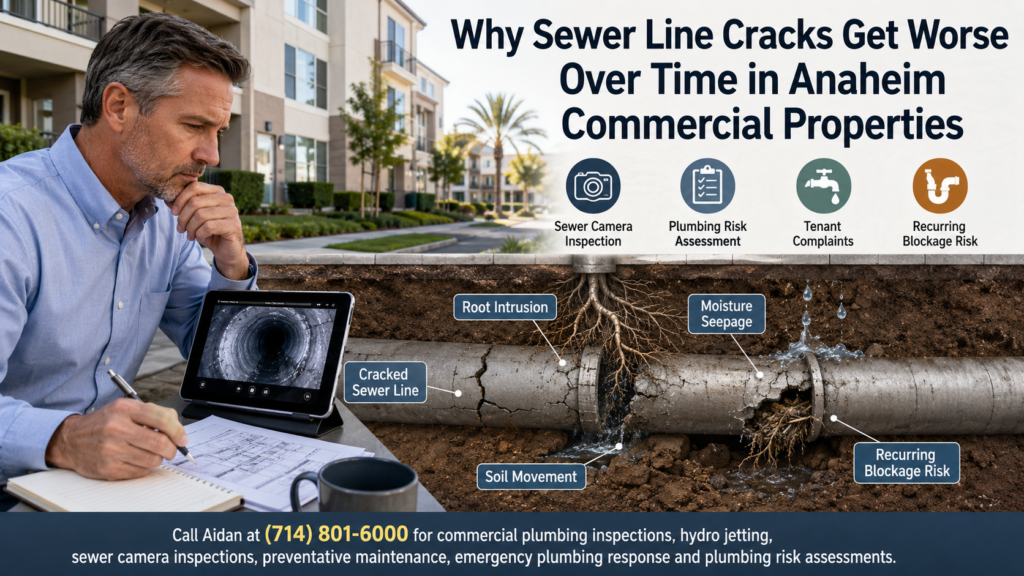
Why Sewer Line Cracks Get Worse Over Time
Sewer line cracks get worse because underground pressure, soil movement, root intrusion, corrosion, water flow, and repeated use slowly enlarge small defects. For Anaheim commercial properties, a minor crack can become a recurring backup, moisture concern, tenant complaint, insurance documentation issue, or emergency plumbing event if it is not inspected early.
For commercial property managers, facility managers, HOA boards, apartment operators, retail center managers, and building owners, a cracked sewer line is not just a pipe problem. It is an operational risk.
One small crack underground can quietly affect resident satisfaction, maintenance budgets, insurance documentation, liability exposure, and long-term property protection. The challenge is that sewer line cracks usually do not announce themselves clearly at first. They often show up as slow drains, odor complaints, recurring toilet backups, wet soil, unexplained moisture concerns, or repeated calls from tenants who are tired of the same plumbing issue coming back.
In Anaheim, Orange County, and nearby Southern California communities, many commercial and multifamily properties rely on aging plumbing infrastructure. Older clay, cast iron, Orangeburg, concrete, or aging plastic drain lines may already be under stress from soil movement, tree roots, years of wastewater flow, and previous repairs. Once a crack begins, time usually works against the property.
That is why sewer camera inspections, preventative maintenance, hydro jetting when appropriate, and plumbing risk assessments matter. They help turn guesswork into plumbing infrastructure intelligence.
Why Sewer Line Cracks Matter for Commercial Properties
A sewer line crack is a structural weakness in the pipe. It may start small, but underground sewer systems are constantly exposed to pressure from above, movement from surrounding soil, and wastewater flow from inside the pipe.
For a commercial or multifamily property, this can lead to:
- Recurring drain stoppages
- Tenant complaints
- Sewer odors
- Moisture intrusion
- Soil erosion around the pipe
- Foundation-area concerns
- Emergency plumbing calls
- Business disruption
- Insurance-related questions
- Documentation gaps after a loss
- Higher liability exposure if the issue was known but not addressed
The real problem is not only the crack. The real problem is what the crack allows to happen next.
A crack can allow roots to enter. It can allow soil to wash into the pipe. It can allow wastewater to escape. It can allow the pipe to shift, separate, sag, or collapse. Once that begins, the property may move from a manageable repair conversation into an emergency response situation.
Direct Answer: Why Do Sewer Line Cracks Get Worse Over Time?
Sewer line cracks get worse because the pipe is no longer structurally sealed. Soil pressure, root growth, wastewater movement, vibration, corrosion, and ground settlement keep working on the damaged area. Over time, a hairline crack can widen, separate, collect debris, attract roots, and create recurring backups or hidden moisture concerns.
For commercial property managers, this means one unresolved crack can turn into a repeated operational headache.
Common Causes of Sewer Line Cracks in Anaheim and Orange County
1. Aging Plumbing Infrastructure
Many Anaheim and Orange County properties were built decades ago. Older underground sewer materials can weaken with age, especially if the system has never been properly inspected.
Older pipes may develop:
- Surface corrosion
- Brittle walls
- Joint separation
- Root entry points
- Cracks from ground pressure
- Scale buildup that restricts flow
Aging plumbing infrastructure does not always fail all at once. It usually gives small warning signs first.
2. Soil Movement and Settlement
Southern California soil conditions can place stress on underground plumbing systems. Dry periods, irrigation, construction vibration, landscaping changes, and ground settlement can all affect sewer line alignment.
When the soil moves, the pipe may shift. When the pipe shifts, cracks can widen. Once alignment changes, wastewater may no longer flow smoothly.
That can lead to standing waste, solids buildup, odors, and recurring stoppages.
3. Tree Root Intrusion
Tree roots are drawn to moisture. If a sewer line has a crack or weak joint, roots may enter through the opening. Once inside, they continue growing.
Root intrusion can:
- Catch toilet paper and solids
- Slow drain flow
- Create repeated blockages
- Widen cracks
- Break apart pipe joints
- Increase the chance of pipe collapse
Hydro jetting may clear roots and debris in some situations, but if the pipe is cracked, a sewer camera inspection is important to understand whether the problem is only a blockage or a structural defect.
4. Corrosion and Pipe Deterioration
Cast iron sewer lines can rust from the inside. Over time, the pipe wall becomes thinner, rougher, and more vulnerable to cracking.
When corrosion combines with flow restrictions, the property may experience:
- Slow drains
- Gurgling fixtures
- Sewer odor complaints
- Recurring backups
- Pipe wall failure
- Moisture concerns near affected areas
For property managers, corrosion-related cracking is especially important because the visible symptom may be a tenant complaint, while the real issue is hidden underground or below the slab.
5. Improper Repairs or Previous Patchwork
Some properties have a history of partial repairs. A section may have been replaced, patched, snaked repeatedly, or temporarily cleared without documenting the root cause.
That can create a false sense of security.
If previous repair work did not address slope, alignment, pipe condition, root intrusion, or structural cracking, the same problem may come back. Sewer camera inspections help document what is actually happening inside the line.
How Small Cracks Become Major Sewer Problems
Stage 1: Hairline Crack
At first, the pipe may still function. Wastewater passes through, and the property may not notice any major symptoms. But the pipe is no longer fully sealed.
This is the best time to identify and document the issue.
Stage 2: Soil and Water Interaction
Water may leak out of the pipe. Soil may enter through the crack. The surrounding ground may begin to shift or wash away.
This can create:
- Soft spots
- Pipe sagging
- Bellied sections
- Misalignment
- More stress on the crack
Stage 3: Debris Collection
Once the pipe interior is no longer smooth, paper, grease, wipes, sludge, and other debris can catch at the damaged area.
This is where tenant complaints often begin.
The property may hear:
- “The toilet keeps clogging.”
- “The shower drain smells bad.”
- “The downstairs unit has slow drains again.”
- “Maintenance already fixed this last month.”
Repeated drain calls are often not random. They are clues.
Stage 4: Root Entry or Pipe Separation
If roots find the crack, the problem accelerates. Roots can expand the crack and create a blockage network inside the pipe.
If the pipe shifts further, a crack can become a separation.
Now the property may face recurring backups, wastewater escape, and more serious property damage prevention concerns.
Stage 5: Collapse or Emergency Backup
When the pipe wall can no longer hold its shape, a cracked section may collapse. At that point, routine drain cleaning may no longer solve the issue.
This can become an emergency plumbing prevention lesson the hard way: after a tenant disruption, business interruption, odor complaint, water damage concern, or insurance documentation scramble.
Why This Is a Liability Reduction Issue
For commercial property managers and owners, liability reduction depends on reasonable inspection, response, and documentation.
A cracked sewer line can create exposure when:
- Tenant complaints are repeated but not investigated
- Maintenance records are incomplete
- Backups affect multiple units
- Sewer water enters occupied areas
- Moisture concerns are not documented
- Temporary clearing is used repeatedly without camera verification
- Insurance documentation is weak after a loss
- Known plumbing risks are not addressed
A sewer camera inspection creates visual evidence. It helps identify cracks, offsets, root intrusion, bellies, corrosion, and obstructions. It also helps property teams show that they acted responsibly and based decisions on actual pipe conditions.
That matters when a plumbing problem becomes a claim, complaint, or board-level budget discussion.
The Role of Sewer Camera Inspections
Sewer camera inspections are one of the most useful tools for commercial plumbing asset management.
They help answer practical questions:
- Is there a crack?
- Where is the crack located?
- Is the pipe separated?
- Are roots entering?
- Is there a belly holding water?
- Is corrosion restricting flow?
- Is hydro jetting appropriate?
- Is the line structurally safe to clean?
- Is repair or replacement needed?
- Is this a one-time clog or a recurring infrastructure issue?
For Anaheim commercial properties, this type of documentation supports smarter maintenance decisions. It also helps property managers explain the issue to owners, HOA boards, asset managers, insurance representatives, and tenants.
Where Hydro Jetting Fits In
Hydro jetting can be valuable when a sewer line has grease, sludge, roots, scale, or recurring buildup. It uses high-pressure water to clean the interior of the pipe.
But hydro jetting should be used intelligently.
If a sewer line is severely cracked, collapsed, or structurally fragile, the line should be evaluated before aggressive cleaning. The goal is not just to clear the blockage. The goal is to protect the property and avoid making a weakened line worse.
The best approach is often:
- Document the symptoms.
- Perform a sewer camera inspection.
- Identify the pipe condition.
- Use hydro jetting when appropriate.
- Recommend repair, monitoring, or replacement based on evidence.
- Keep records for insurance documentation and future plumbing risk assessments.
That is plumbing infrastructure intelligence, not guesswork.
Warning Signs of a Cracked Sewer Line
Commercial property teams should pay attention when the same issue repeats.
Common warning signs include:
- Recurring toilet clogs
- Multiple slow drains
- Gurgling drains
- Sewer odor complaints
- Wet soil or sunken landscaping
- Unexplained moisture concerns
- Drain flies
- Backups after heavy usage
- Repeated service calls in the same unit or building line
- Tenant complaints that return after snaking
- Grease or sludge buildup that comes back quickly
- Water pressure issues reported alongside drain complaints, especially in older properties with broader plumbing deterioration
One symptom does not automatically mean a cracked sewer line. But repeated symptoms deserve inspection.
Commercial Example: Multifamily Property in Anaheim
Imagine a multifamily property in Anaheim with repeated downstairs bathroom backups. Maintenance clears the toilet twice. A plumber snakes the line. The issue comes back three weeks later.
From the tenant’s view, management is not fixing the problem.
From the property manager’s view, the issue is becoming expensive, frustrating, and hard to explain.
A sewer camera inspection may reveal a cracked lateral with root intrusion and a slight belly holding waste. That finding changes the conversation. The issue is no longer “another clog.” It is a documented underground sewer defect.
That documentation helps the manager:
- Explain the problem to ownership
- Prioritize repair funding
- Reduce repeat emergency calls
- Support insurance documentation if needed
- Improve resident satisfaction
- Protect the property from further damage
Preventative Maintenance for Cracked Sewer Line Risk
Preventative maintenance is not only about avoiding emergencies. It is about knowing which plumbing assets are most likely to fail.
For commercial properties, a strong plan may include:
- Scheduled sewer camera inspections for high-risk lines
- Hydro jetting for appropriate drain systems
- Documentation of recurring tenant complaints
- Drain line mapping
- Photos and video records
- Maintenance history review
- Root intrusion monitoring
- Grease line maintenance for restaurants or food-service tenants
- Plumbing risk assessments before major occupancy changes
- Annual or semiannual inspections for older properties
This approach helps property managers move from reactive maintenance to plumbing asset management.
Why Documentation Matters for Insurance-Related Concerns
When sewer damage occurs, insurance-related concerns often depend on facts, timing, cause, and documentation.
Helpful records may include:
- Sewer camera inspection video
- Photos of affected areas
- Date-stamped maintenance logs
- Tenant complaint history
- Plumbing invoices
- Hydro jetting records
- Moisture readings when applicable
- Written plumbing risk assessments
- Repair recommendations
- Notes showing whether the issue was sudden, recurring, or related to long-term deterioration
Insurance coverage depends on the specific policy and facts of the loss. But better documentation gives property teams a cleaner file, a clearer timeline, and fewer unanswered questions.
What Property Managers Should Not Ignore
A cracked sewer line should not be treated as a normal clog if the problem keeps returning.
Be cautious when:
- The same line is cleared repeatedly
- Multiple units are affected
- Odors continue after cleaning
- Wet areas appear near sewer paths
- Roots are pulled back during drain cleaning
- A technician recommends camera inspection
- A tenant reports recurring backup after “repair”
- Drain issues appear after construction, landscaping, or soil movement
The expensive mistake is waiting until the pipe fails completely.
Best-Practice Approach for Commercial Sewer Line Cracks
A practical response plan looks like this:
Step 1: Record the Complaint
Document who reported the issue, where it occurred, when it happened, and whether it has happened before.
Step 2: Inspect Before Assuming
A clog may be simple. A recurring clog may be structural. Sewer camera inspections help separate the two.
Step 3: Identify the Pipe Condition
Look for cracks, root intrusion, corrosion, bellies, offsets, collapsed sections, and heavy buildup.
Step 4: Decide Whether Hydro Jetting Is Appropriate
Hydro jetting can be effective, but the pipe condition should guide the cleaning method.
Step 5: Create a Repair or Monitoring Plan
Not every crack requires the same response. Some need immediate repair. Some need scheduled replacement. Some need monitoring and preventative maintenance.
Step 6: Keep Documentation
Save video, photos, invoices, notes, and recommendations. This protects the property manager, ownership group, and maintenance team.
Frequently Asked Questions
Do sewer line cracks always cause immediate backups?
No. Some sewer line cracks start small and allow the pipe to keep functioning for a while. The risk is that cracks often worsen as soil pressure, roots, corrosion, and wastewater flow continue affecting the damaged area.
Can hydro jetting fix a cracked sewer line?
Hydro jetting can clean buildup, roots, grease, and sludge, but it does not repair a cracked pipe. If the crack is structural, repair, lining, replacement, or monitoring may be needed.
How does a sewer camera inspection help?
A sewer camera inspection gives visual evidence of the pipe’s condition. It can show cracks, root intrusion, bellies, corrosion, offsets, and blockages. This helps property managers make informed decisions and maintain better insurance documentation.
Why do sewer line cracks attract roots?
Roots seek moisture and nutrients. A cracked sewer line can release moisture into surrounding soil, creating an attractive entry point for roots. Once roots enter, they can expand the crack and create recurring blockages.
Are recurring tenant complaints a sign of sewer line damage?
They can be. Repeated complaints about slow drains, odors, backups, or gurgling fixtures may indicate a deeper issue in the sewer line, especially in older Anaheim, Orange County, and Southern California properties.
How often should commercial sewer lines be inspected?
Inspection frequency depends on property age, pipe material, tenant type, history of backups, tree coverage, and usage. High-risk properties may benefit from scheduled sewer camera inspections and preventative maintenance as part of plumbing asset management.