



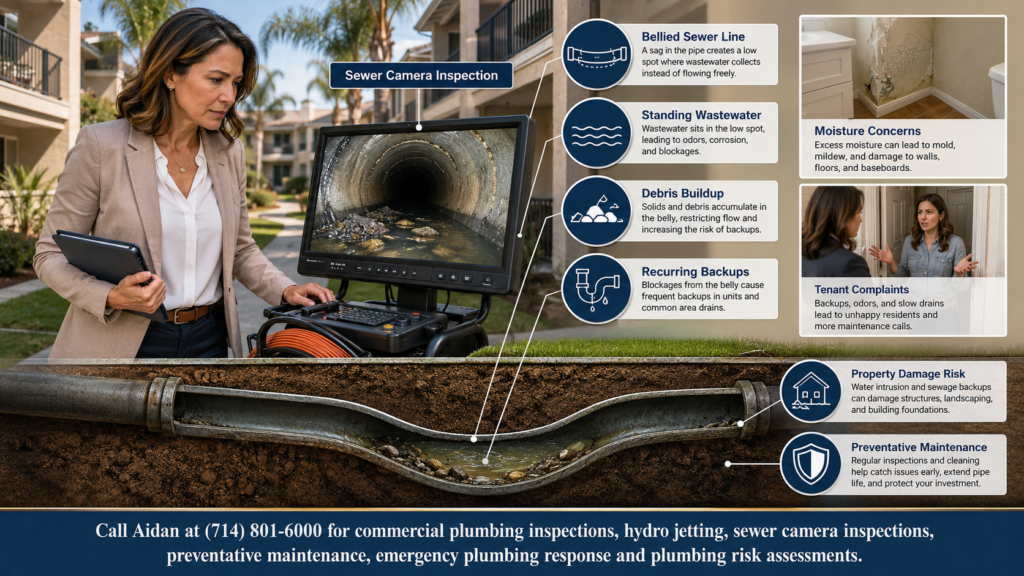
What Bellied Sewer Lines Mean for Your Home
A bellied sewer line means part of the underground pipe has sagged, creating a low spot where wastewater, grease, sludge, and debris collect. For Anaheim and Orange County properties, this can lead to recurring backups, tenant complaints, moisture concerns, property damage, and avoidable emergency plumbing calls.
Why Bellied Sewer Lines Matter in Anaheim Commercial Properties
For commercial property managers, HOA boards, apartment owners, facility managers, and maintenance directors, a sewer line problem is rarely “just plumbing.”
A bellied sewer line can quickly become an operational problem.
It can affect:
- Resident satisfaction
- Tenant retention
- Property reputation
- Emergency maintenance costs
- Insurance documentation
- Liability exposure
- Moisture and odor complaints
- Business continuity
- Preventative maintenance planning
In Anaheim, Orange County, and nearby Southern California communities, many commercial and multi-unit properties rely on aging plumbing infrastructure. Older sewer lines may have shifted because of soil movement, poor installation, ground settling, root pressure, construction activity, or years of underground wear.
The difficult part is this: a bellied sewer line is usually hidden underground. You may not see the problem until toilets clog repeatedly, drains gurgle, cleanouts overflow, or tenants report sewer odors.
That is why sewer camera inspections and plumbing risk assessments are so important.
What Is a Bellied Sewer Line?
A bellied sewer line is a section of sewer pipe that has sunk, sagged, or settled below the proper slope.
Sewer lines are supposed to carry wastewater downhill by gravity. When a pipe develops a belly, wastewater slows down or pools in the low section of the pipe.
Over time, that low section can collect:
- Toilet paper
- Grease
- Sludge
- Soap residue
- Food waste
- Dirt and sediment
- Tree root debris
- Foreign objects
- Commercial waste buildup
Instead of flowing smoothly to the city sewer or septic connection, the line begins acting like a trap.
That trapped material can cause recurring clogs, sewer backups, foul odors, and long-term pipe deterioration.
Direct Answer: Is a Bellied Sewer Line Serious?
Yes. A bellied sewer line is serious because it usually means the pipe’s slope has failed. Snaking or hydro jetting may temporarily clear buildup, but if wastewater continues to collect in the sagged section, the problem often comes back.
For commercial properties, this creates a cycle:
- Tenant complaint
- Emergency drain cleaning
- Temporary improvement
- Another backup
- More complaints
- Higher risk of property damage
The goal is not simply to clear the drain. The goal is to understand the condition of the sewer line and document the risk before it becomes a larger liability issue.
Common Signs of a Bellied Sewer Line
A sewer belly may not cause a total blockage right away. In many properties, the warning signs appear gradually.
Repeated Drain Backups
If the same restroom, laundry room, kitchen, or lower-level drain backs up again and again, the issue may be deeper than a surface clog.
Slow Drains Across Multiple Fixtures
When multiple drains are slow at the same time, the main sewer line may be restricted.
Gurgling Toilets or Drains
Gurgling can indicate air movement caused by poor drainage flow, partial blockage, or sewer line restrictions.
Sewer Odors
Standing wastewater inside a bellied line can contribute to odor complaints, especially near floor drains, bathrooms, laundry rooms, and commercial kitchens.
Moisture Concerns
Backups, seepage, and recurring overflows can create moisture concerns in walls, flooring, cabinets, baseboards, and shared spaces.
Recurring Tenant Complaints
For property managers, repeated tenant complaints are often the operational clue that a hidden plumbing issue needs deeper investigation.
Drain Cleaning That Does Not Last
If snaking or hydro jetting improves the problem temporarily but the issue returns, a sewer camera inspection may reveal a belly, offset joint, root intrusion, cracked pipe, or heavy buildup.
Why Bellied Sewer Lines Happen in Southern California
Anaheim and Orange County properties face unique underground plumbing risks because many properties have a combination of older sewer materials, soil movement, remodel history, tree roots, and long service lines.
Aging Plumbing Infrastructure
Older properties may have clay, cast iron, Orangeburg, concrete, or older plastic sewer lines. These materials can shift, crack, corrode, or separate over time.
Soil Settlement
Southern California soil conditions can change with moisture levels, irrigation, drought cycles, leaks, and ground movement. When soil under a sewer line settles unevenly, part of the pipe can sag.
Poor Original Installation
Some sewer lines were installed with inadequate bedding, poor slope, weak compaction, or improper support. Years later, that installation weakness can become a belly.
Tree Root Pressure
Roots may not directly create every sewer belly, but they can enter joints, add pressure, disturb soil, and worsen existing pipe defects.
Heavy Surface Loads
Parking lots, driveways, delivery areas, trash enclosures, and commercial vehicle traffic can affect underground piping if the sewer line is shallow or poorly supported.
Prior Repairs or Remodels
Older commercial properties often have plumbing additions from tenant improvements, unit conversions, restroom upgrades, kitchen changes, or laundry expansions. These modifications may create inconsistent slope or weak transition points.
Why This Is a Property Management Issue, Not Just a Plumbing Issue
A bellied sewer line affects more than maintenance.
It can create a risk-management problem.
For a property manager, the concern is not only, “Can we clear the drain today?”
The better question is:
“What is the condition of the sewer line, how likely is this to repeat, and do we have documentation to support the next decision?”
Bellied sewer lines can affect:
- Maintenance budgets
- Resident satisfaction scores
- Emergency response costs
- Vendor dispatch frequency
- Insurance documentation
- Lease compliance conversations
- Tenant communication
- Habitability concerns
- Mold and moisture prevention
- Long-term plumbing asset management
A recurring sewer issue without documentation can become difficult to defend, especially if tenants, owners, boards, or insurance carriers ask what was done to identify the cause.
Sewer Camera Inspections: The Most Important Diagnostic Step
A sewer camera inspection is one of the most useful tools for identifying a bellied sewer line.
A professional sewer camera inspection can help document:
- Pipe material
- Pipe depth
- Standing water
- Sagging sections
- Cracked pipe
- Root intrusion
- Offset joints
- Grease buildup
- Scale buildup
- Foreign objects
- Collapsed areas
- Direction and location of the problem
For commercial properties, this documentation matters. It turns a vague plumbing complaint into visual plumbing infrastructure intelligence.
Instead of saying, “The drain clogged again,” the report can show:
- Where the defect is located
- What type of defect exists
- Whether hydro jetting is appropriate
- Whether excavation or repair may be needed
- Whether the issue is maintenance-related or structural
- Whether further monitoring is recommended
That is the difference between reactive plumbing and plumbing asset management.
Can Hydro Jetting Fix a Bellied Sewer Line?
Hydro jetting can clean buildup inside the line, but it does not correct the physical sag in the pipe.
That distinction is important.
Hydro jetting may help remove:
- Grease
- Sludge
- Soft blockages
- Mineral buildup
- Root debris
- Accumulated waste
However, if the pipe has a low spot, material may continue collecting there after the cleaning.
In some cases, hydro jetting is a smart preventative maintenance tool. In other cases, it is only temporary relief before repair planning becomes necessary.
A sewer camera inspection before and/or after hydro jetting can help determine whether the line is simply dirty or physically bellied.
Bellied Sewer Line vs. Clogged Sewer Line
A clogged sewer line is a blockage.
A bellied sewer line is a pipe slope problem.
That difference matters because a clog may be cleared, but a belly usually remains.
A Clogged Sewer Line May Be Caused By:
- Wipes
- Grease
- Paper buildup
- Food waste
- Foreign objects
- Roots
- Scale
- Sludge
A Bellied Sewer Line May Be Caused By:
- Ground settlement
- Poor pipe support
- Soil movement
- Improper installation
- Pipe separation
- Heavy traffic loads
- Aging infrastructure
- Prior repair defects
A property can have both. A bellied section can become the place where clogs repeatedly form.
Why Bellied Sewer Lines Create Liability Concerns
For commercial and multi-unit properties, sewer backups can create serious exposure.
A backup may affect:
- Flooring
- Drywall
- Cabinets
- Baseboards
- Elevators
- Common areas
- Commercial suites
- Restrooms
- Storage rooms
- Tenant inventory
- Electrical rooms
- Adjacent units
When sewage or contaminated water is involved, the issue becomes more sensitive. Documentation, response time, containment, cleanup coordination, and communication all matter.
A bellied sewer line that causes repeated backups can raise questions such as:
- Was the property aware of recurring sewer issues?
- Was a sewer camera inspection performed?
- Was the defect documented?
- Was preventative maintenance scheduled?
- Were tenants notified appropriately?
- Was the owner or board advised of repair options?
- Was the line cleaned, monitored, or repaired?
Good documentation does not eliminate every risk, but it helps show that the property took reasonable steps to inspect, assess, and respond.
Commercial Examples: How Sewer Bellies Show Up
Apartment Building
A first-floor toilet backs up every few months. Maintenance clears it, but the issue returns. A sewer camera inspection shows standing water in a sagged section under the courtyard. Now the property manager can document the problem and present options to ownership.
HOA Community
Several units near one shared line report slow drains. Hydro jetting improves the flow temporarily. Camera footage shows a belly near a tree-lined walkway. The HOA can use the documentation for planning, board review, and budget discussion.
Retail Center
A restaurant tenant reports recurring floor drain backups. The issue affects odor complaints and business operations. Camera inspection reveals grease accumulation sitting in a low section of pipe. Preventative maintenance and repair planning help reduce emergency closures.
Office Building
Restroom drains gurgle after heavy usage. A camera inspection identifies a sagged sewer section near a parking lot. The facilities manager now has documentation for capital planning instead of repeated emergency calls.
What Property Managers Should Document
For liability reduction and insurance-related concerns, documentation is not a luxury. It is part of responsible property management.
Useful documentation includes:
- Date and time of complaint
- Location of affected fixture or unit
- Photos of visible conditions
- Description of backup or odor
- Vendor arrival time
- Drain cleaning method used
- Sewer camera inspection findings
- Video or still images from the line
- Notes on pipe material and condition
- Recommended next steps
- Tenant communication
- Preventative maintenance schedule
- Repair estimates, if needed
This creates a clear record for owners, boards, tenants, insurance carriers, and future vendors.
Preventative Maintenance for Bellied Sewer Lines
Not every bellied line requires immediate excavation, but every suspected bellied line deserves attention.
A preventative maintenance plan may include:
- Sewer camera inspections
- Scheduled hydro jetting
- Drain line mapping
- Cleanout access verification
- Recurring problem area tracking
- Tenant education on wipes and grease
- Documentation after each service
- Repair prioritization by risk level
- Plumbing risk assessments
- Budget planning for future repairs
The key is to stop treating every backup as a separate event. Recurring plumbing issues should be tracked as part of the property’s infrastructure history.
When Repair May Be Needed
A bellied sewer line may need repair when the sag is severe, the line repeatedly backs up, standing water remains after cleaning, or the pipe has structural damage.
Repair options may depend on:
- Pipe depth
- Pipe material
- Access points
- Location of the belly
- Soil conditions
- Surface conditions above the pipe
- Nearby utilities
- Building use
- Tenant impact
- Local code requirements
In some cases, a spot repair may be possible. In other cases, a longer sewer line replacement may be more practical.
A professional plumbing risk assessment helps determine whether the issue is urgent, monitorable, or ready for capital planning.
Why Bellied Sewer Lines Affect Resident Satisfaction
Residents and tenants usually do not care whether the problem is a belly, clog, root intrusion, or pipe slope issue.
They care that:
- Their toilet flushes
- Their sink drains
- Their unit does not smell
- Their floor does not flood
- Maintenance responds quickly
- The problem does not keep coming back
Recurring sewer problems create frustration. They also make the property appear disorganized, even when the maintenance team is working hard.
That is why camera-backed documentation is valuable. It helps property managers explain the issue clearly and make informed decisions instead of constantly apologizing for repeat problems.
Plumbing Asset Management: A Better Way to Think About Sewer Lines
Commercial properties should treat sewer lines as assets, not mysteries.
Plumbing asset management means understanding:
- What type of sewer lines the property has
- Where the cleanouts are located
- Which lines have recurring issues
- Which drains serve which units or areas
- Which pipes are aging
- Which sections need monitoring
- Which areas should be budgeted for repair
- Which emergencies can be prevented
A bellied sewer line is not just a repair issue. It is infrastructure intelligence.
The more information a property has, the better it can reduce emergencies, protect property value, and plan maintenance responsibly.
Direct Answer Section: What Should You Do If You Suspect a Bellied Sewer Line?
If you suspect a bellied sewer line, schedule a sewer camera inspection first. Avoid relying only on repeated snaking. Camera footage can confirm whether the issue is a simple blockage, root intrusion, pipe damage, or a sagged section holding wastewater.
Recommended next steps:
- Document the complaint history
- Inspect the line with a sewer camera
- Identify the exact location of standing water or sagging
- Determine whether hydro jetting is appropriate
- Review whether the issue is recurring or isolated
- Create a maintenance or repair plan
- Keep records for owner, board, tenant, and insurance documentation
FAQs About Bellied Sewer Lines
What does a belly in a sewer line mean?
A belly means part of the sewer pipe has sagged or settled, creating a low spot where water and waste collect instead of flowing properly.
Can a bellied sewer line cause repeated clogs?
Yes. A sewer belly can collect debris, grease, sludge, and paper, which can lead to recurring clogs and backups.
Can hydro jetting repair a sewer belly?
No. Hydro jetting can clean the pipe, but it does not fix the sag. It may help manage buildup if the pipe is still structurally usable.
How do you know if a sewer line is bellied?
A sewer camera inspection is the best way to identify a bellied line. The camera may show standing water, poor slope, debris collection, or pipe sagging.
Is a bellied sewer line an emergency?
It can become an emergency if it causes sewage backups, overflows, odors, or property damage. If backups are recurring, it should be inspected promptly.
Should commercial properties document sewer line problems?
Yes. Documentation supports liability reduction, insurance documentation, tenant communication, maintenance planning, and repair decisions.
Are bellied sewer lines common in older Orange County properties?
They can occur in older properties, especially where aging plumbing infrastructure, soil movement, roots, prior repairs, or poor installation are present.
Can a sewer belly affect multiple units?
Yes. If the bellied section is on a shared main line, multiple units, restrooms, or commercial spaces may be affected.
What is the best prevention strategy?
The best strategy is sewer camera inspections, scheduled maintenance, hydro jetting when appropriate, cleanout verification, and plumbing risk assessments.
Who should be concerned about bellied sewer lines?
Property managers, HOA boards, apartment owners, facility managers, commercial landlords, maintenance supervisors, and risk managers should all pay attention to recurring sewer line problems.