



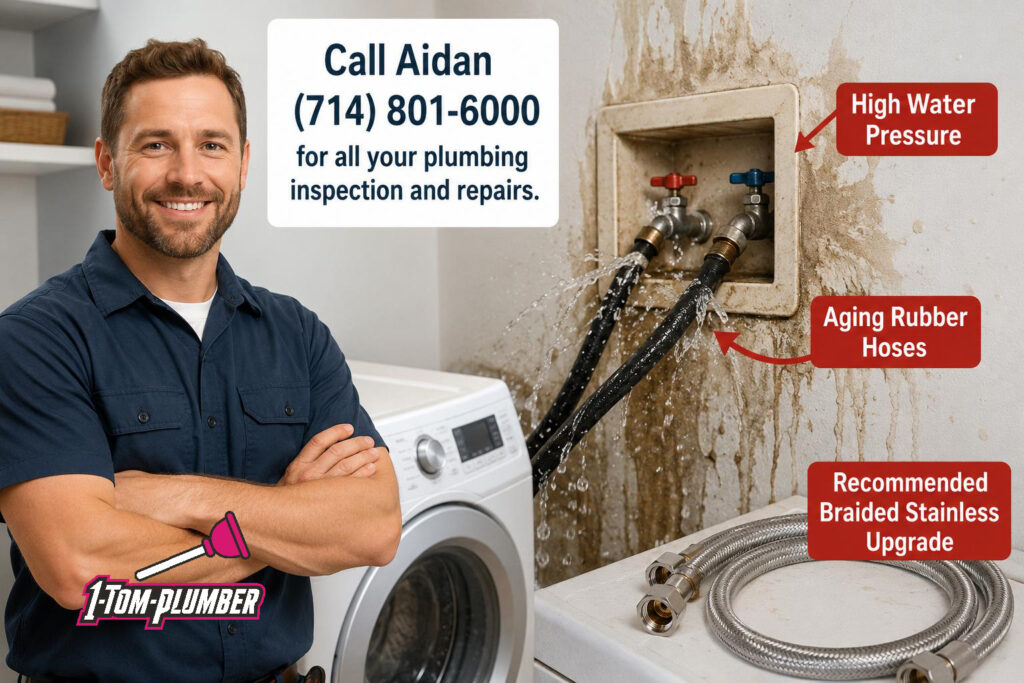
Washing Machine Hose Burst: How to Prevent Water Damage
Washing Machine Hose Burst incidents are one of the most common causes of sudden residential water damage. A worn, aging, or improperly installed washing machine hose can fail without warning, releasing large amounts of water into a home and causing expensive damage to flooring, walls, cabinets, and personal belongings.
Why Washing Machine Hoses Burst
Many homeowners never think about their washing machine hoses until water suddenly floods the laundry room. Unfortunately, these small hoses are under constant water pressure every day — even when the washer is not running.
When a hose weakens or cracks, it can release gallons of water quickly, causing damage to:
- Flooring
- Drywall
- Cabinets
- Baseboards
- Adjacent rooms
- Downstairs ceilings
- Personal belongings
In Southern California homes, especially older Anaheim properties, high water pressure and aging plumbing systems increase the risk significantly.
A simple hose failure can become a major insurance claim.
Why Washing Machine Hoses Are High Risk
Washing machine hoses are one of the most overlooked plumbing components in a home.
Here is why they fail so often:
1. Constant Water Pressure
Most hoses stay pressurized 24/7.
That means the hose is constantly expanding slightly under pressure, even while nobody is home.
Over time, this weakens the material.
2. Heat and Humidity
Laundry rooms experience moisture, vibration, and temperature swings.
These conditions slowly break down rubber hoses.
3. Vibration During Wash Cycles
Washing machines shake and vibrate during spin cycles.
This movement places stress on hose connections and fittings.
4. Aging Materials
Older rubber hoses dry out internally over time.
Small cracks may form without visible warning signs.
5. High Water Pressure
Many Anaheim and Orange County homes experience elevated water pressure.
Excessive pressure can shorten the lifespan of:
- Washing machine hoses
- Angle stops
- Supply lines
- Water heater connectors
- Faucets and fixtures
Rubber Hoses vs. Braided Stainless Hoses
Not all washing machine hoses are equal.
Standard Rubber Hoses
Older black rubber hoses are the most common type involved in water damage claims.
Problems include:
- Dry rot
- Cracking
- Bulging
- Weakening near fittings
- Sudden splitting
Rubber hoses are inexpensive but have a shorter lifespan.
Braided Stainless Steel Hoses
Braided stainless steel hoses are much stronger and safer.
Benefits include:
- Better pressure resistance
- Improved durability
- Reduced cracking risk
- Longer lifespan
- Better protection against bursting
The stainless braid protects the inner hose from expanding excessively under pressure.
Many plumbers strongly recommend braided stainless hoses for Anaheim homeowners.
How High Water Pressure Makes It Worse
High water pressure is one of the biggest hidden plumbing problems in Southern California.
Many homeowners enjoy strong shower pressure without realizing it quietly damages plumbing systems over time.
Excessive pressure can:
- Stretch hoses internally
- Weaken seals
- Damage appliance valves
- Increase leak risks
- Shorten plumbing component lifespan
In many cases, homeowners do not realize their pressure is too high until a failure occurs.
A professional plumbing inspection can test water pressure and inspect the home’s pressure regulating valve (PRV).
Warning Signs to Check
Washing machine hoses usually show warning signs before failing.
Homeowners should regularly inspect for:
Bulging Areas
A hose that appears swollen or uneven may be weakening internally.
Cracks or Dry Rot
Small surface cracks often indicate aging rubber.
Rust Near Connections
Corrosion near fittings may signal moisture leakage.
Dripping Water
Even small drips can indicate loose or damaged fittings.
Kinks or Sharp Bends
Improper installation can place stress on the hose walls.
Water Stains Behind the Washer
Moisture behind appliances should never be ignored.
How Often to Replace Hoses
Most plumbers recommend replacing washing machine hoses every 3–5 years, depending on:
- Water pressure
- Hose material
- Usage frequency
- Environmental conditions
Rubber hoses may require replacement sooner.
Even braided stainless hoses should still be inspected regularly.
Many homeowners forget the hoses are there because they are hidden behind the appliance.
Prevention Checklist
Here are simple ways Anaheim homeowners can reduce the risk of a washing machine hose burst:
Upgrade to Braided Stainless Hoses
These provide better long-term durability.
Inspect Hoses Twice Per Year
Look for cracks, bulges, rust, or leaks.
Avoid Sharp Bends
Ensure hoses are not pinched behind the machine.
Test Home Water Pressure
High pressure can quietly damage plumbing systems.
Replace Old Hoses Proactively
Do not wait for visible failure.
Turn Off Washer Valves During Long Vacations
This reduces pressure exposure while away.
Schedule a Plumbing Inspection
A professional inspection can identify hidden plumbing risks before emergencies happen.
FAQ
1. Why do washing machine hoses burst?
Most hose failures happen because of age, high water pressure, weakened rubber, vibration, or poor installation.
2. Are braided stainless hoses better?
Yes. Braided stainless steel hoses are generally safer and more durable than standard rubber hoses.
3. How often should washing machine hoses be replaced?
Most plumbers recommend replacement every 3–5 years depending on condition and water pressure.
4. Can high water pressure damage washing machine hoses?
Yes. Excessive pressure can weaken hoses over time and increase burst risks.
5. What are warning signs of a failing hose?
Bulging, cracking, rust, dripping, or water stains behind the washer are common warning signs.
6. Can a burst hose cause major water damage?
Absolutely. A burst hose can release large amounts of water quickly and damage flooring, drywall, cabinets, and nearby rooms.