



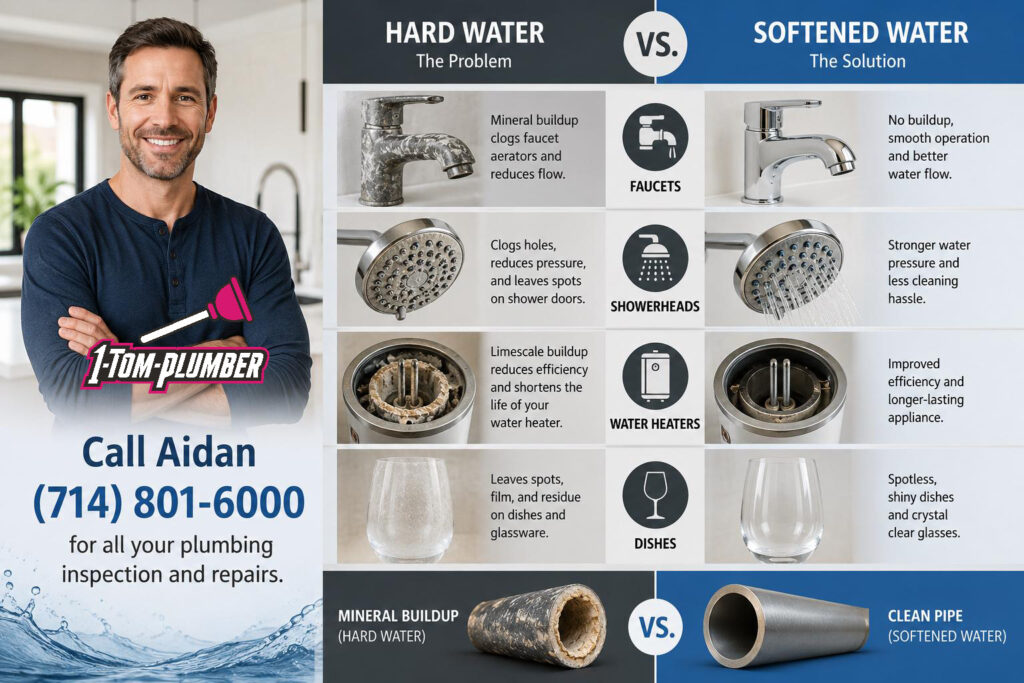
Hard Water vs Soft Water: What Anaheim Homeowners Should Know
Hard Water vs Soft Water is an important topic for Anaheim homeowners because local water quality can affect plumbing pipes, water heaters, fixtures, appliances, and utility costs. Understanding the differences between hard and soft water helps homeowners protect their plumbing systems and make informed water treatment decisions.
Soft water helps reduce mineral buildup and can improve soap performance, fixture appearance, and plumbing system longevity.
What Is Hard Water?
Hard water is water that contains dissolved minerals, mainly calcium and magnesium. As water travels underground through rock and soil, it naturally collects these minerals before entering the municipal water supply.
Many Anaheim and Orange County homes experience moderately hard to very hard water due to Southern California’s regional water sources.
Common hard water problems include:
- White chalky buildup on faucets
- Spots on dishes and shower glass
- Reduced water pressure
- Soap that does not lather well
- Scale buildup inside pipes and water heaters
That white crust around showerheads and sink fixtures is usually calcium scale left behind as water evaporates.
What Is Soft Water?
Soft water has most of the calcium and magnesium removed through a water softening system.
A typical water softener works through a process called ion exchange, where hardness minerals are replaced with sodium or potassium ions.
Benefits of soft water can include:
- Cleaner fixtures and glass
- Better soap and shampoo performance
- Softer-feeling laundry and towels
- Reduced scale buildup
- Improved appliance efficiency
- Longer plumbing system lifespan
Soft water does not mean “unsafe” water. It simply means the mineral hardness has been reduced.
How Hard Water Affects Faucets and Showerheads
Hard water slowly leaves mineral deposits inside faucets, aerators, showerheads, and valves.
Over time, homeowners may notice:
- Reduced water flow
- Uneven spray patterns
- Stiff faucet handles
- White buildup around fixtures
- Water spots that are difficult to clean
In severe cases, mineral deposits can partially clog plumbing fixtures and restrict water movement.
Anaheim homeowners often notice hard water buildup first in:
- Kitchen faucets
- Showerheads
- Refrigerator water dispensers
- Dishwasher interiors
- Bathroom sink fixtures
How Hard Water Affects Water Heaters
Water heaters are one of the most vulnerable plumbing components when hard water is present.
As water heats up, calcium minerals separate and settle inside the tank or attach to heating surfaces.
This can cause:
- Reduced heating efficiency
- Higher energy bills
- Rumbling or popping sounds
- Slower hot water recovery
- Premature water heater failure
Gas and electric water heaters both suffer from mineral scale buildup.
Tankless water heaters are especially sensitive because mineral deposits can restrict small internal water passages.
In many Southern California homes, annual flushing and inspection help reduce long-term scale damage.
Signs Your Home Has Hard Water
You may have hard water if you notice:
- White spots on dishes
- Chalky buildup on faucets
- Dry skin after showers
- Soap that feels difficult to rinse
- Reduced water pressure
- Frequent appliance maintenance
- Water heater noises
- Scale around shower drains or fixtures
Some homeowners also notice laundry becoming stiff or faded faster over time.
What Homeowners Can Do
Homeowners do not always need a full water softener immediately, but it is important to understand the condition of the plumbing system.
Helpful steps include:
Install a Water Softener
A professionally installed water softener can help reduce mineral buildup throughout the home.
Flush the Water Heater
Regular water heater flushing helps remove sediment and scale accumulation.
Clean Faucet Aerators
Removing and cleaning aerators can improve flow and remove calcium buildup.
Monitor Water Pressure
High pressure combined with hard water can increase plumbing wear.
Schedule Plumbing Inspections
Routine inspections help identify scale buildup before expensive damage occurs.
Professional plumbers may also recommend:
- Whole-home filtration systems
- Tankless water heater descaling
- Pressure regulation adjustments
- Fixture upgrades for hard water environments
FAQ
Is Southern California known for hard water?
Yes. Southern California, including Anaheim and Orange County, commonly has hard water with elevated mineral content.
Is hard water dangerous?
Hard water is generally not considered harmful to drink, but it can damage plumbing systems and appliances over time.
What does hard water buildup look like?
It often appears as white, chalky, crusty residue around faucets, showerheads, drains, and glass surfaces.
Does hard water damage water heaters?
Yes. Mineral scale buildup can reduce efficiency and shorten water heater lifespan.
Do water softeners help plumbing?
Yes. Water softeners can reduce scale buildup inside plumbing fixtures, appliances, and pipes.
Why does my shower glass always look spotted?
Hard water minerals dry onto surfaces and leave visible deposits after evaporation.