


Emergency Plumbing Tools Anaheim: Every Homeowner Should Know
Emergency Plumbing Tools Anaheim homeowners keep on hand can help reduce water damage while waiting for a professional plumber. Knowing where these tools are located—and how to use them safely—can make the difference between a small plumbing repair and a major water damage restoration project.
Being prepared does not mean doing major plumbing repairs yourself. It means minimizing damage, protecting your home, and responding quickly during an emergency.
Why Preparation Matters
Most plumbing emergencies start small.
A slow drip becomes cabinet damage.
A clogged drain becomes a sewer backup.
A leaking water heater floods the garage overnight.
In Southern California homes, especially older Anaheim properties, small plumbing issues can escalate quickly because many homes have aging valves, older drain systems, hard water buildup, and hidden pipe wear.
Having a few emergency plumbing tools nearby helps homeowners:
- Reduce water damage
- Shut water off quickly
- Detect hidden leaks early
- Prevent drain blockages
- Stay safer during emergencies
- Communicate better with plumbers
Prepared homeowners usually experience less property damage and lower repair costs.
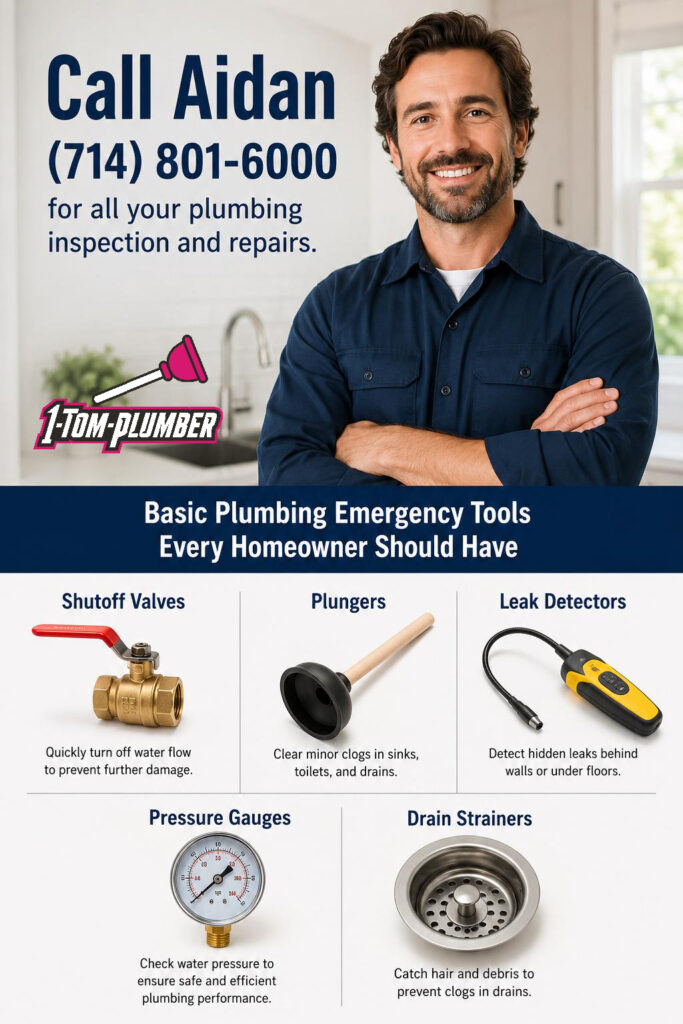
Tool 1: Main Water Shutoff
The most important plumbing “tool” in your home is actually knowledge.
Every homeowner should know:
- Where the main shutoff valve is
- How to turn it off
- Whether it still works properly
Common Anaheim shutoff locations include:
- Garage walls
- Side yards
- Near hose bibs
- Water meter boxes
If a pipe bursts, shutting off water quickly can prevent thousands of dollars in damage.
Most shutoff valves turn clockwise to close.
Important: Older valves can break if forced. If the valve feels stuck or corroded, do not force it aggressively.
A professional plumbing inspection can verify whether your shutoff valve operates safely.
Tool 2: Plunger
A quality plunger is one of the most useful emergency plumbing tools.
Homeowners should ideally keep:
- A toilet plunger (flange style)
- A sink/shower plunger (flat style)
Plungers work best on:
- Toilet clogs
- Slow drains
- Minor sink backups
What many homeowners do wrong:
- Using chemical drain cleaners first
- Using the wrong plunger type
- Plunging too aggressively
Repeated clogs may indicate:
- Grease buildup
- Root intrusion
- Main sewer blockage
- Venting problems
If clogs continue returning, a sewer camera inspection may be necessary.
Tool 3: Leak Detector
Small hidden leaks often cause major damage before homeowners notice them.
Simple leak detectors and water alarms can help identify:
- Water heater leaks
- Washing machine leaks
- Cabinet leaks
- Toilet supply leaks
- Slab leak warning signs
Modern water alarms can:
- Sound loud alerts
- Send smartphone notifications
- Detect moisture instantly
Good places to install leak detectors:
- Under sinks
- Behind washing machines
- Near water heaters
- Around refrigerators
- Near toilets
Early leak detection can prevent mold growth and structural damage.
Tool 4: Pressure Gauge
Many homeowners never check water pressure.
High water pressure quietly damages:
- Pipes
- Water heaters
- Supply lines
- Faucets
- Appliances
A simple hose-bib pressure gauge connects to an exterior faucet.
Typical safe residential pressure:
- Around 50–80 PSI
Excessive pressure may increase the risk of:
- Burst hoses
- Leaks
- Thermal expansion problems
- Premature plumbing wear
If pressure is consistently high, a plumber may recommend a pressure regulating valve inspection.
Tool 5: Drain Strainers
Drain strainers are inexpensive but extremely effective.
They help prevent:
- Hair clogs
- Soap buildup
- Food debris blockages
- Grease accumulation
Best places for drain strainers:
- Kitchen sinks
- Bathroom sinks
- Showers
- Laundry drains
Drain strainers are especially important in homes with:
- Long hair
- Large families
- Garbage disposals
- Older drain systems
Prevention is always easier than emergency drain cleaning.
Other Helpful Emergency Plumbing Items
Bucket and Towels
Simple but critical during active leaks.
Keep:
- Old towels
- Absorbent cloths
- A medium bucket
- Mop nearby
These help reduce floor and cabinet damage while waiting for professional service.
Flashlight
Power outages and nighttime leaks happen often during emergencies.
A bright flashlight helps homeowners:
- Inspect shutoff valves
- Check under sinks
- Navigate garages and crawlspaces safely
Avoid relying only on phone flashlights.
Adjustable Wrench
Useful for:
- Minor supply line tightening
- Turning some shutoff valves
- Disconnecting leaking hoses
Do not overtighten plumbing fittings. Excess force can create larger leaks.
Water Alarm
Water alarms provide early warning before visible flooding occurs.
They are especially valuable near:
- Water heaters
- Washing machines
- Bathrooms
- Under sinks
Some newer systems automatically shut off the water supply when leaks are detected.
Keep a Trusted Plumber’s Contact Information Handy
During emergencies, homeowners often waste valuable time searching online for help.
Keep your plumber’s number:
- Saved in your phone
- Posted near the water heater
- Shared with family members
Fast action during a plumbing emergency can dramatically reduce damage.
What Not to Do
During plumbing emergencies, avoid these common mistakes:
- Do not ignore small leaks
- Do not pour chemical drain cleaners repeatedly
- Do not force old shutoff valves
- Do not use toilets during suspected sewer backups
- Do not delay water heater leaks
- Do not assume slow drains will “fix themselves”
If sewage, contaminated water, or extensive flooding is present, homeowners should avoid direct exposure and contact trained professionals.
FAQ
What is the most important plumbing emergency tool?
Knowing how to shut off your home’s main water supply is the most important emergency skill for homeowners.
Should every homeowner own a plunger?
Yes. A proper plunger can resolve many simple clogs safely without chemicals.
Are water alarms worth it?
Yes. Water alarms can detect leaks early and help prevent expensive water damage.
What water pressure is too high?
Residential pressure above about 80 PSI may increase plumbing wear and leak risks.
Can drain strainers really help?
Absolutely. They help stop hair, food debris, and buildup before clogs form.
When should I call a plumber?
Call a plumber immediately for:
- Sewer backups
- Burst pipes
- Water heater leaks
- Multiple clogged drains
- Sudden loss of water
- Hidden leak concerns