



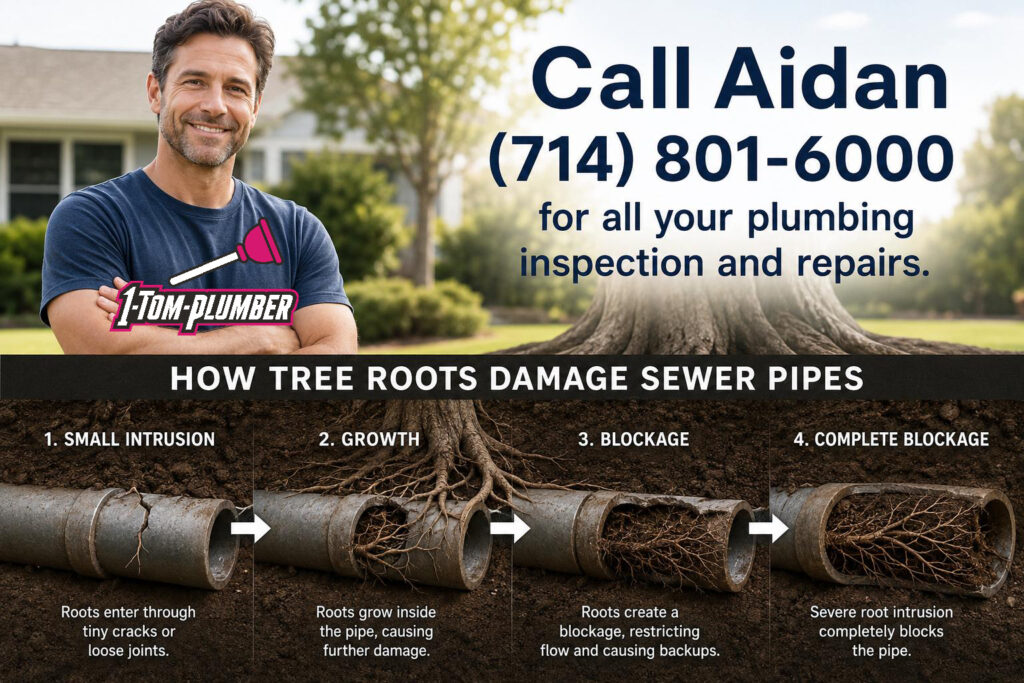
Tree Roots Sewer Pipes: How Roots Enter Through Tiny Cracks and Joints
Tree Roots Sewer Pipes become vulnerable when tiny cracks, loose joints, or aging pipe connections allow moisture to escape into the surrounding soil. Tree roots naturally seek water and nutrients, making underground sewer lines an attractive target. Once roots enter a pipe, they continue growing, restricting flow and increasing the risk of sewer backups and expensive plumbing repairs.
For many older homes in Anaheim, root intrusion is one of the most common causes of recurring drain and sewer problems.
Why Tree Roots Search for Sewer Lines
Roots constantly look for water, oxygen, and nutrients beneath the soil. Sewer pipes provide all three.
Unlike solid concrete, older underground sewer systems often develop:
- Tiny hairline cracks
- Loose pipe joints
- Small separations
- Corrosion damage
- Shifting connections
Even a very small leak can release enough moisture into surrounding soil for roots to detect.
Trees with aggressive root systems are especially attracted to sewer lines, including:
- Ficus trees
- Magnolia trees
- Pine trees
- Palm trees
- Large shade trees
- Fast-growing landscaping trees
Roots do not intentionally “break” pipes at first. They simply follow moisture. But once they enter the pipe, the damage grows rapidly.
How Tiny Cracks Become Big Problems
Most root intrusion begins with an opening that homeowners cannot see.
Common weak points include:
- Aging clay sewer lines
- Cast iron corrosion
- Offset joints
- Ground movement
- Soil settling
- Previous repair areas
A crack only a few millimeters wide is enough for fine feeder roots to enter.
Once inside the pipe:
- Roots absorb constant moisture
- Roots continue expanding
- Hair and grease begin catching
- Toilet paper and debris collect
- Flow slows down
- Sewer blockages develop
Over time, roots can completely fill sections of pipe.
This is why many homeowners notice repeated drain backups long before discovering the real issue underground.
Why Pipe Joints Are Vulnerable
Older sewer systems often contain multiple pipe sections connected by joints.
These joints naturally weaken over time because of:
- Earth movement
- Tree growth pressure
- Temperature changes
- Aging materials
- Improper installation
- Heavy traffic above the line
Older clay sewer line systems are especially vulnerable because the joints are more likely to separate over decades.
Once roots enter at the joint, they continue thickening year after year.
In severe cases, root masses can:
- Restrict nearly all wastewater flow
- Crack pipe walls further
- Cause sewage backups
- Collapse portions of sewer lines
Warning Signs
Homeowners often miss the early warning signs of root intrusion.
Common symptoms include:
- Multiple slow drains
- Toilets bubbling or gurgling
- Frequent toilet clogs
- Sewer odors
- Water backing up into tubs or showers
- Repeated drain snaking needs
- Wet spots in the yard
- Large trees near sewer lines
If clogs keep returning after cleaning, the issue may be deeper inside the main sewer line.
Camera Inspection and Hydro Jetting
A professional sewer camera inspection is the best way to confirm root intrusion.
During a sewer camera inspection Anaheim service, plumbers can identify:
- Root entry locations
- Cracked sewer pipe sections
- Offset joints
- Heavy grease buildup
- Sewer blockage severity
- Pipe material condition
A camera inspection helps avoid guessing and allows homeowners to see the actual condition of the sewer line.
After inspection, hydro jetting is often used to clear roots and debris.
Hydro jetting uses high-pressure water to:
- Cut through root masses
- Remove grease buildup
- Clean pipe walls
- Restore proper sewer flow
However, hydro jetting may not permanently solve the issue if the pipe itself is badly damaged.
Prevention and Repair Options
Homeowners can reduce the risk of future root intrusion by:
- Scheduling periodic sewer inspections
- Addressing slow drains early
- Avoiding chemical drain cleaners
- Replacing failing clay sewer lines
- Installing modern pipe materials
- Monitoring large trees near sewer systems
Depending on pipe condition, repair options may include:
- Spot repairs
- Pipe lining
- Section replacement
- Full sewer replacement
Early detection is usually far less expensive than waiting for a complete sewer backup.
FAQ
What causes roots in sewer pipes?
Roots are attracted to moisture leaking from tiny cracks, loose joints, or damaged sewer pipes.
Can roots grow through solid pipes?
Roots usually enter through existing weak points first. Once inside, they expand and worsen the damage.
Are clay sewer lines more vulnerable?
Yes. Older clay sewer line systems commonly develop separated joints that allow root intrusion.
Will drain snaking permanently remove roots?
Usually not. Snaking may temporarily open flow, but roots often grow back unless the pipe issue is repaired.
Is hydro jetting effective for roots?
Hydro jetting is very effective for clearing roots and cleaning pipe walls, especially when combined with camera inspection.
How do plumbers find roots underground?
A sewer camera inspection allows plumbers to visually inspect the inside of the sewer line and locate root intrusion precisely.