


Why Tenants Blame Property Managers for Plumbing Problems They Never See
In multifamily and commercial properties throughout Anaheim, Orange County, and nearby Southern California communities, many of the most expensive plumbing emergencies begin as invisible problems.
The difficult reality for property managers is this:
Tenants rarely see the early warning signs.
But they absolutely remember the flooding, sewage backup, water shutoff, ceiling stain, foul odor, mold concern, or late-night emergency that follows.
To residents, the property manager becomes the face of the problem — even when the plumbing issue was hidden deep inside walls, underground sewer lines, aging infrastructure, or deteriorating supply systems.
That emotional pressure creates operational stress that many multifamily, HOA, facilities, and commercial property managers know all too well:
- tenant complaints
- emergency dispatch calls
- owner pressure
- insurance documentation demands
- online reputation concerns
- recurring plumbing failures
- vendor coordination fatigue
- budget scrutiny
- fear of preventable property damage
The challenge is not simply fixing plumbing problems.
The challenge is preventing hidden plumbing problems from becoming visible catastrophes.
Direct Answer: Why Property Managers Get Blamed for Hidden Plumbing Problems
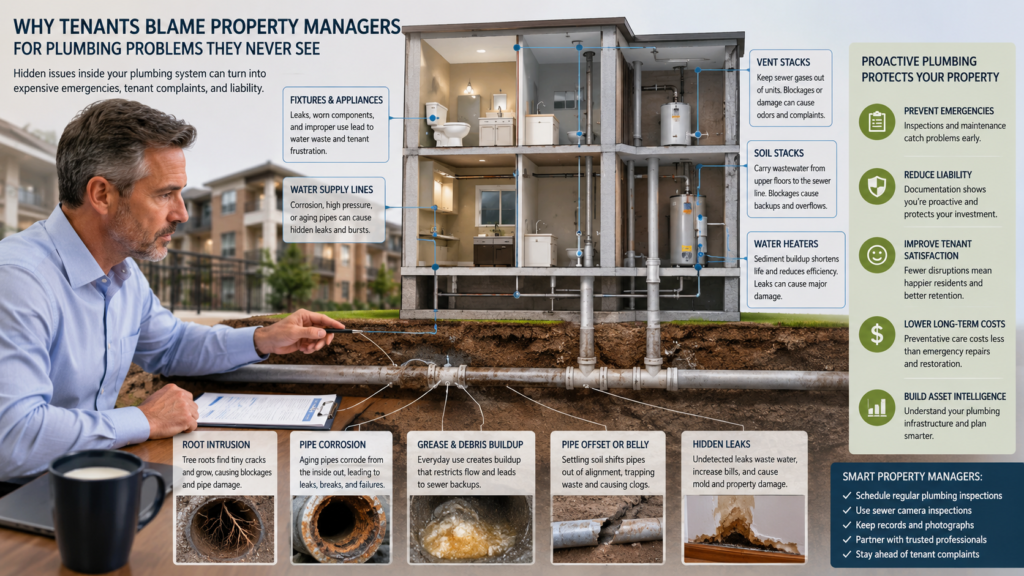
Property managers are often blamed because tenants experience the consequences, not the underlying infrastructure conditions. Residents usually do not see deteriorating sewer lines, pressure fluctuations, hidden moisture intrusion, root intrusion, slab leaks, or drain buildup until the issue disrupts their daily life. By the time the problem becomes visible, frustration has already escalated.
That is why preventative plumbing maintenance, plumbing risk assessments, sewer camera inspections, hydro jetting, and documentation have become critical operational tools for modern property management teams.
The Emotional Reality of Property Management Plumbing Emergencies
Tenants Do Not Differentiate Between “Hidden” and “Preventable”
A tenant may not understand:
- sewer line scaling
- hydrostatic pressure
- hidden pipe corrosion
- aging cast iron deterioration
- moisture migration
- slab leak indicators
- drain line buildup
- pressure regulator failures
What they do understand is:
- water coming through a ceiling
- toilets overflowing
- recurring drain backups
- foul odors
- mold concerns
- unusable kitchens or bathrooms
- emergency water shutoffs
- delayed vendor response
To tenants, these situations feel preventable.
Even when the plumbing issue developed slowly over years, the property manager often absorbs the emotional frustration because they are viewed as the responsible party overseeing the property.
Hidden Plumbing Problems That Commonly Trigger Tenant Complaints
1. Aging Plumbing Infrastructure
Many multifamily and commercial properties across Orange County and Southern California are operating with aging plumbing systems.
Older buildings commonly experience:
- pipe scaling
- corrosion
- deteriorating cast iron sewer lines
- galvanized pipe restrictions
- root intrusion
- pressure inconsistencies
- hidden moisture accumulation
These issues may remain invisible until a significant failure occurs.
2. Water Pressure Issues
High water pressure is one of the most overlooked causes of plumbing damage.
Excessive pressure can:
- stress fixtures
- weaken supply lines
- increase leak risks
- shorten appliance lifespan
- contribute to hidden pipe failures
Residents may only notice:
- noisy pipes
- inconsistent water flow
- fixture failures
- leaks
- water hammer sounds
Without preventative inspections, pressure-related damage often escalates quietly.
3. Sewer Line Blockages
Recurring drain complaints are often symptoms of larger underground sewer issues.
Common causes include:
- grease accumulation
- root intrusion
- pipe offsets
- aging cast iron scaling
- improper flushing habits
- collapsed lines
Sewer camera inspections help identify these hidden conditions before they become emergency backups.
4. Moisture Concerns Behind Walls and Floors
Hidden plumbing leaks can create:
- drywall damage
- flooring deterioration
- odor issues
- microbial growth concerns
- mold-related complaints
- indoor air quality concerns
Even after a visible leak is repaired, hidden moisture may remain trapped behind materials if not properly identified and documented.
Why Recurring Plumbing Problems Damage Tenant Trust
Repeated Issues Create the Appearance of Neglect
Tenants are more forgiving of isolated emergencies than repeated plumbing disruptions.
Recurring issues often create perceptions such as:
- “management never fixes the real problem”
- “this building always has plumbing problems”
- “maintenance is reactive instead of proactive”
- “ownership is cutting corners”
This perception can affect:
- tenant retention
- lease renewals
- online reviews
- resident satisfaction scores
- owner confidence
- operational morale
In competitive Southern California rental markets, reputation matters.
The Operational Cost of Reactive Plumbing Management
Emergency Plumbing Is Almost Always More Expensive
Reactive plumbing management often leads to:
- after-hours emergency costs
- water damage restoration expenses
- tenant relocation complications
- insurance claims
- mold investigations
- business interruption
- increased maintenance labor
- repeated vendor dispatching
Preventative maintenance programs help reduce the likelihood of catastrophic failures.
How Sewer Camera Inspections Reduce Liability
Sewer Camera Inspections Create Plumbing Infrastructure Intelligence
One of the biggest challenges property managers face is proving they acted responsibly before a loss occurred.
Sewer camera inspections help create documented evidence of:
- pipe conditions
- root intrusion
- line buildup
- corrosion
- offsets
- cracking
- blockages
- deterioration trends
This documentation helps:
- support maintenance decisions
- justify budget requests
- improve vendor coordination
- reduce liability exposure
- strengthen insurance documentation
- improve long-term plumbing asset management
In many commercial and multifamily environments, sewer camera inspections have become an important component of risk management planning.
Why Hydro Jetting Is Important for Multifamily Properties
Drain Problems Often Build Slowly Over Time
Many recurring drain issues are not caused by a single blockage.
Instead, years of buildup accumulate inside drain and sewer lines from:
- grease
- debris
- soap residue
- scale buildup
- organic waste
- tenant usage patterns
Hydro jetting helps remove accumulated buildup throughout the pipe interior rather than simply punching temporary openings through obstructions.
This can help:
- improve flow
- reduce recurring backups
- lower emergency call frequency
- extend plumbing infrastructure lifespan
- improve preventative maintenance performance
Plumbing Risk Assessments Help Property Managers Stay Ahead
Preventative Maintenance Is Easier to Explain Than Emergencies
Property managers often face difficult conversations with ownership groups after a plumbing loss.
Questions may include:
- “Could this have been prevented?”
- “Why did this happen?”
- “Were there warning signs?”
- “What documentation exists?”
- “Has this happened before?”
- “What maintenance was performed?”
Plumbing risk assessments help answer those questions proactively.
A comprehensive plumbing risk assessment may include:
- pressure evaluations
- sewer camera inspections
- drain condition reviews
- leak detection observations
- plumbing infrastructure mapping
- moisture concern identification
- maintenance recommendations
- emergency preparedness guidance
This creates operational visibility before failures occur.
Commercial Example: Multifamily Plumbing Liability Scenario
A Common Orange County Situation
Imagine a 1980s multifamily property in Orange County experiencing:
- intermittent tenant drain complaints
- occasional odors
- slow drainage
- repeated maintenance calls
Without preventative investigation, management assumes the issues are isolated.
Months later:
- a sewer backup impacts multiple units
- water damages flooring and drywall
- residents complain publicly online
- insurance documentation becomes urgent
- vendors must coordinate emergency response
- ownership demands answers
A prior sewer camera inspection may have revealed:
- root intrusion
- heavy scaling
- deteriorating cast iron
- line offsets
- progressive blockage risks
This is why preventative infrastructure intelligence matters.
Documentation Matters More Than Most Property Managers Realize
Insurance and Liability Often Depend on Records
Detailed plumbing documentation can help demonstrate:
- preventative action
- maintenance consistency
- inspection frequency
- vendor recommendations
- infrastructure conditions
- emergency response timelines
Strong documentation helps reduce confusion during:
- insurance claims
- ownership reviews
- resident disputes
- vendor coordination
- property damage investigations
In today’s environment, documentation is operational protection.
Signs Your Property May Have Hidden Plumbing Risks
Warning Signs Property Managers Should Not Ignore
Recurring Tenant Complaints
- slow drains
- intermittent backups
- sewer odors
- inconsistent water pressure
Building Indicators
- ceiling stains
- bubbling paint
- moisture odors
- warped flooring
- unexplained utility increases
Operational Red Flags
- repeated emergency dispatches
- frequent drain cleaning calls
- recurring unit-specific issues
- aging infrastructure without inspection history
Emergency Plumbing Prevention Starts With Visibility
You Cannot Prevent What You Cannot See
One of the biggest misconceptions in property management is believing that “no visible issue” means “no plumbing risk.”
Hidden infrastructure problems often progress quietly until:
- pressure failures occur
- sewer systems back up
- moisture spreads
- structural damage develops
- tenant frustration escalates
Preventative visibility changes that dynamic.
Plumbing Asset Management Is Becoming a Competitive Advantage
Modern Property Management Requires Infrastructure Awareness
Forward-thinking property managers increasingly treat plumbing systems as managed assets rather than reactive repair items.
That shift includes:
- scheduled inspections
- preventative hydro jetting
- sewer camera documentation
- moisture concern monitoring
- pressure management
- maintenance tracking
- risk-based budgeting
This proactive mindset helps reduce:
- operational disruption
- resident dissatisfaction
- preventable emergencies
- long-term infrastructure deterioration
FAQs
Why do tenants blame property managers for plumbing problems?
Tenants usually experience the visible consequences of hidden plumbing issues, including backups, leaks, odors, and water damage. Because property managers oversee building operations, residents often associate the problem with management responsibility.
What hidden plumbing issues are common in multifamily properties?
Common hidden issues include sewer line deterioration, root intrusion, slab leaks, moisture intrusion, pipe corrosion, high water pressure, drain buildup, and aging cast iron plumbing systems.
How do sewer camera inspections help property managers?
Sewer camera inspections provide visual documentation of underground pipe conditions, helping identify deterioration, buildup, root intrusion, and blockages before major failures occur.
What is hydro jetting?
Hydro jetting uses high-pressure water to clean buildup inside drain and sewer pipes. It helps improve flow and reduce recurring backups in commercial and multifamily properties.
Why is plumbing documentation important for insurance claims?
Documentation helps demonstrate preventative maintenance efforts, inspection history, and response timelines, which may support operational accountability and insurance-related investigations.
How can preventative plumbing maintenance reduce emergencies?
Routine inspections, hydro jetting, pressure evaluations, and sewer camera assessments help identify hidden risks early before they escalate into costly emergencies.