


The Hidden Liability of Ignoring Small Water Leaks in Multifamily Properties
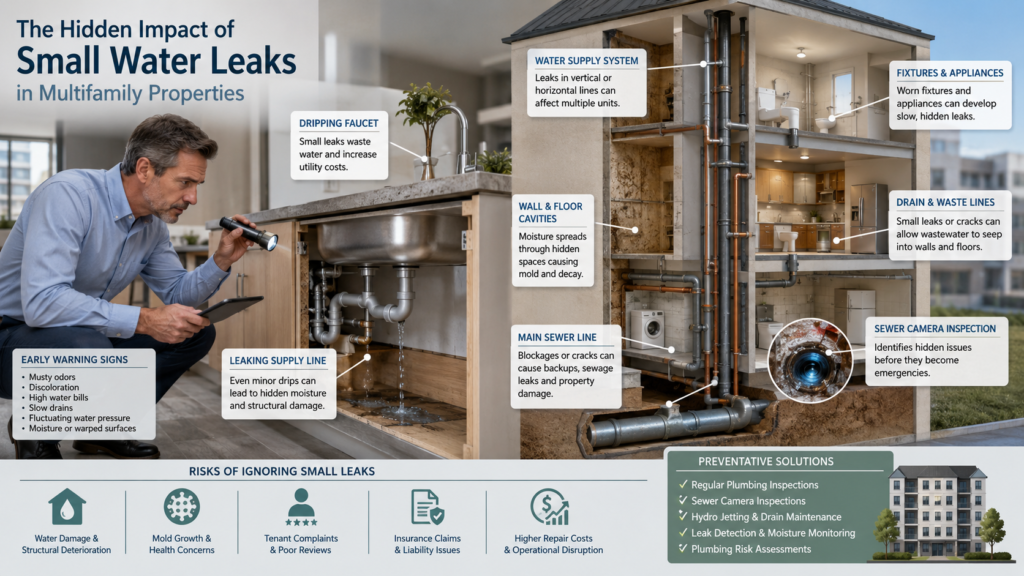
Multifamily Water Leak Liability often begins with a small plumbing leak that appears harmless. What starts as a minor drip beneath a sink, behind, seemingly harmless plumbing leak a wall, or inside a mechanical room can quickly escalate into property damage, tenant complaints, mold concerns, insurance claims, and significant repair expenses if not addressed promptly.
In multifamily housing throughout Anaheim, Orange County, and nearby Southern California communities, small leaks are frequently ignored because they appear minor, intermittent, or non-urgent. Unfortunately, these “small” leaks often become large operational problems involving:
- tenant complaints
- mold concerns
- insurance documentation issues
- property damage
- online reputation problems
- emergency plumbing failures
- resident displacement
- vendor coordination stress
- owner frustration
- rising maintenance costs
Property managers already balance resident satisfaction, maintenance budgets, vendor scheduling, owner expectations, and emergency response coordination. Plumbing failures add another layer of pressure that can quickly disrupt operations across an entire building.
The challenge is that many plumbing risks remain invisible until damage has already spread.
Why Small Water Leaks Become Major Commercial Liability Issues
Water Travels Further Than Most Property Managers Realize
A slow leak under a sink or behind a wall may not seem urgent initially. However, moisture can migrate through:
- drywall
- framing
- insulation
- flooring systems
- subfloors
- ceiling cavities
- adjacent units
In multifamily housing, water rarely stays confined to one location.
One tenant’s “minor drip” can eventually affect:
- neighboring units
- common areas
- electrical systems
- flooring
- cabinetry
- HVAC systems
- insulation
- structural materials
This creates operational disruption and increases the likelihood of:
- insurance claims
- tenant dissatisfaction
- legal exposure
- remediation expenses
- negative online reviews
The Emotional Reality Property Managers Face
Property management professionals often operate under constant pressure.
Common Multifamily Plumbing Stressors
Tenant Complaints
Residents expect fast responses when leaks, backups, odors, or water intrusion occur.
Late-Night Emergencies
Burst pipes, overflowing drains, and slab leaks rarely happen during business hours.
Owner Pressure
Owners expect preventative maintenance, cost control, and minimized liability exposure.
Vendor Coordination
Property managers must coordinate plumbers, remediation vendors, restoration teams, and sometimes insurance adjusters simultaneously.
Repeat Plumbing Problems
Recurring drain backups and hidden leaks create frustration when problems continue despite prior repairs.
Online Reviews & Reputation Management
Water damage incidents can negatively affect resident retention and future leasing.
Ignoring small leaks often allows these operational pressures to compound over time.
Hidden Water Damage Often Starts Before Visible Signs Appear
Early Moisture Concerns Are Frequently Invisible
One of the biggest challenges in multifamily plumbing infrastructure management is that hidden damage develops silently.
Common early warning signs include:
- musty odors
- fluctuating water pressure issues
- recurring drain clogs
- bubbling paint
- warped flooring
- elevated water bills
- slow drains
- intermittent sewer odors
- unexplained moisture readings
- discoloration around baseboards or ceilings
By the time visible staining appears, moisture intrusion may already be extensive.
This is especially common in older multifamily buildings throughout Anaheim and Orange County where aging plumbing infrastructure may include:
- cast iron drain systems
- galvanized piping
- deteriorating sewer lines
- aging shut-off valves
- slab plumbing vulnerabilities
Insurance Documentation and Liability Reduction
Preventative Documentation Matters
Insurance carriers increasingly examine whether reasonable preventative maintenance was performed before major water damage occurred.
Property managers who maintain plumbing documentation often place themselves in a stronger position during claims handling.
Useful documentation may include:
- plumbing inspection reports
- sewer camera inspection findings
- hydro jetting service records
- leak detection documentation
- moisture readings
- maintenance logs
- resident complaint tracking
- plumbing risk assessments
- before-and-after photos
- emergency response timelines
Without documentation, proving proactive property management becomes more difficult.
Sewer Camera Inspections Help Detect Hidden Problems Early
Featured Snippet Answer
Sewer camera inspections help multifamily property managers identify hidden drain and sewer problems before they become emergencies. Camera inspections can reveal root intrusion, pipe offsets, grease buildup, cracked lines, corrosion, standing water, and recurring blockage risks without destructive excavation.
Plumbing Infrastructure Intelligence Matters
Modern sewer camera inspections provide valuable insight into underground plumbing systems.
For multifamily property managers, this creates:
- better maintenance planning
- improved vendor accountability
- reduced guesswork
- earlier problem detection
- improved budgeting visibility
- reduced emergency response frequency
Sewer camera inspections may identify:
- root intrusion
- pipe bellies
- cracked sewer lines
- scale buildup
- grease accumulation
- deteriorating cast iron systems
- hidden obstructions
- recurring blockage causes
This plumbing infrastructure intelligence allows managers to make informed maintenance decisions instead of reacting after failures occur.
Hydro Jetting Supports Preventative Maintenance Programs
Emergency Plumbing Prevention Starts With Drain Maintenance
Hydro jetting is often misunderstood as only an emergency drain cleaning solution.
In reality, hydro jetting can serve as a preventative maintenance tool for multifamily properties.
Hydro jetting helps:
- remove grease buildup
- clear sludge accumulation
- reduce recurring backups
- improve drain flow
- minimize emergency calls
- extend drain system performance
- reduce tenant disruption
Properties with recurring kitchen line backups, laundry drain issues, or aging sewer systems often benefit from scheduled preventative hydro jetting programs.
This is especially important in high-density multifamily communities throughout Southern California where plumbing systems experience heavy daily usage.
Water Pressure Issues Can Quietly Damage Plumbing Systems
High Water Pressure Creates Hidden Risk
Many multifamily properties experience excessive water pressure without realizing the long-term consequences.
High water pressure can contribute to:
- pipe stress
- supply line failures
- valve deterioration
- appliance damage
- fixture leaks
- hidden wall leaks
Pressure fluctuations may also worsen existing weaknesses within aging plumbing infrastructure.
Routine plumbing risk assessments often include:
- pressure testing
- leak evaluations
- shut-off inspections
- fixture inspections
- drain performance evaluations
Preventative inspections help identify risk before catastrophic failures occur.
Multifamily Water Leaks Often Trigger Secondary Damage
Plumbing Failures Frequently Expand Beyond Plumbing
A small leak may eventually require:
- drywall replacement
- flooring replacement
- mold remediation
- tenant relocation
- contents restoration
- odor remediation
- reconstruction work
- insurance coordination
Water intrusion frequently affects:
- insulation
- electrical systems
- cabinetry
- framing
- common areas
- neighboring units
The total cost of secondary damage often exceeds the original plumbing repair itself.
Operational Continuity Is a Major Property Management Priority
Property managers are not simply managing plumbing systems.
They are managing:
- resident experience
- operational continuity
- owner expectations
- liability exposure
- maintenance budgets
- vendor relationships
- emergency preparedness
A single unresolved leak can disrupt:
- move-ins
- leasing schedules
- resident retention
- maintenance staffing
- building operations
- online reputation
Preventative maintenance strategies help reduce reactive chaos.
What a Commercial Plumbing Risk Assessment Typically Includes
Proactive Plumbing Evaluations Help Reduce Emergencies
Commercial plumbing risk assessments may include:
Drain & Sewer Evaluations
- sewer camera inspections
- drain flow analysis
- blockage identification
- root intrusion review
Leak Detection
- moisture evaluations
- hidden leak inspections
- pressure testing
Water Pressure Evaluations
- pressure regulation review
- fixture performance testing
Preventative Maintenance Recommendations
- hydro jetting schedules
- repair prioritization
- aging infrastructure identification
Documentation
- inspection photos
- written findings
- maintenance recommendations
- risk observations
These evaluations help property managers better plan maintenance budgets and reduce surprise plumbing failures.
Common Multifamily Plumbing Risks in Orange County and Southern California
Regional Conditions Affect Plumbing Systems
Many Southern California multifamily properties face:
- aging cast iron drain systems
- slab leak risks
- hard water mineral buildup
- root intrusion
- high occupancy plumbing demand
- deferred maintenance issues
- older pressure regulation systems
In Anaheim and Orange County, older multifamily communities often experience recurring drain issues tied to decades-old infrastructure.
Preventative maintenance becomes increasingly important as systems age.
How Preventative Plumbing Helps Protect Resident Satisfaction
Resident satisfaction is closely tied to maintenance responsiveness.
Recurring plumbing issues often create:
- resident frustration
- negative reviews
- lease non-renewals
- increased complaint volume
Tenants typically remember:
- recurring backups
- water shutoffs
- delayed response times
- odors
- visible damage
- unresolved leaks
Preventative maintenance programs help reduce recurring disruptions and improve resident confidence in property management responsiveness.
Commercial Example: Small Leak → Large Liability
H3: Realistic Multifamily Scenario
A property manager receives repeated complaints about intermittent moisture beneath a second-floor kitchen sink.
Initially, the issue appears minor.
Weeks later:
- cabinet swelling develops
- hidden mold growth forms
- water spreads into an adjacent unit
- drywall staining appears downstairs
- tenant complaints escalate
- insurance documentation becomes necessary
- emergency mitigation vendors are required
What started as a small leak becomes:
- a resident relations issue
- an operational disruption
- a liability concern
- a budgeting challenge
Early inspection and documentation could have significantly reduced overall exposure.
FAQ Section
Can small water leaks really cause major property damage?
Yes. Small leaks can lead to mold growth, structural deterioration, hidden moisture intrusion, resident complaints, and costly secondary damage if left unresolved.
Why are sewer camera inspections important for multifamily properties?
Sewer camera inspections help identify hidden drain and sewer problems before backups or failures occur. They improve plumbing infrastructure visibility and support preventative maintenance planning.
How does hydro jetting help prevent emergencies?
Hydro jetting removes buildup inside drain lines, helping reduce recurring clogs, backups, and emergency plumbing failures in multifamily properties.
What are signs of hidden plumbing leaks?
Warning signs include musty odors, elevated water bills, water pressure issues, slow drains, warped flooring, bubbling paint, recurring drain backups, and unexplained moisture.
Why is plumbing documentation important for insurance claims?
Inspection reports, maintenance records, sewer camera findings, and leak documentation help demonstrate proactive property management and may assist during insurance-related investigations.