



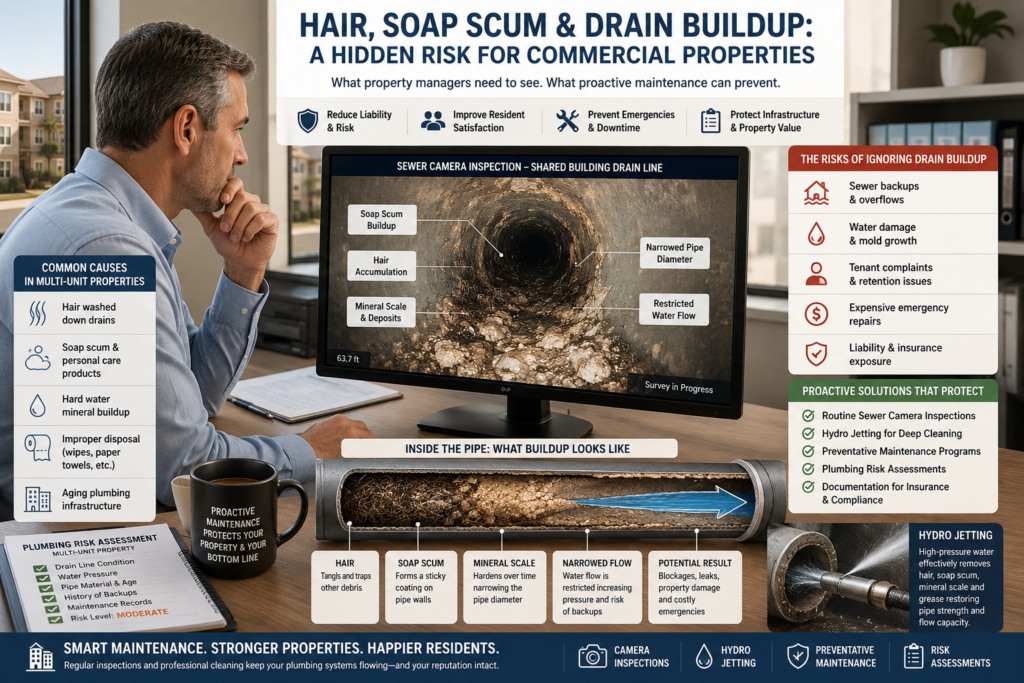
Hair, Soap Scum, and Drain Buildup: What Homeowners Need to Know
Hair and soap scum combine with mineral deposits to create dense drain blockages that increase pressure, slow drainage, damage aging plumbing infrastructure, and trigger preventable emergencies. In Anaheim and Orange County properties, routine inspections, hydro jetting, and sewer camera assessments are essential for liability reduction and operational continuity.
Property owners and facility managers across Anaheim, Orange County, and Southern California often underestimate what appears to be a simple “slow drain.”
But in multi-family housing, mixed-use developments, retail centers, hospitality properties, and HOA communities, minor drain buildup is rarely minor.
Hair. Soap scum. Mineral deposits from hard water. Grease. Debris.
Together, they form a compounding risk factor inside aging plumbing systems — and when left unmanaged, that risk escalates quickly.
This guide explains what commercial decision-makers need to understand about drain buildup, how it affects property protection and insurance exposure, and how preventative maintenance protects both infrastructure and reputation.
Why Hair and Soap Scum Are a Bigger Commercial Risk Than Most Property Owners Realize
In Southern California, several environmental and infrastructure factors intensify buildup risks:
- Hard water mineral content
- Aging plumbing infrastructure
- High tenant turnover
- Water pressure issues
- Shared drain lines in multi-unit properties
- Older cast iron or clay sewer laterals
When hair combines with soap residue and mineral scale, it forms a sticky interior lining along pipe walls. Over time:
- Pipe diameter narrows
- Drain velocity slows
- Internal pressure increases
- Backups become more likely
- Moisture concerns spread behind walls and under flooring
This is not just a plumbing nuisance. It becomes:
- A liability exposure
- A tenant satisfaction issue
- A potential insurance claim
- A business interruption event
The Operational Impact on Commercial and Multi-Unit Properties
1. Tenant Complaints Escalate Quickly
In apartment communities or commercial buildings, one slow drain often signals a systemic problem in shared lines.
Common complaints include:
- Slow showers and sinks
- Sewer odors
- Gurgling drains
- Overflowing fixtures
- Repeated clogs despite snaking
Unresolved plumbing issues directly impact resident satisfaction and online reviews — a measurable operational risk.
2. Hidden Damage Behind Walls and Under Slabs
Drain buildup does not just stop water flow. It creates pressure imbalances that can:
- Crack aging pipes
- Worsen joint separation
- Trigger slab leaks
- Contribute to moisture intrusion
- Create conditions for mold growth
By the time water becomes visible, hidden structural damage may already be underway.
Property damage prevention requires early detection — not reactive emergency response.
3. Insurance and Liability Concerns
Insurance carriers increasingly scrutinize maintenance documentation for water-related claims.
If a preventable backup occurs and there is no record of:
- Routine inspections
- Drain maintenance
- Sewer camera assessments
- Hydro jetting service
- Plumbing risk assessments
Coverage disputes may follow.
Documentation is not optional. It is part of liability reduction strategy.
What Causes Drain Buildup in Anaheim and Orange County Properties?
Hard Water and Mineral Scaling
Southern California water contains elevated mineral content. Over time:
- Calcium and magnesium deposits adhere to pipe interiors
- Soap residue hardens more rapidly
- Interior pipe diameter shrinks
This accelerates buildup beyond what many property owners expect.
Aging Plumbing Infrastructure
Many buildings in Anaheim and surrounding communities were constructed decades ago. Older systems often include:
- Cast iron drain lines
- Clay sewer laterals
- Galvanized components
These materials are more vulnerable to corrosion, scaling, and root intrusion.
Routine sewer camera inspections provide plumbing infrastructure intelligence that prevents catastrophic failure.
Improper Waste Disposal
Commercial tenants may unknowingly contribute to drain blockages by flushing or rinsing:
- Wipes (even “flushable” types)
- Paper towels
- Grease
- Feminine hygiene products
- Excessive paper
In multi-unit properties, one misuse event can affect multiple units.
Emergency Plumbing Prevention: A Strategic Approach
Reactive plumbing is expensive plumbing.
Emergency mitigation costs include:
- After-hours service premiums
- Water extraction
- Dry-out services
- Flooring replacement
- Tenant relocation
- Lost revenue
Preventative maintenance costs a fraction of emergency restoration.
Preventative Maintenance Framework for Commercial Properties
1. Scheduled Sewer Camera Inspections
Sewer camera inspections provide:
- Real-time pipe condition assessment
- Identification of buildup before blockage
- Detection of cracks or separations
- Root intrusion visibility
- Documentation for insurance records
Camera documentation creates asset intelligence that informs long-term plumbing asset management planning.
2. Hydro Jetting for Deep Line Cleaning
Unlike basic snaking, hydro jetting:
- Removes hardened soap scum
- Clears hair accumulation
- Breaks apart mineral scale
- Restores pipe diameter
- Improves flow efficiency
Hydro jetting is particularly effective in properties with recurring clogs or known buildup history.
3. Plumbing Risk Assessments
A comprehensive plumbing risk assessment evaluates:
- Pipe age and materials
- Water pressure stability
- Drain line slope integrity
- Backup history
- Maintenance gaps
This proactive strategy supports:
- Emergency plumbing prevention
- Budget forecasting
- Infrastructure longevity
- Property damage prevention
Plumbing Asset Management: Thinking Beyond the Immediate Clog
Smart property managers treat plumbing systems as infrastructure assets — not just service calls.
Asset management includes:
- Mapping sewer lines
- Tracking maintenance intervals
- Storing inspection footage
- Documenting pressure readings
- Recording repair history
This approach supports operational continuity and long-term capital planning.
Early Warning Signs of Drain Buildup
Commercial property teams should train maintenance staff to monitor:
- Slow multi-unit drainage
- Simultaneous fixture backups
- Recurring clogs in the same stack
- Sewer odors
- Gurgling sounds
- Rising water levels in floor drains
These indicators suggest systemic buildup — not isolated fixture issues.
The Cost of Ignoring Buildup in Southern California
Ignoring buildup in aging plumbing systems can result in:
- Main line sewer backups
- Slab leaks
- Foundation damage
- Mold remediation expenses
- Code violations
- Business interruption
- Litigation exposure
In competitive rental markets across Anaheim and Orange County, plumbing reliability directly impacts occupancy and brand reputation.
Case Scenario: Multi-Unit Property in Anaheim
A 24-unit property experienced repeated shower drain clogs over six months.
Initial response: snaking individual drains.
Result: temporary relief, recurring complaints.
A full sewer camera inspection revealed:
- Heavy soap and hair accumulation in shared vertical stacks
- Mineral scaling narrowing pipe diameter by nearly 40%
- Early corrosion in cast iron sections
Hydro jetting restored flow, reduced tenant complaints, and prevented what would likely have become a full-stack backup event.
Preventative intervention avoided:
- Water damage to lower units
- Insurance claim
- Tenant displacement
- Emergency response costs
How Drain Maintenance Supports Insurance Documentation
Insurance providers favor documented preventative care.
Maintain records of:
- Inspection dates
- Camera findings
- Hydro jetting service reports
- Repair invoices
- Risk assessments
- Before-and-after documentation
This establishes due diligence in the event of a water damage claim.
Documentation strengthens liability reduction strategies.
FAQs: Hair, Soap Scum, and Commercial Drain Risk
What is the fastest way to remove heavy soap scum buildup in commercial drain lines?
Hydro jetting is the most effective solution because it removes hardened scale and residue rather than punching a temporary hole through debris.
How often should commercial properties schedule sewer camera inspections?
Properties with aging plumbing infrastructure in Southern California should consider annual inspections, with higher-risk properties evaluated more frequently.
Are recurring slow drains a sign of a larger sewer issue?
Yes. Recurring clogs often indicate shared line buildup or narrowing pipe diameter due to mineral scale, corrosion, or root intrusion.
Does preventative drain maintenance reduce insurance risk?
Yes. Documented preventative maintenance supports liability reduction and demonstrates responsible asset management during claim review.
Can drain buildup cause structural damage?
Yes. Blockages increase pressure and can contribute to pipe cracks, slab leaks, and moisture intrusion behind walls.
Best Practices for Property Protection
To reduce plumbing risk exposure:
- Schedule routine hydro jetting
- Conduct sewer camera inspections
- Monitor water pressure stability
- Address slow drains immediately
- Educate tenants on proper disposal practices
- Maintain detailed maintenance logs
- Integrate plumbing into asset management planning
Proactive planning prevents reactive spending.
Protecting Operational Continuity in Anaheim and Orange County
Drain systems are foundational infrastructure.
When they fail, operations stop.
Restaurants close. Tenants complain. Residents relocate. Insurance claims increase. Brand reputation suffers.
Emergency plumbing prevention is not about convenience — it is about continuity.
In Southern California’s competitive commercial property market, plumbing reliability is part of operational excellence.