



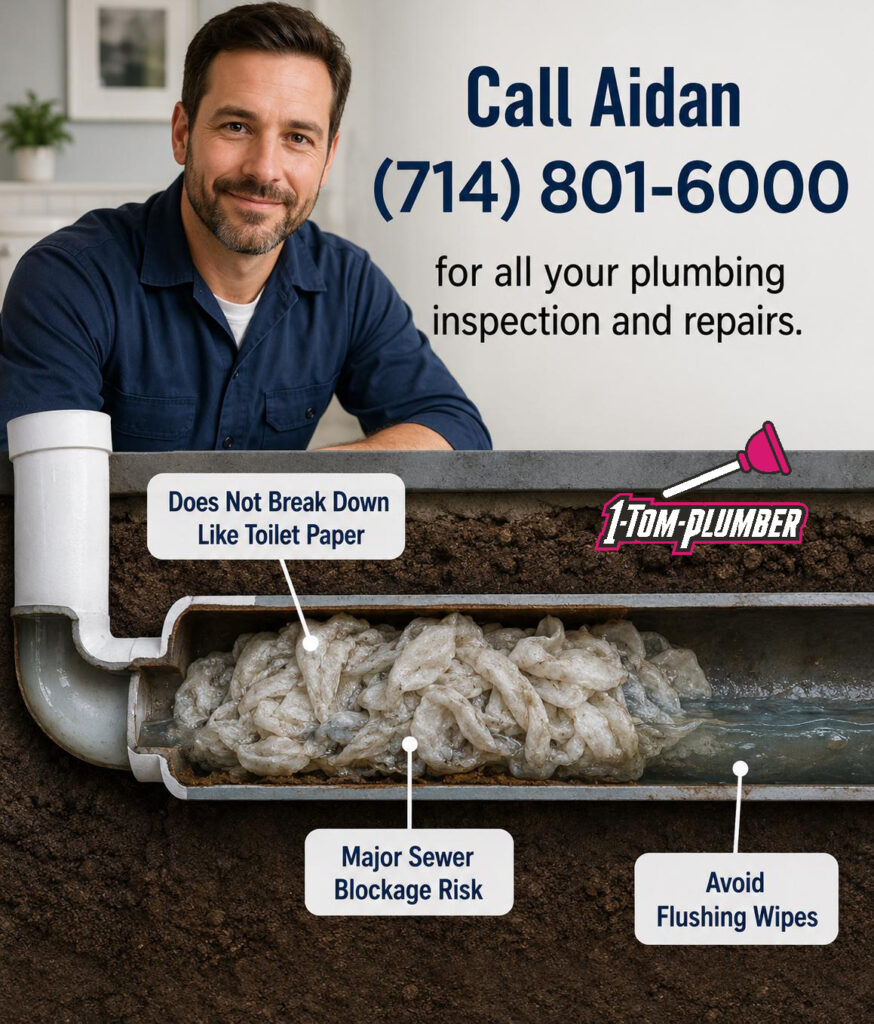
What Flushable Wipes Really Do to Your Sewer Line
Many Anaheim homeowners assume that if a package says “flushable,” it must be safe for plumbing systems. Unfortunately, that is often not true. Flushable wipes are one of the most common causes of toilet clogs, sewer blockages, and expensive drain backups seen by plumbers throughout Orange County.
Flushable wipes do not break down like regular toilet paper. Instead, they stay strong inside drain lines, catch grease and debris, and create thick blockages that can eventually stop wastewater from flowing properly.
That can lead to:
- Toilet backups
- Slow drains
- Main sewer clogs
- Sewage backing up into tubs or showers
- Expensive emergency plumbing repairs
Why Wipes Do Not Break Down Like Toilet Paper
Toilet paper is designed to dissolve quickly in water.
Flushable wipes are designed to stay durable while being used. Even after flushing, many wipes remain intact for a long time inside pipes and sewer systems.
Unlike toilet paper, wipes often contain:
- Synthetic fibers
- Plastic-based materials
- Reinforced fabric-like textures
- Moisture-resistant layers
Because of this, wipes can twist together inside pipes and create large masses that block wastewater flow.
Many municipal sewer systems across the country have publicly warned homeowners about wipes causing sewer damage and pump failures.
How Wipes Catch Grease and Debris
One wipe alone may not immediately clog a sewer line.
The problem usually develops slowly over time.
As wipes travel through drain pipes, they can snag on:
- Grease buildup
- Tree roots
- Cracked sewer pipes
- Offset pipe joints
- Existing debris inside the line
Once one wipe catches, additional wipes often attach to it.
Over time, the blockage grows larger and thicker until wastewater can no longer pass through normally.
This is especially common in older Anaheim homes with aging sewer systems or root intrusion.
Why This Causes Sewer Backups
When the main sewer line becomes blocked, wastewater has nowhere to go.
Instead of flowing toward the city sewer, it can begin backing up into the home through the lowest drains.
Common signs include:
- Water rising in tubs during toilet flushing
- Toilets bubbling or gurgling
- Multiple drains slowing down at once
- Sewage odors inside the home
- Overflowing toilets or showers
In severe situations, sewage can back up onto floors and create major sanitation and water damage issues.
Sewage exposure may contain harmful contaminants, so backups should always be handled carefully according to industry safety standards including EPA, OSHA, and IICRC restoration guidelines.
Warning Signs of a Wipe Clog
Homeowners often notice warning signs before a complete blockage happens.
Watch for:
- Toilets flushing slowly
- Repeated plunging needs
- Gurgling sounds from drains
- Water backing up into nearby fixtures
- Frequent toilet clogs
- Bad sewer odors
- Slow shower or tub drainage
If several plumbing fixtures are affected at the same time, the issue may be deeper inside the sewer line rather than a single toilet clog.
What Not to Flush
The safest rule is simple:
Only flush human waste and toilet paper.
Items that should never be flushed include:
- Flushable wipes
- Baby wipes
- Disinfecting wipes
- Paper towels
- Feminine hygiene products
- Cotton swabs
- Dental floss
- Grease or oils
- Cat litter
- Heavy tissues
Even products labeled “septic safe” or “flushable” can still contribute to sewer blockages.
How Plumbers Clear Wipe Blockages
Professional plumbers use several methods depending on the severity of the clog.
Common solutions include:
Drain Snaking
A drain machine can break through smaller wipe clogs temporarily.
Sewer Camera Inspection
A sewer camera inspection helps identify:
- Wipe buildup
- Root intrusion
- Cracked pipes
- Heavy grease accumulation
- Pipe damage
Hydro Jetting
Hydro jetting uses high-pressure water to clean pipe walls and remove heavy wipe buildup, grease, and sludge.
This is often one of the most effective ways to fully clean a sewer line after repeated wipe blockages.
FAQ
Are flushable wipes really flushable?
Many wipes are marketed as flushable, but they often do not break down safely inside residential sewer systems like toilet paper does.
Can flushable wipes clog sewer lines?
Yes. Flushable wipes are one of the leading causes of sewer blockages and backups.
Why do wipes cause plumbing problems?
Wipes stay intact longer than toilet paper and can collect grease, debris, and roots inside sewer pipes.
Can hydro jetting remove wipe blockages?
Yes. Hydro jetting is commonly used to clear heavy wipe buildup and clean pipe walls.
What are signs of a sewer blockage?
Common signs include slow toilets, gurgling drains, backups in tubs or showers, and sewer odors.
Should I get a sewer camera inspection?
A sewer camera inspection is often recommended if clogs keep returning or if multiple drains are affected at once.