



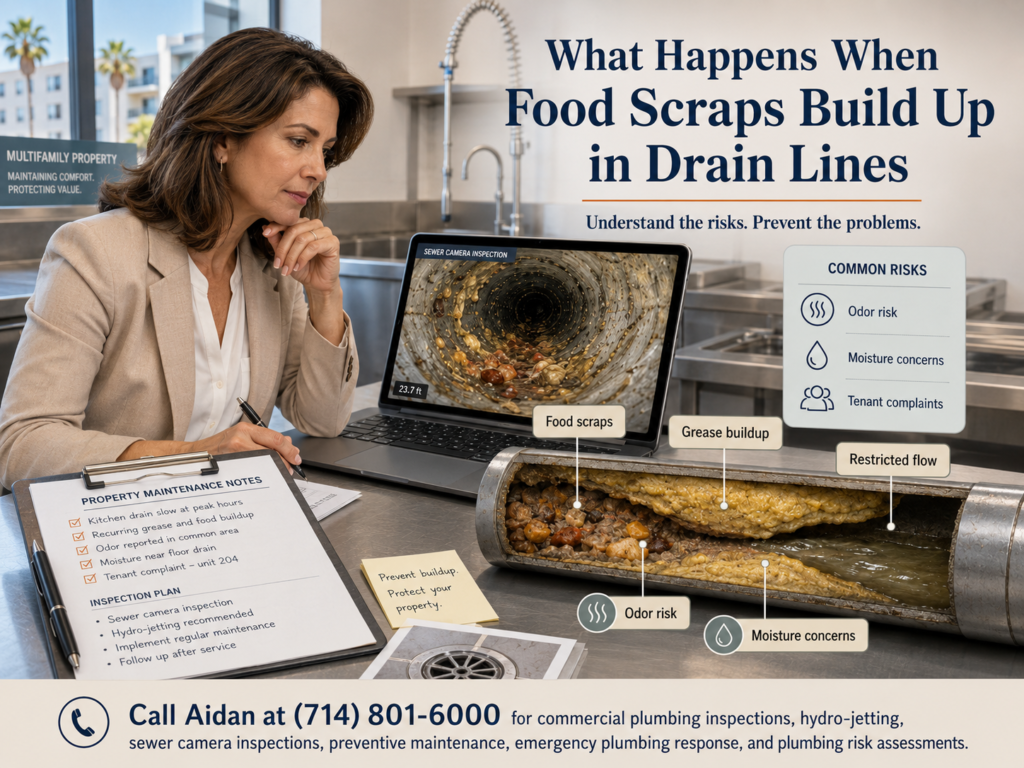
What Happens When Food Scraps Build Up in Drain Lines
Food scraps do not simply “wash away.” In commercial properties, they can collect inside drain lines, trap grease, slow water flow, create odors, attract pests, trigger backups, and eventually cause emergency plumbing problems that affect tenants, kitchens, restrooms, common areas, and property operations.
For Anaheim, Orange County, and Southern California property managers, food scrap buildup is not just a maintenance issue. It is a risk-management issue.
Why Food Scraps Are a Bigger Problem Than They Look
Food scraps often seem harmless because they are small, soft, or partially broken down. But once they enter a drain line, they can stick to grease, soap residue, pipe scale, corrosion, root intrusion, and rough interior pipe surfaces.
Over time, those scraps create layers of organic buildup inside the pipe.
That buildup can lead to:
- Slow kitchen drains
- Recurring sink backups
- Bad odors
- Gurgling drain sounds
- Fruit flies and pest complaints
- Tenant frustration
- Moisture concerns under cabinets or flooring
- Emergency plumbing calls
- Insurance documentation issues
- Business interruption in commercial kitchens or shared facilities
In multifamily, restaurant, office, retail, hospitality, healthcare, and mixed-use properties, one clogged line can affect more than one occupant.
Direct Answer: What Happens When Food Scraps Build Up in Drain Lines?
When food scraps build up in drain lines, they combine with grease, oils, soap residue, and debris to form sticky blockages. These blockages reduce pipe capacity, slow drainage, create odors, increase pressure inside the line, and can eventually cause wastewater backups into sinks, floors, cabinets, or adjacent units.
The longer the buildup sits, the more expensive and disruptive the problem can become.
How Food Scraps Actually Create Drain Problems
1. Food Particles Stick to Grease
Grease is one of the biggest enemies of commercial drain systems. Even when grease enters the drain as a warm liquid, it cools and hardens inside the pipe.
Food scraps then attach to that sticky grease layer.
Common problem foods include:
- Rice
- Pasta
- Coffee grounds
- Eggshell fragments
- Potato peels
- Vegetable scraps
- Meat particles
- Flour-based residue
- Dairy residue
- Sauces and gravies
- Fibrous foods like celery, onion skins, and corn husks
Once these materials stick, they begin narrowing the drain line.
2. Pipe Capacity Shrinks Over Time
A drain line may still move water, but that does not mean it is healthy.
Food scraps can slowly reduce the usable interior diameter of the pipe. A four-inch line, for example, may begin functioning like a two-inch line when buildup becomes heavy.
That reduced capacity creates problems during peak-use periods, such as:
- Lunch rushes
- Dinner rushes
- Tenant move-ins
- Laundry room use
- Weekend occupancy spikes
- Restaurant prep times
- Morning kitchen activity
- Events or high-traffic building use
This is why commercial drains often fail after heavy use, not during light use.
3. Organic Buildup Creates Odors
Food scraps decay inside the drain line. That decomposition can produce sour, rotten, or sewer-like odors.
Property managers may receive complaints such as:
- “The kitchen smells bad.”
- “There is a sewer smell under the sink.”
- “The breakroom smells like spoiled food.”
- “The hallway smells musty.”
- “The restaurant drain smells after closing.”
Odors can damage tenant satisfaction quickly, especially when residents or commercial tenants feel the issue is not being taken seriously.
4. Food Scraps Attract Pests
Organic buildup can attract:
- Fruit flies
- Drain flies
- Cockroaches
- Ants
- Rodents in severe exterior or dumpster-adjacent drain conditions
This creates a second layer of liability and operational concern. Now the property manager is not just managing a plumbing complaint. They may also be managing pest control complaints, tenant dissatisfaction, and sanitation concerns.
5. Buildup Can Hide Deeper Pipe Problems
Food scraps may be the visible symptom, but not the root cause.
Recurring food-related drain backups may point to:
- Bellied sewer lines
- Old cast iron corrosion
- Clay sewer pipe failure
- Root intrusion
- Improper pipe slope
- Grease buildup
- Broken fittings
- Damaged cleanouts
- Undersized drain lines
- Poor tenant use habits
- Aging plumbing infrastructure
This is where sewer camera inspections become valuable. They help document what is actually happening inside the pipe instead of guessing.
Why Food Scrap Buildup Matters to Commercial Property Managers
It Creates Tenant Complaints
Slow drains are one of those maintenance issues that tenants notice immediately. A slow kitchen sink, breakroom sink, commercial prep sink, or shared laundry drain can quickly become a daily frustration.
Tenant complaints may escalate when:
- The issue repeats after snaking
- Odors return
- Water backs up again
- Maintenance appears reactive
- Tenants believe the property is ignoring a health or sanitation concern
For multifamily and commercial properties, plumbing reliability is part of resident and tenant satisfaction.
It Increases Emergency Plumbing Risk
Food scrap buildup rarely improves on its own. It usually becomes worse until the line is cleaned, inspected, or repaired.
Emergency risks include:
- After-hours backups
- Weekend service calls
- Overflowing sinks
- Wastewater on floors
- Water damage to cabinets or walls
- Business interruption
- Tenant displacement
- Complaints to ownership or asset managers
Emergency plumbing prevention is almost always less disruptive than emergency response.
It Can Cause Moisture and Property Damage
When a drain backs up, water does not always stay in the sink.
It may overflow into:
- Base cabinets
- Toe kicks
- Flooring
- Wall cavities
- Shared walls
- Lower units
- Commercial tenant spaces
- Storage areas
- Mechanical rooms
Once moisture is present, the issue may expand beyond plumbing into drying, documentation, odor control, contents damage, and potential insurance-related concerns.
Food Scraps and Grease: The Dangerous Combination
Food scraps alone are bad enough. But food scraps mixed with grease are much worse.
Grease acts like glue inside the drain line. Food scraps become trapped in that grease and form a dense blockage. This can happen in:
- Restaurant kitchens
- Apartment kitchens
- Clubhouse kitchens
- Breakrooms
- Shared commercial kitchens
- Senior living facilities
- Hospitality properties
- School or daycare kitchens
- Retail food service spaces
For commercial properties, grease and food waste should be managed as part of a preventative maintenance plan, not only handled after complaints begin.
Warning Signs Food Scraps Are Building Up in Drain Lines
Property managers and maintenance teams should watch for these early warning signs:
- Sink drains slowly after heavy use
- Water backs up when multiple fixtures are used
- Gurgling sounds from drains
- Bad odors near sinks or floor drains
- Frequent need for plunging
- Recurring tenant complaints
- Drain flies or pest activity
- Water stains under cabinets
- Wet flooring near sink areas
- Backups that return after basic snaking
- Maintenance staff clearing the same drain repeatedly
Repeated clogs are not normal. They are data.
Why Snaking May Not Solve the Problem
A drain snake can punch a temporary hole through the blockage, but it may not clean the full interior pipe wall.
That means the pipe may drain better for a short time, but the food scrap and grease buildup can remain along the sides of the line.
This is why some properties experience the same complaint every few weeks or months.
Snaking May Help When:
- The clog is isolated
- The blockage is soft
- The problem is near the fixture
- The line does not have heavy buildup
Hydro Jetting May Be Needed When:
- Buildup is widespread
- Grease is present
- Food scraps have layered inside the pipe
- Multiple fixtures are affected
- Backups keep returning
- The pipe needs full-wall cleaning
Hydro jetting uses high-pressure water to clean the inside of the pipe more thoroughly than basic cabling. For commercial drain lines, it can be part of a preventative maintenance strategy.
Why Sewer Camera Inspections Matter
A sewer camera inspection helps identify whether the problem is only food scrap buildup or whether there is a deeper infrastructure issue.
A camera inspection can help document:
- Grease buildup
- Food debris accumulation
- Pipe corrosion
- Root intrusion
- Cracks
- Bellied lines
- Standing water
- Offset joints
- Broken pipe sections
- Improper slope
- Areas where blockages repeatedly form
For property managers, this documentation is useful because it supports better decisions, clearer owner communication, stronger maintenance records, and better insurance-related documentation when damage occurs.
Commercial Examples
Multifamily Property in Anaheim
Several residents report slow kitchen sinks after dinner hours. Maintenance snakes the line, but complaints return. A camera inspection shows grease and food scrap buildup in a shared branch line serving multiple units.
The better approach: clean the line, document the condition, educate residents, and schedule preventative drain maintenance before the next backup.
Restaurant Tenant in Orange County
A restaurant experiences recurring floor drain backups after closing. The tenant believes the issue is the building’s main line. The property manager needs documentation to separate tenant-use issues from infrastructure problems.
The better approach: perform drain cleaning and camera inspection, document grease and food scrap buildup, review grease management practices, and create a maintenance schedule.
Commercial Office Breakroom
Employees rinse coffee grounds, food waste, and leftovers into the breakroom sink. Odors develop, then slow drainage begins. The issue becomes a comfort complaint and reflects poorly on building management.
The better approach: clean the line, post simple sink-use guidance, and inspect if odors or slow drainage return.
Preventative Maintenance: The Smart Property Manager’s Advantage
Food scrap buildup is preventable when properties treat drains as assets, not just pipes.
A strong preventative plan may include:
- Routine drain inspections
- Scheduled hydro jetting for high-use lines
- Sewer camera documentation
- Tenant education
- Grease control practices
- Maintenance logs
- Before-and-after photos
- Service records for ownership and insurance files
- Tracking repeated complaints by unit, stack, or building area
This turns plumbing from a reactive expense into infrastructure intelligence.
What Property Managers Should Document
Good documentation protects the property manager, owner, and vendor relationship.
Document:
- Date and time of complaint
- Unit, suite, or location
- Fixture affected
- Photos of backup or moisture
- Prior service history
- Whether multiple fixtures are involved
- Drain cleaning method used
- Camera inspection findings
- Recommendations
- Before-and-after condition
- Tenant communication
- Preventative maintenance schedule
When a plumbing issue becomes an insurance-related concern, documentation can matter as much as the repair itself.
How to Reduce Food Scrap Drain Problems
For Multifamily Properties
Provide residents with simple guidance:
- Scrape plates into the trash
- Do not rinse rice, pasta, coffee grounds, or grease into sinks
- Avoid using disposals as trash cans
- Report slow drains early
- Do not use chemical drain cleaners repeatedly
For Commercial Kitchens
Focus on operational controls:
- Use drain screens
- Maintain grease traps
- Train kitchen staff
- Keep grease out of sinks
- Schedule routine drain cleaning
- Inspect recurring problem lines
- Keep service documentation
For Office and Retail Properties
Simple habits help:
- Place signage near breakroom sinks
- Provide food waste bins
- Avoid coffee grounds in drains
- Report odors early
- Schedule cleaning before peak tenant complaints
The Risk of Ignoring Food Scrap Buildup
Ignoring food scrap buildup can lead to:
- Larger blockages
- Emergency backups
- Tenant dissatisfaction
- Odor complaints
- Pest problems
- Water damage
- Business interruption
- Higher repair costs
- Liability concerns
- Insurance claim complications
- Damage to building reputation
A slow drain is often the early warning. A backup is the consequence.
Direct Answer for Featured Snippet
Food scraps build up in drain lines by sticking to grease, soap residue, and pipe debris. Over time, they narrow the pipe, slow drainage, create odors, attract pests, and can cause wastewater backups. Commercial properties should use drain screens, tenant education, hydro jetting, sewer camera inspections, and preventative maintenance to reduce risk.
FAQs
Can food scraps really clog a commercial drain line?
Yes. Food scraps can combine with grease, oils, soap residue, and pipe scale to form heavy buildup inside drain lines. This restricts water flow and can eventually cause backups.
Why does my sink back up after heavy use?
Heavy use sends more water and debris through the line. If the pipe is already narrowed by food scraps or grease, the system may not drain fast enough, causing water to back up.
Are garbage disposals safe for commercial or multifamily properties?
Garbage disposals can break food into smaller pieces, but they do not make food waste disappear. Food particles can still collect inside drain lines, especially when grease is present.
What foods are worst for drain lines?
Rice, pasta, coffee grounds, potato peels, grease, eggshells, fibrous vegetables, sauces, and flour-based residue are common contributors to drain buildup.
Does hydro jetting remove food scrap buildup?
Hydro jetting can remove heavy organic buildup, grease, and debris from the pipe walls when performed properly. A sewer camera inspection can help determine whether hydro jetting is appropriate.
When should a property manager request a sewer camera inspection?
Request a sewer camera inspection when clogs repeat, multiple fixtures are affected, backups return after snaking, odors persist, or the property needs documentation for ownership, maintenance planning, or insurance-related concerns.
Can food scrap buildup cause water damage?
Yes. If a drain backs up or overflows, water can damage cabinets, flooring, walls, lower units, and nearby contents.
How often should commercial drain lines be cleaned?
It depends on usage, tenant type, pipe age, grease exposure, and prior backup history. High-use commercial kitchens and multifamily properties may need scheduled preventative maintenance more often than low-use office spaces.