



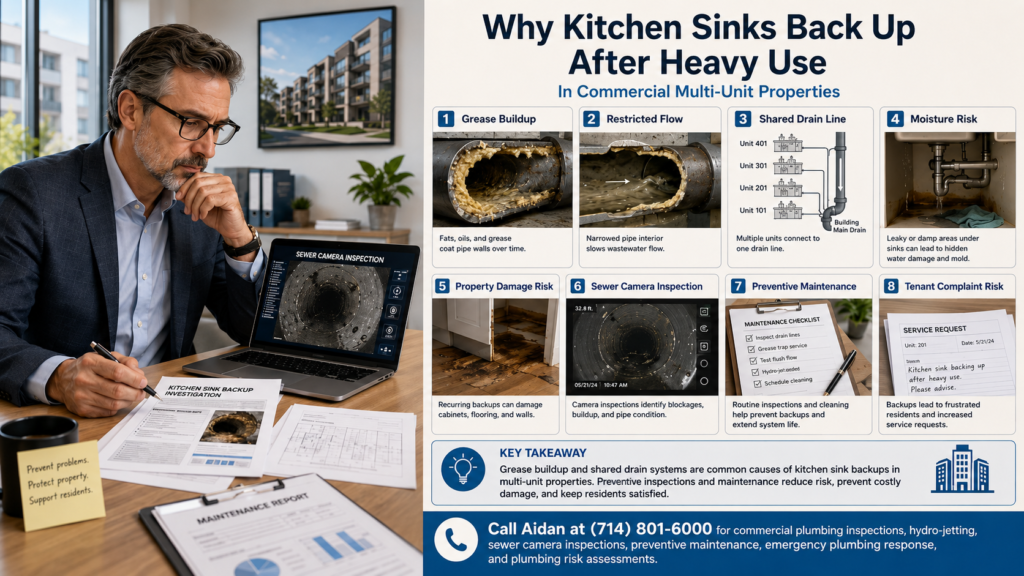
Why Kitchen Sinks Back Up After Heavy Use in Anaheim Commercial Properties
Kitchen sinks back up after heavy use because grease, food solids, soap residue, scale, and pipe buildup restrict drain flow faster than water can exit. In Anaheim commercial properties, aging plumbing infrastructure, high-use kitchens, and shared drain lines can turn a slow kitchen drain into tenant complaints, moisture concerns, property damage, and emergency plumbing calls.
Why Does a Kitchen Sink Back Up After Heavy Use?
A commercial kitchen sink backs up after heavy use when the drain line becomes partially blocked and cannot handle peak water volume. Heavy use exposes hidden restrictions already inside the pipe, including grease buildup, food debris, hardened sludge, scale, root intrusion, pipe sagging, or poor drain slope.
For property managers and facility teams, the issue is rarely “just a clogged sink.” It may be an early warning sign of a larger plumbing risk inside the building.
Why This Matters for Commercial Property Managers
A backed-up kitchen sink can disrupt more than one unit, tenant, restaurant, breakroom, clubhouse, or shared-use area. It can quickly become an operational problem involving complaints, odor, downtime, sanitation concerns, and documentation requests.
For Anaheim, Orange County, and Southern California properties, kitchen sink backups often affect:
- Multifamily apartment buildings
- HOAs and condo communities
- Senior living facilities
- Restaurants and commercial kitchens
- Office breakrooms
- Retail centers with food service tenants
- Schools, churches, and community buildings
- Hospitality and mixed-use properties
The operational concern is simple: a kitchen backup creates urgency, but the cause may have been building quietly for months.
Common Reasons Kitchen Sinks Back Up After Heavy Use
1. Grease Buildup Inside Drain Lines
Grease is one of the biggest causes of kitchen sink backups. Even when grease goes down the drain as a warm liquid, it cools inside the pipe and sticks to the pipe wall. Over time, it catches food particles, soap residue, and debris.
In commercial environments, grease buildup is common because kitchen drains may receive frequent use from:
- Food preparation
- Dishwashing
- Tenant cooking
- Employee breakroom use
- Restaurant operations
- Shared laundry or utility sinks connected nearby
Once the pipe opening narrows, normal use may still drain slowly. Heavy use pushes the system beyond its reduced capacity, causing water to back up.
2. Food Solids and Debris Accumulation
Food scraps, coffee grounds, rice, pasta, eggshells, vegetable peels, and fibrous waste can collect inside horizontal drain lines. These materials may not fully wash away, especially in older drain systems with poor slope or rough pipe interiors.
For apartment and multifamily properties, this becomes a resident satisfaction issue. One tenant’s disposal habits can impact another tenant’s drain line, especially when units share a branch drain or stack.
3. Aging Plumbing Infrastructure
Many Anaheim and Orange County commercial properties have aging plumbing infrastructure. Older cast iron, galvanized, clay, or mixed-material drain systems can develop interior roughness, corrosion, scale, cracks, offsets, or restrictions.
A kitchen sink backup after heavy use may indicate:
- Interior pipe corrosion
- Pipe scale buildup
- Cracked drain lines
- Bellied sections holding water and debris
- Root intrusion near exterior sewer lines
- Poor drainage slope
- Failing branch lines or common lines
This is where plumbing infrastructure intelligence matters. The backup is the symptom. The drain line condition is the story.
4. Water Pressure Issues and High Fixture Demand
Water pressure issues can also contribute to plumbing performance problems. In some properties, high water flow from multiple fixtures may overwhelm a restricted drain line. In others, inconsistent water pressure may fail to properly move debris through the system.
Heavy use creates a stress test. If several sinks, dishwashers, floor drains, or nearby fixtures discharge at the same time, a weakened or restricted drain line may reveal itself through bubbling, slow drainage, or backup.
5. Poor Drain Slope or Bellied Drain Lines
Drain lines need proper slope to move wastewater and solids. If a pipe has settled, sagged, or developed a belly, water and debris can sit inside the low section.
Over time, the settled area collects grease, sludge, food debris, and bacteria. During heavy use, the standing waste area can block flow and push water back toward the sink.
This is especially important in Southern California properties where soil movement, slab conditions, age, and prior repairs may affect underground or under-slab plumbing.
6. Shared Lines in Multifamily and Commercial Buildings
In multi-unit buildings, a kitchen sink backup may not be isolated to one unit. Several apartments or commercial spaces may share a drain branch, stack, or main line.
This creates liability and communication challenges because:
- The affected resident may not be the source of the blockage
- Multiple tenants may experience symptoms
- Water may surface in a lower unit
- Odors may travel through connected lines
- Emergency access may be needed
- Documentation becomes critical for owner, manager, and insurance review
For property managers, the question becomes: is this a single fixture issue or a building system issue?
Warning Signs Before a Kitchen Sink Backup
Kitchen sink backups usually provide early warning signs before a full stoppage. These signs should be documented because they help identify recurring issues and support plumbing risk assessments.
Watch for These Symptoms
- Slow kitchen sink drainage
- Gurgling after heavy use
- Water backing up into the sink after dishwasher discharge
- Odors from the drain
- Repeated tenant complaints
- Water appearing in a nearby floor drain
- Bubbling in adjacent fixtures
- Grease-like residue in the sink
- Moisture concerns under cabinets
- Recurring clogs in the same stack or building line
When these symptoms repeat, snaking alone may not solve the real problem.
Why Repeated Kitchen Sink Backups Are a Risk Management Issue
Liability Reduction
A backed-up kitchen sink can create slip hazards, sanitation concerns, water damage, tenant disputes, and habitability complaints. In commercial settings, it may also affect food safety, employee work areas, or customer-facing spaces.
Liability reduction starts with recognizing patterns early and documenting the response.
Property teams should track:
- Date and time of complaint
- Unit, suite, or area affected
- Fixture involved
- Whether nearby fixtures were affected
- Photos of standing water or moisture
- Technician findings
- Drain cleaning method used
- Camera inspection recommendations
- Preventative maintenance notes
Good documentation helps show that management responded reasonably and proactively.
Resident Satisfaction
For residents, a kitchen sink backup feels personal. It interrupts meals, cleaning, family routines, and basic daily living. Even if the issue is part of a larger shared drain problem, the resident experiences it as a direct failure of the home.
Fast response matters, but so does communication.
A professional property response should explain:
- What was inspected
- What was cleared
- Whether the issue appears isolated or recurring
- What prevention steps are being taken
- Whether additional sewer camera inspections or hydro jetting are recommended
Clear communication reduces frustration and helps prevent repeated complaints from escalating.
Property Damage Prevention
Kitchen sink backups can damage cabinets, flooring, drywall, baseboards, toe kicks, and adjacent living areas. Moisture under cabinets may go unnoticed until odors, swelling, staining, or microbial concerns appear.
Property damage prevention depends on early detection and proper follow-up.
A backup should trigger a check for:
- Moisture under the sink
- Cabinet base swelling
- Flooring edge damage
- Water migration behind walls
- Adjacent unit impact
- Odor persistence
- Repeated staining or soft materials nearby
The drain may be cleared, but hidden damage can remain.
The Role of Sewer Camera Inspections
A sewer camera inspection helps identify what is happening inside the pipe. For commercial properties, this provides plumbing infrastructure intelligence instead of guesswork.
What a Camera Inspection Can Reveal
A sewer camera inspection may identify:
- Grease buildup
- Heavy sludge
- Pipe scale
- Cracks
- Root intrusion
- Offset joints
- Bellied pipe sections
- Collapsed or damaged pipe
- Standing water
- Poor slope
- Foreign objects
- Recurring blockage points
For property managers, camera footage can support maintenance planning, budget conversations, insurance documentation, and vendor accountability.
When Hydro Jetting Makes Sense
Hydro jetting uses high-pressure water to clean the inside of drain lines. It is often more effective than basic snaking when the issue involves grease, sludge, scale, or recurring buildup.
Hydro Jetting May Help When:
- Kitchen drains repeatedly back up
- Grease buildup is suspected
- Multiple fixtures drain slowly
- Snaking provides only temporary relief
- Restaurant or commercial kitchen lines need maintenance
- A camera inspection shows heavy buildup
- Preventative maintenance is needed before peak use periods
Hydro jetting is not always the first step. The safest approach is to assess the line condition first, especially in older plumbing systems. A damaged pipe should be evaluated before aggressive cleaning.
Preventative Maintenance for Commercial Kitchen Drain Lines
Preventative maintenance is often less expensive than emergency response, tenant disruption, water damage, or insurance-related complications.
Recommended Preventative Actions
Commercial properties should consider:
- Scheduled drain line inspections
- Periodic hydro jetting for high-use kitchen lines
- Sewer camera inspections for recurring backups
- Grease management education for tenants
- Sink strainer use in common kitchens
- Documentation of all drain service history
- Plumbing asset management records by building, unit, stack, or line
- Moisture checks after backup incidents
- Risk-based maintenance for older buildings
The goal is not just to clear clogs. The goal is to understand which parts of the plumbing system create repeat exposure.
Plumbing Asset Management: Turning Backups Into Useful Data
A kitchen sink backup should be entered into a plumbing asset management system or maintenance log. Over time, this information helps identify repeat locations, aging lines, and high-risk building areas.
Track These Details
- Building number
- Unit or suite number
- Fixture type
- Drain line affected
- Complaint history
- Previous service dates
- Cleaning method used
- Camera inspection findings
- Photos and videos
- Technician recommendations
- Tenant impact
- Moisture concerns
- Insurance-related notes
This turns emergency plumbing prevention into a measurable property management strategy.
Insurance Documentation and Claim Concerns
Not every kitchen sink backup becomes an insurance claim. However, poor documentation can create problems if water damage, tenant displacement, cabinet damage, flooring damage, or microbial concerns appear later.
Useful Insurance Documentation May Include:
- Photos before and after service
- Moisture readings when relevant
- Written technician findings
- Drain cleaning report
- Camera inspection footage
- Cause-of-loss notes
- Maintenance history
- Tenant complaint timeline
- Emergency response records
- Recommendations for prevention
Insurance-related concerns often become clearer after the first response. The stronger the documentation, the easier it is for owners, managers, adjusters, and contractors to understand what happened.
Commercial Examples in Anaheim and Orange County
Multifamily Apartment Building
A lower-level tenant reports kitchen sink water backing up after dinner hours. Maintenance clears the sink, but the issue returns twice in one month. A sewer camera inspection shows grease and sludge buildup in the shared kitchen branch line.
Risk management takeaway: the issue was not just one tenant’s sink. It was a shared drain line requiring preventative maintenance and documentation.
Restaurant Tenant in a Retail Center
A restaurant kitchen experiences backups during peak weekend service. Snaking temporarily restores flow, but odors and slow drains return. Hydro jetting and camera inspection reveal heavy grease accumulation and a low section of pipe holding debris.
Operational takeaway: drain maintenance should be scheduled around business continuity, not only after emergency failure.
HOA Clubhouse Kitchen
A clubhouse kitchen sink backs up after a large community event. The sink drains normally during light use but fails under heavy volume. Inspection finds partial blockage and poor drainage slope.
Property protection takeaway: occasional-use kitchens still need preventative inspection before high-volume events.
Kitchen Sink Backup Prevention Checklist for Property Teams
For Property Managers and Facility Managers
Use this checklist to reduce emergency plumbing risk:
- Log every kitchen sink backup by unit or area
- Ask whether nearby fixtures are affected
- Photograph visible water and cabinet areas
- Check for moisture concerns under sinks
- Review prior drain service history
- Identify repeat complaints
- Request camera inspection for recurring backups
- Consider hydro jetting for grease-heavy lines
- Educate tenants on grease and food waste disposal
- Schedule preventative maintenance before holidays or peak occupancy
- Keep plumbing documentation organized for owners and insurance review
What Not to Ignore
Do not ignore a kitchen sink backup if:
- It has happened more than once
- Multiple units are affected
- Water backs up after dishwasher use
- Odor remains after clearing
- The same stack has repeated tenant complaints
- Cabinets or flooring show moisture damage
- The building has older drain lines
- The backup occurs during high-use periods
- Snaking solves the problem only temporarily
These signs may indicate a deeper issue inside the plumbing system.
Direct Answer Section: Is Snaking Enough for a Kitchen Sink Backup?
Snaking may clear a localized blockage, but it does not always clean the full pipe wall or reveal why the backup happened. If the problem involves grease buildup, heavy sludge, pipe scale, root intrusion, poor slope, or damaged pipe, a sewer camera inspection and hydro jetting may be needed.
Direct Answer Section: When Should a Commercial Property Call for Emergency Plumbing?
A commercial property should request emergency plumbing response when water is actively backing up, multiple fixtures are affected, tenants cannot use the kitchen, water is spreading to cabinets or flooring, odors are severe, or there is risk of business disruption, resident complaints, liability exposure, or property damage.
FAQs About Kitchen Sink Backups After Heavy Use
Why does the kitchen sink only back up during heavy use?
Heavy use sends more water into the drain line at once. If the pipe is partially blocked by grease, food debris, scale, or sludge, the reduced opening cannot handle the volume. The backup appears during peak use because that is when the hidden restriction is exposed.
Are kitchen sink backups common in Anaheim commercial properties?
Yes. Anaheim, Orange County, and Southern California properties often include older drain systems, high-density occupancy, restaurant spaces, shared plumbing lines, and aging plumbing infrastructure. These conditions can increase the risk of recurring kitchen sink backups.
Can hydro jetting prevent future kitchen sink backups?
Hydro jetting can help prevent future backups by removing grease, sludge, and buildup from the pipe interior. For high-use commercial kitchens or recurring problem areas, scheduled hydro jetting can be part of a preventative maintenance plan.
When is a sewer camera inspection necessary?
A sewer camera inspection is recommended when backups repeat, multiple fixtures are affected, the property has older plumbing, snaking only provides temporary relief, or there are concerns about cracks, bellied lines, root intrusion, or hidden pipe damage.
Can a kitchen sink backup cause property damage?
Yes. Water can damage cabinets, flooring, drywall, baseboards, and adjacent areas. Moisture concerns may remain even after the drain is cleared, which is why property managers should document visible damage and inspect affected materials.
How can property managers reduce liability from recurring sink backups?
Property managers can reduce liability by responding quickly, documenting complaints, keeping service records, using sewer camera inspections when appropriate, scheduling preventative maintenance, addressing moisture concerns, and communicating clearly with residents or tenants.
Is a backed-up kitchen sink an insurance issue?
It can become one if water damage occurs. Insurance documentation may be important when cabinets, flooring, walls, or personal property are affected. Photos, service notes, moisture readings, and camera inspection findings can help clarify the cause and scope of damage.