



How Grease Buildup Destroys Kitchen Drain Lines in Commercial Properties
Direct Answer:
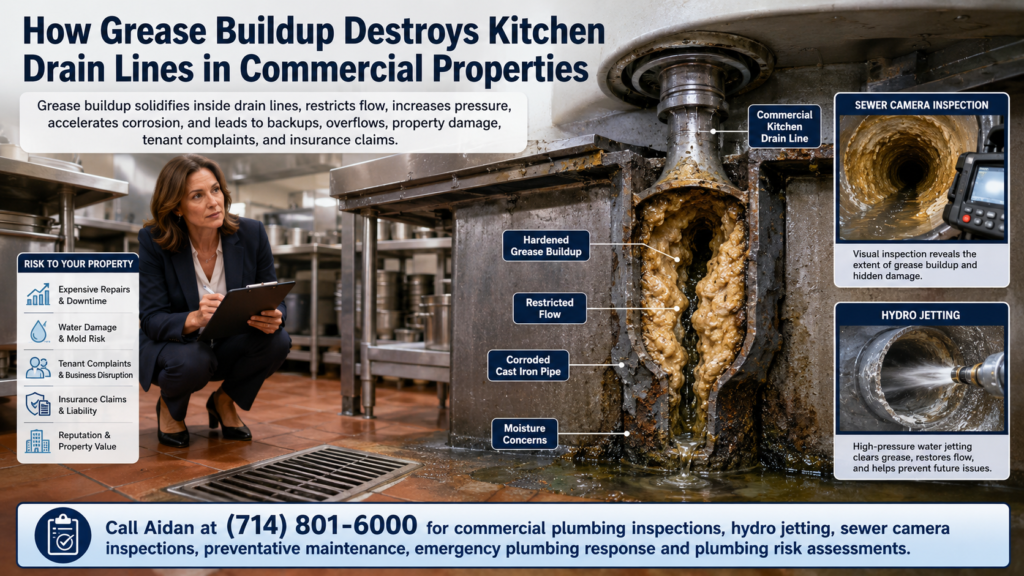
Grease buildup destroys commercial kitchen drain lines by solidifying inside pipes, restricting flow, increasing pressure, accelerating corrosion, and eventually causing backups, overflows, structural damage, tenant complaints, and insurance claims. Without preventative maintenance like hydro jetting and sewer camera inspections, small grease deposits become operational emergencies.
Why This Matters to Property Owners & Facility Managers in Anaheim and Orange County
If you manage restaurants, multifamily housing, hospitality, healthcare, schools, or retail centers in Anaheim, Orange County, and Southern California, grease accumulation in kitchen lines is not a minor maintenance issue. It’s a liability event waiting to happen.
In regions with aging plumbing infrastructure, shifting soil conditions, and fluctuating water pressure issues, grease buildup accelerates system failure faster than most operators realize.
For:
- Commercial property managers
- Facility directors
- HOA boards
- Asset managers
- Restaurant operators
- Risk managers
- Insurance adjusters
Grease blockages are directly tied to:
- Emergency plumbing calls
- Business interruption
- Tenant complaints
- Property damage claims
- Health department citations
- Increased insurance scrutiny
What Actually Happens Inside the Pipe
H2: The Hidden Science of Grease Failure
When fats, oils, and grease (FOG) enter drain lines:
- They cool.
- They solidify.
- They adhere to pipe walls.
- They trap food particles and debris.
- They narrow pipe diameter.
- They create pressure and flow restrictions.
Over time, this causes:
- Slow drains
- Backups into kitchens or units
- Increased internal pipe pressure
- Joint separation
- Pipe corrosion
- Slab leaks
- Structural moisture concerns
In commercial properties, this happens faster due to:
- High-volume food production
- Shared lateral lines
- Older cast iron or clay sewer systems
- Improper grease interceptor maintenance
Why Grease Is a Major Risk Factor in Southern California
H2: Aging Plumbing Infrastructure in Anaheim & Orange County
Many commercial buildings across Anaheim, Brea, Fullerton, Santa Ana, and surrounding areas were constructed decades ago.
Common system vulnerabilities include:
- Cast iron drain lines nearing end-of-life
- Orangeburg pipe collapse
- Clay pipe root intrusion
- Corroded underground sewer laterals
- Shifting soil and seismic movement
When grease buildup combines with compromised pipe material, failure accelerates dramatically.
Grease doesn’t just clog a pipe.
It exposes structural weaknesses already present.
Operational Impact: More Than a Clog
H2: How Grease Buildup Disrupts Commercial Operations
H3: 1. Emergency Plumbing Events
Grease blockages cause:
- After-hours backups
- Flooded kitchens
- Overflowing floor drains
- Sewage exposure
- Health violations
Emergency plumbing prevention starts with proactive maintenance—not reactive service.
H3: 2. Tenant Complaints & Resident Satisfaction Risks
In multifamily or mixed-use properties:
- Backups into lower units damage flooring and cabinetry
- Sewer odors reduce air quality
- Moisture concerns trigger mold investigations
- Repeated plumbing failures damage reputation
Tenant complaints often escalate quickly into legal and insurance exposure.
H3: 3. Property Damage & Insurance Claims
Grease-related backups can cause:
- Structural drywall damage
- Baseboard swelling
- Cabinet deterioration
- Electrical system exposure
- Slip and fall hazards
Insurance carriers increasingly request:
- Maintenance logs
- Hydro jetting documentation
- Sewer camera inspection reports
- Plumbing risk assessments
Without documentation, claims may face scrutiny or denial.
Risk Reduction Through Plumbing Infrastructure Intelligence
H2: The Role of Sewer Camera Inspections
Sewer camera inspections provide:
- Visual documentation of grease accumulation
- Identification of pipe corrosion
- Detection of joint separation
- Root intrusion verification
- Slab leak risk indicators
For asset managers, this is plumbing infrastructure intelligence.
Instead of guessing, you have:
- Video documentation
- Condition assessments
- Maintenance forecasting
- Budget planning data
In commercial settings, this supports:
- Liability reduction
- Insurance documentation
- Capital improvement planning
- Long-term plumbing asset management
H2: Why Hydro Jetting Is Critical (Not Optional)
Hydro jetting uses high-pressure water to:
- Remove hardened grease
- Clear sludge buildup
- Eliminate debris accumulation
- Restore full pipe diameter
- Reduce bacterial growth
Unlike snaking, hydro jetting:
- Cleans pipe walls completely
- Prevents rapid re-clogging
- Extends pipe lifespan
- Supports emergency plumbing prevention
In high-volume commercial kitchens, annual or semi-annual hydro jetting should be part of a documented preventative maintenance plan.
Hidden Damage Most Operators Don’t See
H2: Grease Masks Structural Failure
Grease buildup can temporarily plug cracks and joint failures.
When cleared without inspection, sudden leaks may appear.
Common hidden risks include:
- Corroded cast iron flaking
- Pipe belly formation
- Underground lateral separation
- Slab saturation
- Foundation moisture migration
This is why hydro jetting should be paired with sewer camera inspections for full system evaluation.
Water Pressure Issues and Backflow Risk
Blocked drain lines increase system pressure imbalance.
This can lead to:
- Backflow incidents
- Fixture overflow
- Trap siphoning
- Sewer gas infiltration
In commercial kitchens, these risks are tied directly to:
- Health compliance
- Food safety standards
- Occupational safety
- Employee injury exposure
Commercial Case Example – Anaheim Restaurant Plaza
A restaurant plaza in Anaheim experienced:
- Repeated slow drains
- Grease trap overflow
- Tenant complaints
- After-hours emergency calls
A sewer camera inspection revealed:
- 60% pipe diameter restriction
- Heavy grease scaling
- Corrosion along cast iron seams
After hydro jetting and scheduled preventative maintenance:
- Emergency calls reduced
- Insurance documentation improved
- Tenant satisfaction stabilized
- Operational continuity restored
The cost of prevention was significantly lower than one sewage loss claim.
Preventative Maintenance Framework for Commercial Kitchens
H2: Plumbing Risk Assessment Checklist
Quarterly or Bi-Annual Review Should Include:
- Sewer camera inspection
- Hydro jetting schedule
- Grease interceptor inspection
- Drain flow testing
- Pipe condition grading
- Documentation for insurance records
- Water pressure evaluation
- Moisture concern assessment
This supports:
- Property damage prevention
- Liability reduction
- Operational continuity
- Budget forecasting
- Capital improvement planning
Insurance & Liability Considerations
Insurance carriers increasingly ask:
- Was maintenance documented?
- Were inspections performed?
- Was grease management enforced?
- Were previous warnings ignored?
Lack of documentation may result in:
- Higher deductibles
- Partial claim denial
- Increased premiums
- Litigation exposure
Proactive plumbing risk assessments protect more than pipes—they protect your balance sheet.
Frequently Asked Questions (FAQs)
What causes grease to harden inside drain lines?
Grease cools as it travels through pipes, solidifies, and adheres to interior walls, trapping debris and restricting flow.
How often should commercial kitchens schedule hydro jetting?
High-volume kitchens in Anaheim and Orange County typically require hydro jetting every 6–12 months depending on usage.
Are slow drains a sign of serious damage?
Yes. Slow drains often indicate pipe diameter reduction due to grease buildup, corrosion, or structural compromise.
Can grease buildup cause slab leaks?
Indirectly, yes. Increased internal pressure and corrosion can weaken pipes under slab foundations, leading to moisture intrusion and structural damage.
Does insurance cover grease-related backups?
Coverage depends on policy terms and maintenance documentation. Lack of preventative maintenance may impact claim approval.
Voice Search Optimized Answer
How does grease buildup damage commercial plumbing systems in Anaheim?
Grease solidifies inside aging drain lines, restricts flow, increases pressure, accelerates corrosion, and eventually causes sewer backups, property damage, and emergency plumbing events. Preventative hydro jetting and sewer camera inspections reduce risk and protect commercial assets.
Protecting Your Commercial Property in Southern California
Grease buildup is predictable.
Pipe failure is preventable.
Emergencies are optional—with the right planning.
In Anaheim and throughout Orange County, proactive plumbing infrastructure intelligence is no longer a luxury. It is an operational requirement.
For commercial properties, preventative maintenance protects:
- Tenant satisfaction
- Health compliance
- Insurance stability
- Asset longevity
- Emergency response budgets
- Brand reputation
Ignoring grease buildup shifts risk from maintenance to crisis management.