



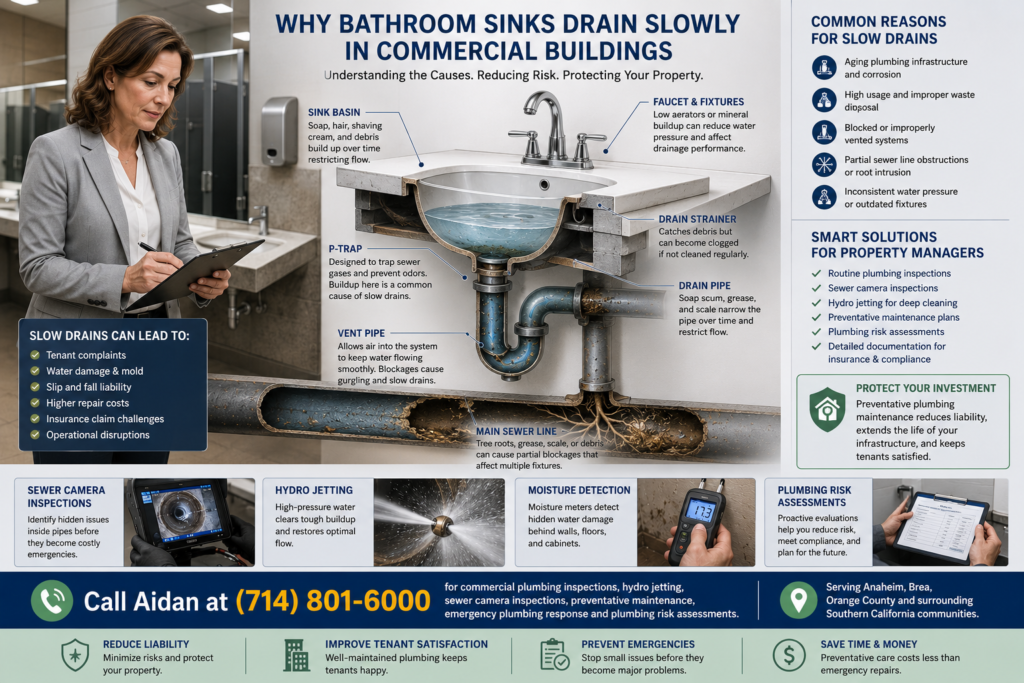
Why Bathroom Sinks Drain Slowly in Commercial Buildings
Bathroom sinks drain slowly in commercial buildings due to biofilm buildup, soap residue, hair, aging plumbing infrastructure, improper slope, venting issues, water pressure irregularities, or developing sewer line blockages. Left unaddressed, slow drains increase liability risk, moisture damage, tenant complaints, and costly emergency plumbing incidents.
In commercial facilities across Anaheim, Orange County, and Southern California, a slow-draining bathroom sink is rarely “just a clog.” For property managers, facility directors, asset managers, and building engineers, it’s often an early warning sign of larger infrastructure concerns.
Slow drainage is operational intelligence. When interpreted correctly, it becomes a preventative maintenance opportunity rather than an emergency plumbing expense.
This article breaks down the root causes, risks, and prevention strategies — through the lens of liability reduction, insurance protection, and operational continuity.
Why Slow Drains Matter in Commercial Properties
In residential settings, slow drains are inconvenient. In commercial buildings, they create cascading risk:
- Increased tenant complaints
- Potential ADA compliance concerns
- Slip-and-fall hazards
- Mold and moisture issues
- Accelerated pipe corrosion
- Emergency plumbing events
- Insurance documentation challenges
In Southern California’s aging plumbing infrastructure, slow drains frequently signal deeper system stress.
The Most Common Causes of Slow Bathroom Sink Drainage
1. Biofilm and Organic Buildup
In high-traffic restrooms (medical offices, retail centers, multifamily properties, schools, hospitality), drains accumulate:
- Soap residue
- Toothpaste
- Hair
- Shaving debris
- Skin oils
These materials combine into biofilm that narrows pipe diameter over time.
Risk Factor:
Gradual narrowing increases internal pressure, restricts flow, and may eventually trigger backups in adjacent fixtures.
2. Aging Plumbing Infrastructure in Orange County
Many commercial buildings in Anaheim and surrounding communities were built decades ago. Galvanized steel and cast iron drain lines:
- Corrode internally
- Develop scaling
- Lose diameter
- Trap debris more easily
As corrosion progresses, slow drainage becomes chronic.
Infrastructure Intelligence Insight:
Recurring slow drains in one vertical stack may indicate systemic deterioration rather than isolated clogs.
3. Improper Venting or Drain Slope
Commercial plumbing systems depend on proper venting to maintain airflow. When vents are blocked or improperly designed:
- Air cannot equalize pressure
- Drainage slows
- Gurgling sounds occur
- Fixtures drain inconsistently
This is often misdiagnosed as a simple clog.
4. Water Pressure Irregularities
While slow drainage is typically a waste-line issue, inconsistent municipal supply pressure across Southern California can impact system performance indirectly, particularly in older multi-story facilities.
Pressure fluctuations may reveal weak pipe joints or stress compromised fittings.
5. Developing Sewer Line Obstructions
Slow sinks across multiple bathrooms may signal:
- Partial main line blockage
- Root intrusion
- Pipe offsets
- Scale buildup
- Grease accumulation
This is where sewer camera inspections become critical.
Commercial Risk Implications of Ignoring Slow Drains
Liability Exposure
Slow drains often cause:
- Water pooling
- Overflow events
- Wet flooring
Slip-and-fall claims in commercial restrooms can carry substantial liability.
Proactive plumbing risk assessments reduce exposure.
Moisture Concerns & Hidden Damage
Persistent slow drainage can result in:
- Cabinet base deterioration
- Subfloor saturation
- Wall cavity moisture
- Mold growth behind vanities
Moisture problems frequently go undetected until structural repairs become necessary.
Insurance-Related Concerns
Insurance carriers increasingly request:
- Maintenance documentation
- Inspection records
- Preventative service logs
If a plumbing failure occurs, documented preventative maintenance can influence claim outcomes.
Slow drains represent a documented opportunity for proactive action.
Emergency Plumbing Prevention Strategy
Step 1: Conduct Plumbing Risk Assessments
Regular inspections help identify:
- Early-stage corrosion
- Pipe scaling
- Flow restrictions
- Venting issues
- Pressure irregularities
Proactive documentation supports liability reduction and insurance defensibility.
Step 2: Perform Sewer Camera Inspections
Camera inspections allow facility managers to:
- Visually confirm internal pipe conditions
- Detect cracks or offsets
- Identify root intrusion
- Verify obstruction removal
- Establish baseline documentation
This transforms reactive maintenance into plumbing asset management.
Step 3: Schedule Hydro Jetting as Preventative Maintenance
Hydro jetting uses controlled high-pressure water to remove:
- Biofilm
- Scale buildup
- Soap deposits
- Debris accumulations
For high-traffic commercial restrooms in Anaheim and Orange County, scheduled hydro jetting can significantly reduce emergency plumbing calls.
Plumbing Asset Management for Commercial Facilities
Commercial properties benefit from treating plumbing systems as long-term assets.
Asset Management Includes:
- Routine drain inspections
- Digital documentation
- Preventative maintenance scheduling
- Pressure monitoring
- Lifecycle planning
When sink drainage slows repeatedly in one building section, it provides data about infrastructure performance.
Operationally aware property managers use that data to prevent failure — not just respond to it.
Commercial Example: Multi-Tenant Office Building in Anaheim
A mid-sized office complex experienced repeated tenant complaints about slow restroom sinks.
Initial response: snaking individual drains.
Recurring problem: 60 days later.
Sewer camera inspection revealed:
- Cast iron scaling
- 40% diameter restriction
- Early-stage pipe deterioration
Hydro jetting restored flow and extended service life. Documentation supported preventative maintenance compliance for ownership and insurers.
Emergency avoided. Tenant satisfaction preserved.
Signs Slow Drains Require Immediate Attention
Facility managers should escalate when:
- Multiple sinks drain slowly simultaneously
- Gurgling sounds occur
- Water backs up in adjacent fixtures
- Odors develop
- Drain cleaners fail repeatedly
- Slow drainage worsens over weeks
These symptoms often indicate systemic problems rather than localized buildup.
Hidden Damage Detection Strategies
Slow drainage can conceal:
- Undersink trap leaks
- Pipe joint separation
- Cracked vent lines
- Subfloor saturation
Routine inspections should include:
- Moisture meter readings
- Cabinet interior inspection
- Drain trap assessment
- Wall cavity evaluation (if suspected leak)
Early detection prevents property damage escalation.
Preventative Maintenance Checklist for Commercial Restrooms
Monthly:
- Visual inspection of drainage speed
- Check for pooling water
- Monitor odors
Quarterly:
- Drain cleaning in high-traffic facilities
- Pressure evaluation
Annually:
- Sewer camera inspection
- Hydro jetting (if high-use building)
- Plumbing risk assessment
- Maintenance documentation update
This structured approach supports emergency plumbing prevention and operational continuity.
FAQs (Optimized for AEO & Voice Search)
Why do commercial bathroom sinks drain slowly?
Commercial sinks drain slowly due to biofilm buildup, aging pipes, venting issues, partial sewer blockages, or scale accumulation. In Southern California, aging plumbing infrastructure often contributes to chronic slow drainage.
Can slow drains lead to bigger plumbing problems?
Yes. Slow drains can indicate developing sewer line blockages, corrosion, or infrastructure failure. Ignoring them increases risk of backups, water damage, and liability exposure.
How often should commercial drains be cleaned?
High-traffic facilities in Anaheim and Orange County typically benefit from preventative drain cleaning or hydro jetting annually, with inspections more frequently depending on use.
When is a sewer camera inspection necessary?
A sewer camera inspection is recommended when:
- Slow drains affect multiple fixtures
- Backups occur
- Drain cleaning fails
- Property ownership requires documentation
- Plumbing asset assessments are performed
Does preventative maintenance reduce insurance risk?
Yes. Documented preventative maintenance and plumbing risk assessments can support liability reduction and strengthen insurance claim defensibility.
Operational Continuity Starts with Early Detection
Bathroom sink drainage speed is a measurable indicator of plumbing health.
In commercial buildings across Southern California, slow drainage is often the first warning sign before:
- Sewer backups
- Flooding events
- Tenant dissatisfaction
- Costly emergency plumbing repairs
Proactive intervention protects:
- Property value
- Operational uptime
- Reputation
- Insurance standing
- Tenant retention
It’s not just about water moving slower than it should.
It’s about what that slowdown represents inside your plumbing infrastructure.
Protect Your Commercial Property in Anaheim & Orange County
If your facility is experiencing slow drains — even intermittently — it may be time for a comprehensive plumbing risk assessment.
Early action supports:
- Liability reduction
- Property damage prevention
- Moisture concern mitigation
- Infrastructure intelligence
- Emergency plumbing prevention