



P Trap Plumbing: What It Is and Why Every Home Needs One
P Trap Plumbing components are found beneath sinks, showers, tubs, and other plumbing fixtures throughout the home. A properly functioning P trap helps prevent sewer gases from entering living spaces while allowing wastewater to flow safely into the drain system.
What Is a P-Trap?
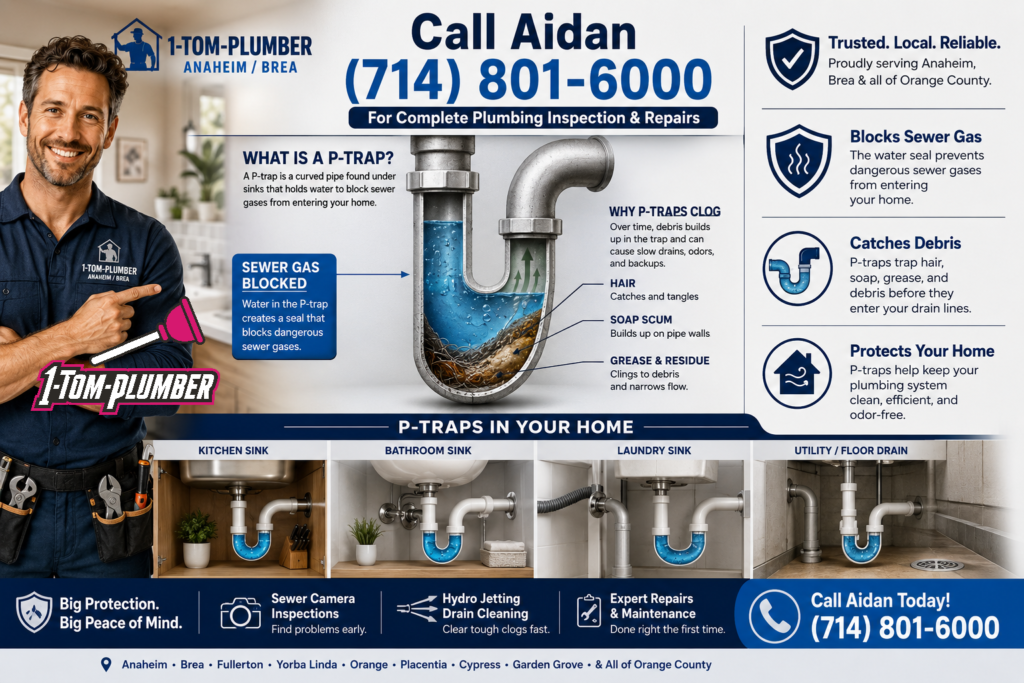
A P-trap is a U-shaped or P-shaped pipe installed beneath plumbing fixtures. It is designed to trap water after each use. That water seal acts like a protective barrier between your home and the sewer system.
Without a properly working P-trap, unpleasant and potentially harmful sewer gases could enter kitchens, bathrooms, laundry rooms, or garages.
Most homeowners never think about their P-traps until they notice:
- Slow drains
- Bad smells
- Gurgling sounds
- Leaks under sinks
- Frequent clogs
In older Anaheim homes, aging drain pipes, grease buildup, soap scum, hair, and hard water minerals can all increase P-trap problems over time.
Where P-Traps Are Found
P-traps are installed under nearly every plumbing fixture that drains water.
Common locations include:
- Bathroom sink drains
- Kitchen sink drains
- Bathtubs
- Showers
- Laundry sinks
- Utility sinks
- Floor drains
In many homes, you can easily spot the P-trap under a sink cabinet because it looks like a curved pipe section.
In slab homes and older Southern California properties, some P-traps may be hidden behind walls or below flooring.
How a P-Trap Blocks Sewer Gas
Every time water flows through a drain, a small amount remains inside the curved section of the P-trap.
That standing water creates a seal that blocks:
- Sewer gas
- Methane
- Odors
- Bacteria
- Harmful airborne contaminants
Without this water barrier, sewer smells can quickly enter the home.
This is why plumbing codes require properly installed P-traps in residential plumbing systems.
If the trap loses water or is damaged, homeowners often notice a strong rotten-egg or sewer odor near sinks or drains.
Why P-Traps Clog
P-traps are among the most common points of clogging in residential plumbing because debris naturally settles inside the curved pipe, which can lead to odors and slow drains if not properly maintained. Understanding these issues helps homeowners feel empowered to keep their plumbing functioning smoothly.
Common causes of clogged P-traps include:
Bathroom Sink P-Traps
- Hair
- Toothpaste buildup
- Soap scum
- Shaving residue
- Small objects
Kitchen Sink P-Traps
- Grease
- Food particles
- Coffee grounds
- Rice and pasta
- Eggshells
Laundry and Utility P-Traps
- Lint
- Dirt
- Soap residue
In Anaheim homes with hard water, mineral scale buildup can also narrow the trap’s inner diameter over time, causing clogs to form more quickly.
Why Dry P-Traps Smell Bad
A dry P-trap is one of the most common causes of sewer gas odors inside homes.
This usually happens when:
- A sink or shower is rarely used
- Water evaporates from the trap
- There is a hidden leak
- Improper venting causes siphoning
Common examples include:
- Guest bathrooms
- Vacation homes
- Garage floor drains
- Unused laundry rooms
Once the water barrier is breached, sewer gas can enter the home directly.
Many homeowners mistake this smell for:
- Mold
- Dirty drains
- Mildew
- Water damage
Sometimes the fix is as simple as running water for 30 seconds. Other times, the issue may involve a blocked vent, damaged drain line, or hidden plumbing problem.
Warning Signs of P-Trap Problems
Watch for these common warning signs:
Slow Drainage
Water drains slowly because debris is trapped inside the curved pipe.
Sewer Odors
A strong drain smell often means the P-trap is dry, damaged, or improperly vented.
Gurgling Sounds
Air-pressure problems or partial blockages can cause bubbling or gurgling noises.
Water Leaks Under Sinks
Loose fittings, corrosion, or cracked trap assemblies can cause water to leak into cabinets.
Frequent Clogs
Repeated drain stoppages may indicate a buildup deeper inside the trap or drain system.
Fruit Flies or Drain Flies
Organic buildup inside dirty P-traps can attract insects.
Homeowner Prevention Tips
Simple maintenance and routine inspections can help reduce P-trap problems and prevent unexpected drain backups, giving homeowners a sense of control and confidence in their plumbing system.
Avoid Pouring Grease Down Kitchen Drains
Grease hardens inside pipes and traps debris.
Use Drain Screens
Hair catchers help reduce clogs in bathroom sinks and showers.
Run Water in Unused Fixtures
This helps maintain the protective water seal.
Flush Drains Periodically
Hot water can help reduce soap and residue buildup.
Avoid Chemical Drain Cleaners
Harsh chemicals can damage pipes and worsen the condition of older plumbing systems. Instead, homeowners should consider routine inspections and gentle cleaning methods to keep P-traps functioning properly without risking damage.
Schedule Routine Plumbing Inspections
Camera inspections and preventative drain maintenance help identify problems early before major backups occur.
FAQ
1. What does a P-trap do?
A P-trap holds water inside the curved pipe section to block sewer gases from entering the home.
2. Why does my sink smell like sewer gas?
A sewer gas smell often means the P-trap is dry, clogged, leaking, or improperly vented.
3. Can a P-trap dry out?
Yes. Unused sinks, showers, and drains can evaporate over time, allowing odors to enter the home.
4. Why do P-traps clog?
Hair, grease, soap scum, food particles, and mineral buildup commonly collect inside P-traps.
5. Can I clean a P-trap myself?
Some homeowners can carefully remove and clean accessible sink P-traps. However, recurring clogs or sewer odors may require professional inspection.
6. When should I call a plumber?
Call a plumber if you notice:
- Persistent drain odors
- Repeated clogs
- Water leaks
- Gurgling drains
- Slow drainage throughout the home
- Sewer backup symptoms
Summary
P-traps are one of the simplest yet most important parts of a home plumbing system. They quietly protect your home by blocking dangerous sewer gases while also helping drains function properly.
Unfortunately, because P-traps naturally collect debris, they are also among the most common sources of clogs and odors in Anaheim homes.
Regular maintenance, proper drain habits, and routine plumbing inspections can help homeowners avoid expensive plumbing emergencies and property damage.