



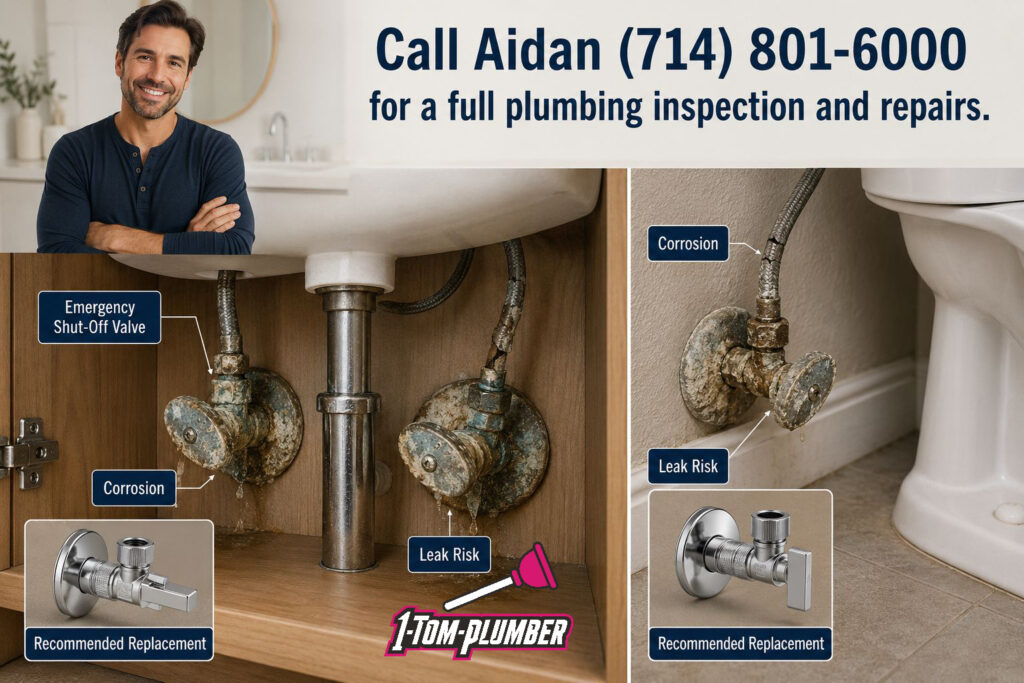
Angle Stop Valve Failure: The Small Valve That Can Cause Big Water Damage
Angle Stop Valve Failure is one of the most common causes of unexpected plumbing leaks in homes. These small shutoff valves located beneath sinks, behind toilets, and near fixtures can deteriorate over time, leading to leaks, water damage, and costly plumbing repairs if not replaced before they fail.
Why Angle Stops Fail
Most homeowners never think about their angle stop valves until one suddenly starts leaking or breaks during an emergency. Unfortunately, these tiny plumbing parts are among the most common sources of hidden leaks in homes throughout Anaheim and Orange County.
A failed angle stop can flood bathrooms, damage kitchen cabinets, ruin flooring, and even trigger mold growth if leaks go unnoticed.
Because many homes in Southern California have hard water and aging plumbing systems, old shutoff valves are under constant stress from mineral buildup and pressure.
The good news is that regular plumbing inspections and proactive valve replacement can help homeowners avoid costly water damage, giving them peace of mind.
What Is an Angle Stop?
An angle stop is a small plumbing shutoff valve that controls water flow to an individual fixture.
These valves are usually connected to:
- Toilets
- Bathroom sinks
- Kitchen sinks
- Utility sinks
- Ice maker supply lines
- Washing machine supply lines
The valve typically has:
- A handle or knob
- A small water supply line is attached to it
- A connection coming from the wall or floor
Its purpose is simple:
It allows water to be turned off locally without shutting down water to the entire house.
For example:
If a toilet starts overflowing, the toilet shutoff valve can stop water immediately.
Where Are Angle Stops Located?
Homeowners often overlook these valves because they are partially hidden.
Common locations include:
Under Bathroom Sinks
The bathroom sink valve is usually inside the vanity cabinet near the wall.
Behind Toilets
The toilet shutoff valve is normally low on the wall behind the toilet tank.
Under Kitchen Sinks
Kitchen angle stops often hide beneath cleaning supplies and are rarely inspected.
Laundry Rooms
Washing machine supply valves can also corrode and leak.
Utility Areas
Older Anaheim homes may have additional shutoff valves in garages, side yards, or utility closets.
Why Angle Stops Fail
Angle stops may be small, but they operate under constant water pressure 24 hours a day.
Over time, several issues commonly cause failure.
1. Hard Water Mineral Buildup
Anaheim and Orange County are known for hard water conditions.
Hard water contains minerals like:
- Calcium
- Magnesium
- Lime
These minerals slowly accumulate inside valves.
Over time:
- Valve handles become difficult to turn
- Internal seals deteriorate
- Corrosion develops
- Water flow becomes restricted
Many homeowners discover the valve no longer works during an emergency.
2. Corrosion
Older metal valves corrode over time.
Common corrosion causes include:
- Moisture exposure
- Age
- Chemical reactions between metals
- Hard water deposits
Corrosion weakens:
- Valve stems
- Compression fittings
- Internal washers
- Threaded connections
Eventually, small leaks begin around the handle or supply connection.
3. High Water Pressure
Many homes in Southern California have excessively high water pressure.
When pressure exceeds safe plumbing levels, it stresses:
- Supply lines
- Faucets
- Toilet fill valves
- Water heaters
- Angle stop valves
High pressure accelerates valve wear and can cause sudden failure.
Some homeowners never realize they have dangerous water pressure until a valve bursts.
4. Old Rubber Seals and Washers
Inside every angle stop are small rubber components.
As these parts age:
- They dry out
- Crack
- Shrink
- Lose flexibility
Once seals fail, water begins leaking around the valve stem.
5. Lack of Use
Ironically, valves that are never turned often fail faster.
Many homeowners avoid touching old valves because they feel stiff.
Unfortunately:
- Minerals lock components in place
- Internal parts seize
- The valve may break when it is finally needed
This is extremely common during emergency plumbing repairs.
Signs that an angle stop needs replacement often appear gradually, but ignoring them can lead to serious water damage and costly repairs.
Many angle stop leaks begin slowly and quietly.
Watch for these warning signs:
Corrosion or Green Buildup
Visible mineral deposits usually indicate exposure to moisture and internal deterioration.
Water Around the Valve
Even a tiny drip can eventually cause:
- Cabinet swelling
- Mold growth
- Flooring damage
- Drywall damage
Stiff or Frozen Handles
If the valve does not turn easily, internal corrosion may already be severe.
Rust or Discoloration
Rust stains often indicate long-term leakage.
Cracked Supply Lines
Older supply lines connected to angle stops may also become dangerous.
Musty Odors Under Cabinets
Small hidden leaks often create moisture buildup and mold smells.
Why Old Valves Can Become an Emergency
Many homeowners assume:
“If it isn’t leaking, it’s fine.”
Unfortunately, aging angle stops can fail suddenly without warning, making it crucial for homeowners to stay alert to potential issues.
Common emergencies include:
- The valve breaks while turning it
- Supply line bursts
- The toilet shutoff valve leaks overnight
- Cabinet flooding
- Water is spraying from corroded fittings
- Major damage during appliance replacement
One small failed valve can cause:
- Flooring damage
- Cabinet replacement
- Baseboard damage
- Drywall repairs
- Mold remediation
- Insurance claims
This is why plumbing inspections are so important in older Anaheim homes.
Regular plumbing inspections, especially for valves over 10-15 years old, can catch issues early and prevent emergency failures.
Homeowners should consider a professional plumbing inspection if:
- Valves are over 10–15 years old
- Handles are difficult to turn
- Corrosion is visible
- Water pressure feels unusually high
- Supply lines look old
- You recently purchased an older home
- Remodeling work is planned
A professional plumber can:
- Test water pressure
- Inspect shutoff valves
- Replace corroded angle stops
- Upgrade old supply lines
- Check for hidden leaks
- Prevent future emergencies
Replacing an old angle stop promptly can be a simple, affordable step to prevent major water damage and give homeowners confidence in their plumbing system.
FAQ
1. What is an angle stop?
An angle stop is a small shutoff valve that controls water flow to individual plumbing fixtures, such as sinks and toilets.
2. Where are angle stops found?
They are commonly located:
- Behind toilets
- Under bathroom sinks
- Under kitchen sinks
- Near the washing machines
- Behind refrigerators
3. Why do angle stops leak?
Common causes include:
- Hard water buildup
- Corrosion
- Aging rubber seals
- High water pressure
- Old supply lines
4. Should homeowners test angle stops?
Yes. Valves should occasionally be tested carefully to ensure they still function properly. If the valve feels frozen or brittle, it is safer to have a plumber inspect it.
5. Can a bad angle cause water damage?
Absolutely. A failed valve can leak slowly for months or burst suddenly, causing major flooding and property damage.
6. When should angle stops be replaced?
Many plumbers recommend replacement if:
- The valve is heavily corroded
- The home is older
- Remodeling is occurring
- The valve no longer turns properly
- Leaks are visible
Summary
Angle stop valves are small but critical plumbing components that many homeowners ignore until a problem occurs.
In Anaheim and throughout Orange County, hard water, corrosion, aging plumbing, and high water pressure commonly shorten the life of these valves.
A simple plumbing inspection can help identify:
- Corroded valves
- Unsafe supply lines
- Hidden leaks
- Excessive water pressure
- Potential flooding risks
Replacing old angle stops before they fail can prevent expensive emergencies and protect your home from major water damage.