



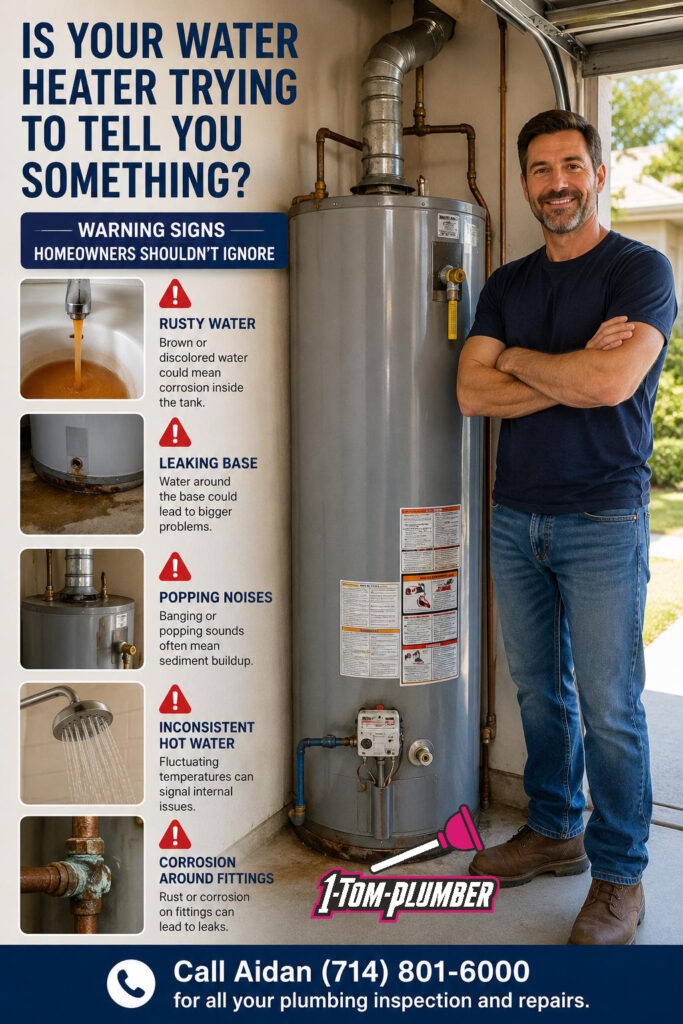
Signs Your Water Heater Is Failing: Anaheim Homeowner Warning Guide
Water heaters rarely fail without warning. Most systems give homeowners several signs before a complete breakdown happens. Recognizing these early warning signals can help prevent water damage, sudden loss of hot water, and expensive emergency repairs.
If you notice rusty water, leaks, strange noises, inconsistent temperatures, or visible corrosion, your system may need professional inspection or replacement.
The most common signs of a failing water heater include:
- Rust-colored hot water
- Water leaking around the tank
- Popping or rumbling noises
- Inconsistent hot water
- Corrosion around fittings
- Reduced hot water supply
- Water heater age over 8–12 years
Ignoring these warning signs can lead to sudden tank failure and major water damage inside the home.
Rusty Water
One of the earliest warning signs of water heater problems is rusty or brown-colored hot water.
This often means corrosion is developing inside the tank.
In many Anaheim and Orange County homes, hard water minerals slowly wear down the inside lining of the tank over time. Once corrosion begins, the tank may eventually leak or fail completely.
Common signs include:
- Brown or orange hot water
- Metallic smell
- Discolored water only when using hot water
- Rust near drain valves or fittings
Sometimes replacing the anode rod may help temporarily, but advanced rust inside the tank often means replacement is approaching.
Leaking Around the Base
Water around the bottom of a water heater should never be ignored.
Small leaks often start slowly before becoming major floods.
Possible causes include:
- Internal tank corrosion
- Cracked drain valve
- Loose fittings
- Excess pressure inside the tank
- Sediment damage
If the actual tank body is leaking, replacement is usually necessary because the tank itself cannot be safely repaired.
A leaking water heater can damage:
- Flooring
- Drywall
- Cabinets
- Baseboards
- Adjacent rooms
Early detection helps prevent larger restoration costs.
Popping or Rumbling Sounds
Many homeowners hear popping, cracking, or rumbling noises coming from older tank water heaters.
These sounds are commonly caused by sediment buildup at the bottom of the tank.
In Southern California, hard water minerals settle inside the heater over time. As the burner heats trapped water beneath the sediment layer, steam bubbles create loud popping sounds.
This buildup can cause:
- Reduced efficiency
- Longer heating times
- Overheating
- Tank stress
- Premature tank failure
Routine flushing may help if caught early.
Inconsistent Hot Water
A failing water heater often struggles to maintain consistent hot water temperatures.
Warning signs include:
- Running out of hot water quickly
- Water turning cold suddenly
- Uneven temperatures
- Lukewarm water
- Slow recovery after showers
This may indicate:
- Sediment buildup
- Failing heating elements
- Thermostat problems
- Aging burner components
- Internal tank deterioration
If multiple symptoms appear together, replacement may be more cost-effective than repeated repairs.
Corrosion Around Fittings
Visible corrosion around pipes, fittings, or valves near the water heater often signals moisture exposure and aging components.
Look for:
- Green or white mineral buildup
- Rust around fittings
- Corroded shutoff valves
- Rust streaks on the tank
- Moisture around connectors
These signs may indicate hidden leaks or long-term wear that should be professionally inspected.
Age of the Water Heater
Most traditional tank water heaters last approximately:
- 8–12 years for standard tank systems
- 15–20 years for some tankless systems with proper maintenance
As water heaters age, the risk of sudden failure increases significantly.
Older units become more vulnerable to:
- Internal rust
- Sediment buildup
- Pressure issues
- Leaks
- Reduced efficiency
If your system is approaching the end of its expected lifespan, proactive replacement may help avoid emergency water damage.
Repair vs Replacement
Not every water heater problem requires full replacement.
Repairs may make sense when:
- The unit is relatively new
- The issue is isolated
- Components can be safely replaced
- The tank itself is not leaking
Replacement is often recommended when:
- The tank is leaking
- Rust is severe
- Repairs are becoming frequent
- The system is older
- Efficiency has significantly declined
A professional inspection can help determine the safest and most cost-effective option.
FAQ
Why is my water heater making popping sounds?
Popping noises are usually caused by sediment buildup heating inside the tank.
Is rusty hot water dangerous?
Rusty water is often a sign of internal corrosion and should be inspected promptly.
Can a leaking water heater be repaired?
It depends on the source of the leak. Tank leaks typically require replacement.
How long should a water heater last?
Most tank water heaters last 8–12 years depending on maintenance and water quality.
What causes inconsistent hot water?
Sediment buildup, aging components, failing thermostats, or heating element problems are common causes.
Should I replace my water heater before it leaks?
In many cases, proactive replacement helps prevent emergency flooding and water damage.