



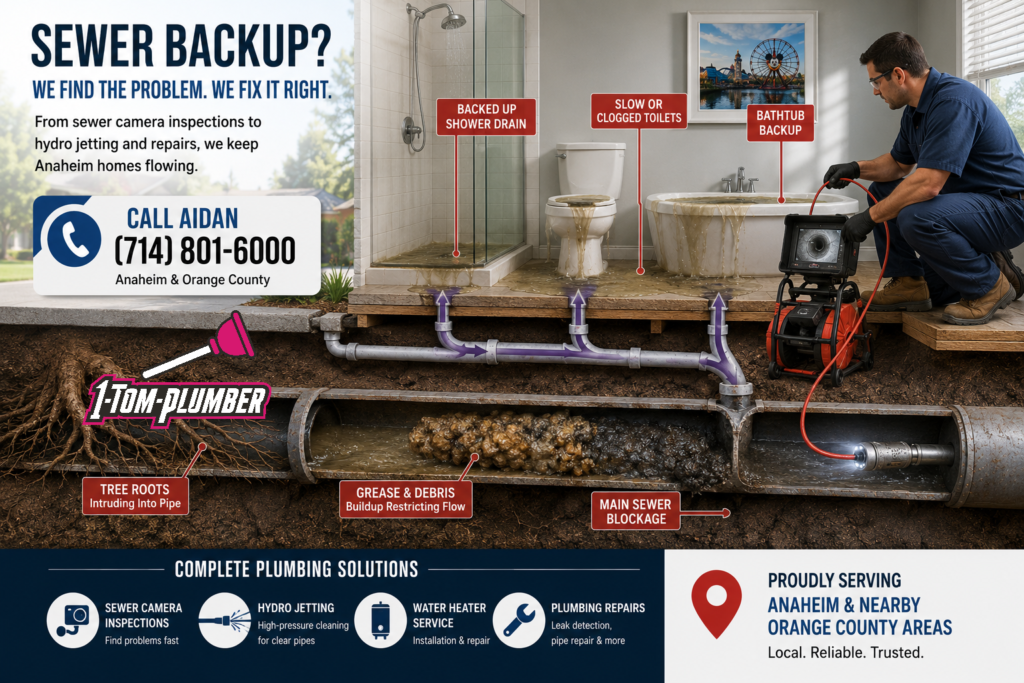
Sewer Backup Anaheim: Causes, Warning Signs & Prevention Can Prevent One
Sewer Backup Anaheim homeowners experience can quickly turn into one of the most expensive and unpleasant plumbing emergencies. When wastewater cannot properly flow through the sewer system, it may back up into sinks, tubs, showers, or toilets, causing property damage, health concerns, and costly repairs.
What Happens During a Sewer Backup
A sewer backup happens when wastewater cannot flow out of the home through the main sewer line. Instead of draining properly, the water reverses direction and returns to the house through the lowest drains.
That may include:
- Shower drains
- Bathtubs
- Toilets
- Floor drains
- Laundry drains
Because all plumbing fixtures connect to the same main sewer line, one blockage can affect the entire home.
In Anaheim and older Southern California neighborhoods, sewer backups are especially common in homes with aging clay sewer pipes, root intrusion, grease buildup, or years of drain neglect.
Quick Answer
A sewer backup usually happens when the main sewer line becomes blocked by roots, grease, wipes, sludge, pipe damage, or heavy buildup. Wastewater can no longer leave the home, causing dirty water to rise back up through tubs, showers, or toilets. Warning signs often appear before a major backup occurs.
Why Sewer Backups Happen
Your home’s plumbing system works entirely through gravity. Wastewater flows downhill from sinks, toilets, showers, and appliances into the main sewer line.
When that main line becomes restricted, wastewater has nowhere to go.
Common sewer backup causes include:
- Tree root intrusion
- Grease buildup
- Flushable wipes
- Pipe collapse
- Offset sewer joints
- Heavy sludge buildup
- Old clay pipes
- Foreign objects flushed into drains
Many Anaheim homes built decades ago still have older sewer systems that become more vulnerable over time.
Why Water Comes Up in Tubs and Showers
Homeowners are often confused when sewage or dirty water first appears in the bathtub or shower.
This happens because tubs and showers are usually the lowest drains inside the home.
When the sewer line blocks:
- Wastewater cannot exit the property
- Pressure builds inside the drain system
- Water seeks the lowest escape point
- The shower or tub drain begins backing up
This is why homeowners may notice:
- Bubbling toilets
- Gurgling drains
- Water rising in showers
- Slow drains throughout the home
These are important early warning signs.
Warning Signs Before a Backup
Most sewer backups do not happen suddenly. Recognizing early warning signs, such as slow drains and gurgling sounds, can help homeowners take action before a major issue occurs, fostering confidence in proactive maintenance.
Common signs include:
Multiple Slow Drains
If several fixtures drain slowly at the same time, the issue may be in the main sewer line rather than an individual sink drain.
Gurgling Sounds
Air trapped by a blockage can cause toilets and drains to gurgle.
Water Backing Up in the Shower
Running a washing machine or flushing a toilet may cause water to rise in the shower drain.
Sewage Odors
A strong sewer smell inside or outside the home may indicate a blockage.
Frequent Toilet Clogs
Repeated toilet backups often signal a deeper sewer problem.
Wet Areas Outside
Sewer leaks underground may create soggy spots or foul smells in the yard.
Common Causes
Tree Roots
Roots naturally seek moisture and can enter small cracks in sewer pipes.
Older Anaheim homes with clay sewer lines are especially vulnerable.
Grease Buildup
Kitchen grease hardens inside pipes over time and traps debris.
Flushable Wipes
Even wipes labeled “flushable” do not break down like toilet paper.
Aging Pipes
Old sewer lines can crack, collapse, or shift over time.
Heavy Scale and Sludge
Mineral buildup and debris accumulation reduce pipe flow capacity.
What to Do Immediately
If a sewer backup happens:
Stop Using Water Immediately
Do not run sinks, flush toilets, or use appliances connected to drains.
Avoid Contact With Contaminated Water
Sewage may contain harmful bacteria and contaminants.
Turn Off Washing Machines and Dishwashers
These appliances can work quickly in the backup as a Professional Plumber
A professional inspection helps determine:
- The blockage location
- Pipe condition
- Whether hydro jetting is safe
- Whether repairs are needed
Document Any Damage
If water damage occurs, photographs may help with insurance claims, but homeowners also worry about health and environmental risks. Properly managing sewer backups through timely inspections and maintenance minimizes exposure to harmful bacteria and prevents environmental contamination, ensuring safety for your family and community.
How to Prevent Sewer Backups
The good news is that many sewer backups are preventable, which can help homeowners feel empowered to protect their property through regular inspections and maintenance.
Schedule Sewer Camera Inspections
A sewer camera inspection allows plumbers to see inside the line and identify:
- Roots
- Cracks
- Grease buildup
- Pipe offsets
- Heavy sludge
This is especially important for older Anaheim homes, as regular sewer camera inspections can detect issues early, providing reassurance and peace of mind for homeowners.
Use Hydro Jetting Preventatively
Hydro jetting uses high-pressure water to clean the inside pipe walls.
Unlike pipe snaking, hydro jetting removes:
- Grease
- Sludge
- Soap buildup
- Root residue
Avoid Flushing Problem Materials
Never flush:
- Wipes
- Grease
- Paper towels
- Feminine products
- Cotton swabs
- Excess food waste
Maintain Older Sewer Lines
Homes with aging clay or cast iron pipes often require ongoing maintenance to prevent backups. Regular inspections, such as sewer camera checks, and preventive measures like hydro-jetting can help manage costs and reduce the need for emergency repairs. Understanding these options helps homeowners plan financially and maintain their sewer systems proactively.
Watch for Early Warning Signs
Slow drains and gurgling sounds should never be ignored.
FAQ
1. Why is sewage coming up in my shower?
Your shower is usually the lowest drain in the home. When the main sewer line blocks, wastewater often backs up there first.
2. What causes a sewer backup?
Common causes include tree roots, grease buildup, wipes, sludge, pipe collapse, and aging sewer systems.
3. Is a sewer backup an emergency?
Yes. Sewer backups can quickly create sanitation problems and water damage if ignored.
4. Can hydro jetting prevent backups?
Yes. Hydro jetting helps remove buildup from pipe walls and can reduce the risk of future blockages.
5. Should I get a camera inspection?
A sewer camera inspection is one of the best ways to identify hidden sewer problems before major backups occur.
6. What should I avoid flushing?
Avoid flushing wipes, grease, paper towels, hygiene products, and large food debris.
Summary
Sewer backups can be stressful, but they rarely happen without warning. Slow drains, gurgling sounds, recurring clogs, and water backing up into tubs or showers often point to a developing sewer problem.
In Anaheim and throughout Orange County, older sewer systems, root intrusion, grease buildup, and aging pipes make preventative maintenance extremely important.
Regular sewer camera inspections and hydro jetting can help homeowners detect hidden problems early, reduce emergency plumbing costs, and protect their property from major water damage.