



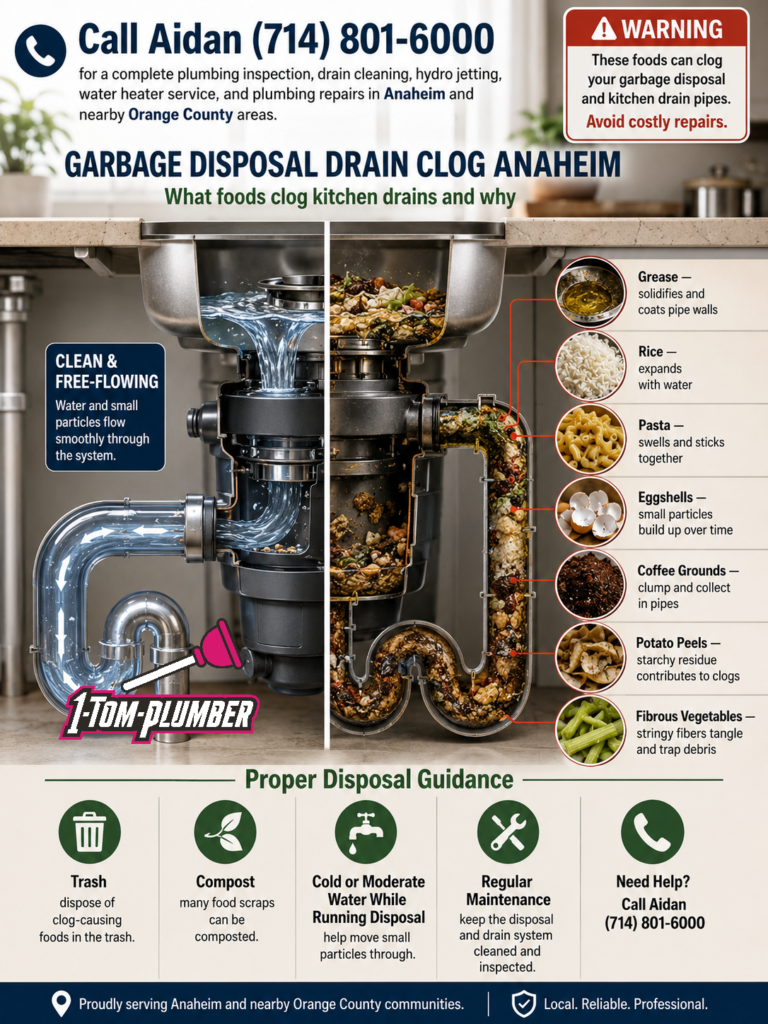
Garbage Disposal Drain Problems: Why Kitchen Drains Get Clogged
Garbage Disposal Drain Problems are a common cause of slow kitchen drains, sink backups, and plumbing service calls. While garbage disposals are convenient, many homeowners unknowingly place food waste into the disposal that can build up inside drain lines and eventually create serious blockages.
Why Garbage Disposals Cause Drain Problems
Garbage disposals help grind small food particles, but they do not magically eliminate waste. Many common kitchen foods expand, harden, stick to pipe walls, or combine with grease inside drains. In Anaheim and Orange County homes — especially older homes with aging plumbing or partial grease buildup — garbage disposals often become the starting point for major kitchen drain clogs.
What Garbage Disposals Are Actually Designed For
A garbage disposal is not a trash can.
It is simply a small grinding device that helps tiny leftover food particles move more easily through your drain system.
Garbage disposals are best for:
- Small soft food scraps
- Tiny rinse-off particles
- Light food residue
- Occasional food waste
They are NOT designed for:
- Heavy grease
- Thick starches
- Fibrous vegetables
- Large scraps
- Expandable foods
- Coffee sludge
- Excessive food waste
Many homeowners assume that if the disposal “grinds it up,” it is safe for the plumbing system. Unfortunately, that is not true.
Your disposal may grind food into smaller pieces, but those materials still travel into your kitchen drain pipes, where they can accumulate over time.
Foods That Commonly Clog Kitchen Drains
Grease
Grease is the number one cause of kitchen drain buildup.
Hot grease may look liquid when poured down the drain, but once it cools, it hardens along the pipe walls like candle wax.
Over time, grease traps food debris and creates thick sludge inside the drain line.
Common grease sources include:
- Bacon grease
- Cooking oil
- Butter
- Meat fat
- Sauces
- Salad dressing
Even small amounts build up over months and years.
Rice
Rice expands dramatically after water exposure.
Small grains continue absorbing water inside the drain pipe and can create dense blockages.
Rice also sticks to existing grease buildup, worsening clogs.
Pasta
Like rice, pasta expands inside pipes.
Soft noodles can clump together and form thick masses inside kitchen drain bends and P-traps.
Eggshells
Many homeowners believe eggshells help sharpen disposal blades.
This is a myth.
Eggshell membranes become sticky and combine with grease inside drains. The shell particles can also settle into sludge buildup.
Coffee Grounds
Coffee grounds are one of the worst materials for drains.
They do not dissolve in water.
Instead, they collect like wet sand inside pipes and often combine with grease to form thick blockages.
Fibrous Vegetables
Fibrous foods wrap around the disposal components and cause slow drainage.
Common examples include:
- Celery
- Corn husks
- Onion skins
- Asparagus
- Artichokes
These stringy fibers can jam disposal parts and trap other debris.
Potato Peels
Potato peels become a starchy paste when ground.
This paste sticks inside pipes and often creates stubborn kitchen sink clogs.
Large Food Scraps
Large quantities of food overwhelm both the disposal and the drain system.
Even if the disposal handles the grinding, excessive food waste can collect downstream in the kitchen line.
Why Grease Is So Dangerous
Grease is especially harmful because it quietly builds up over time.
In Southern California homes, grease buildup often combines with:
- Hard water mineral scale
- Soap residue
- Food particles
- Coffee grounds
- Starches
This gradually reduces the pipe’s inside diameter.
Eventually, homeowners notice: Slow-draining sinks
- Bad kitchen odors
- Gurgling noises
- Water backups
- Repeated clogs
Many Anaheim kitchen drain calls involve years of grease buildup in the line.
Warning Signs of a Kitchen Drain Clog
Homeowners should be attentive to early warning signs such as slow drainage, foul odors, and gurgling noises to feel empowered and prevent major issues.
Common symptoms include:
Slow Draining Kitchen Sink
Water drains more slowly than normal after washing dishes.
Gurgling Sounds
Air trapped inside partially blocked drains creates bubbling noises.
Foul Kitchen Odors
Rotting grease and food buildup create unpleasant smells.
Standing Water
Water backs up into one or both sink basins.
Frequent Plunging
Repeated clogs usually indicate buildup deeper inside the line.
Disposal Backups
Water may rise into the sink when the disposal runs.
Prevention Tips
Simple habits can dramatically reduce kitchen drain problems.
Never Pour Grease Down the Drain
Allow the grease to cool and dispose of it in the trash.
Use a Sink Strainer
Catch food scraps before they enter the disposal.
Run Cold Water
Cold water helps grease remain more solid, allowing it to flow through the line more easily during disposal.
Use the Disposal Sparingly
Treat it as a convenience tool — not a waste system.
Avoid Problem Foods
Keep rice, pasta, coffee grounds, eggshells, and fibrous vegetables out of the disposal.
Flush the Drain Occasionally
Running hot water and mild dish soap periodically may help reduce minor grease residue.
Schedule Drain Cleaning
Professional drain cleaning and sewer camera inspections can identify buildup before backups happen.
When to Call a Plumber
Homeowners should call a plumber when they notice:
- Recurring kitchen sink clogs
- Water is backing up into both sink basins
- Persistent foul odors
- Multiple slow drains
- Gurgling noises
- Standing water
- Disposal humming without draining
- Repeated plunging without improvement
In many cases, professional drain cleaning or hydro jetting may be needed to fully remove grease and sludge buildup from the pipe walls.
A sewer camera inspection can also help identify hidden problems deeper in the kitchen drain system.
FAQ
Is a garbage disposal bad for plumbing?
Not necessarily. Problems usually happen when homeowners put improper materials into the disposal.
Can coffee grounds clog drains?
Yes. Coffee grounds collect inside pipes and often combine with grease buildup.
Why does grease clog drains?
Grease hardens after cooling and sticks to pipe walls, trapping debris over time.
Can rice and pasta clog a disposal?
Yes. Both expand with water and can form thick drain blockages.
Why does my kitchen sink smell bad?
Grease, trapped food particles, and drain buildup commonly create foul odors.
When should I schedule drain cleaning?
If you notice recurring clogs, slow drainage, odors, or backups, professional drain cleaning may help prevent major plumbing problems.
Summary
Garbage disposals are useful tools when used properly. Recognizing how grease, starches, coffee grounds, and food waste can cause problems helps homeowners feel informed and capable of preventing drain issues.
The best way to prevent expensive kitchen drain backups is through good disposal habits, preventative maintenance, and early plumbing inspections before small problems become major emergencies.