


7 Common Plumbing Leak Locations Anaheim Homeowners Should Know
Plumbing Leak Locations Anaheim homeowners encounter are often hidden behind walls, under sinks, beneath slabs, and around plumbing fixtures. Identifying leaks early can help prevent water damage, mold growth, high water bills, and expensive plumbing repairs.
Why Small Leaks Become Expensive
Most plumbing leaks do not begin as major pipe bursts.
They usually start as:
- slow drips,
- loose fittings,
- aging rubber washers,
- corroded valves,
- brittle supply lines,
- or cracked connections.
The problem is that homeowners often do not see these leaks until significant damage has already happened.
In Anaheim and Orange County homes, plumbing systems are constantly exposed to:
- hard water mineral buildup,
- high water pressure,
- older plumbing materials,
- heat exposure,
- and vibration from daily use.
Over time, these conditions weaken plumbing components and increase the risk of hidden water damage.
Even a tiny drip can lead to:
- cabinet swelling,
- mold growth,
- warped flooring,
- drywall damage,
- subfloor deterioration,
- and insurance claims.
The reason for regular plumbing leak inspections is to help homeowners in Southern California feel proactive and in control of their home’s safety, reducing worry about hidden damage.
Leak Location 1: Angle Stops
What Is an Angle Stop?
An angle stop is the small shutoff valve located beneath sinks and behind toilets.
These valves allow homeowners or plumbers to shut off water to individual fixtures without shutting off the entire house.
Why Angle Stops Leak
Angle stops are one of the most common plumbing leak locations because they are often:
- very old,
- rarely exercised,
- exposed to hard water,
- and connected to aging supply lines.
Common problems include:
- leaking valve stems,
- corrosion,
- cracked handles,
- mineral buildup,
- and deteriorated compression fittings.
In Anaheim homes with hard water, calcium buildup can slowly destroy the valve from the inside.
Warning Signs
Watch for:
- corrosion around the valve,
- green or white mineral deposits,
- moisture under sinks,
- musty cabinet smells,
- or water stains.
Many homeowners discover angle stop leaks only after cabinet damage has already occurred.
Leak Location 2: Water Heater Connectors
Why Water Heater Connectors Fail
Water heater connectors constantly expand and contract due to heat.
Over time, the connectors can weaken, especially in homes with:
- high water pressure,
- hard water,
- or older water heaters.
Common leak points include:
- flexible braided connectors,
- threaded fittings,
- shutoff valves,
- and expansion-related stress points.
Why This Leak Is Dangerous
Small water heater leaks often go unnoticed because garages and utility closets are not checked frequently.
Unfortunately, these slow leaks can eventually lead to:
- flooding,
- rust,
- water heater failure,
- drywall damage,
- and mold growth.
Warning Signs
Look for:
- rust around fittings,
- water near the heater,
- corrosion,
- dripping sounds,
- or reduced hot water performance.
Leak Location 3: P-Traps
What Is a P-Trap?
A P-trap is the curved drain pipe beneath sinks.
It holds water to block sewer gases from entering the home.
Why P-Traps Leak
P-traps commonly leak because:
- Slip joints loosen over time.
- plastic pipes crack,
- seals dry out,
- Or homeowners accidentally damage them while storing items under sinks.
Kitchen sinks are especially vulnerable because grease and food debris increase strain on the drain system.
Warning Signs
Watch for:
- water under sinks,
- musty odors,
- warped cabinets,
- slow drains,
- or visible dripping.
Many P-trap leaks start very small and slowly damage cabinets for months.
Leak Location 4: Toilet Supply Lines
Why Toilet Supply Lines Fail
Toilet supply lines are under constant pressure 24 hours a day.
Over time, rubber components weaken, and braided lines can fail unexpectedly.
High water pressure in Anaheim homes significantly increases the risk.
Common Causes
Leaks often happen because of:
- old rubber hoses,
- corroded fittings,
- loose connections,
- hard water corrosion,
- or improper installation.
Warning Signs
Look for:
- water around the toilet base,
- corrosion near fittings,
- bubbling flooring,
- or intermittent dripping sounds.
A failed toilet supply line can release large amounts of water very quickly.
Leak Location 5: Washing Machine Hoses
One of the Most Dangerous Leak Risks
Washing machine hoses are one of the leading causes of residential water damage claims.
These hoses experience:
- constant pressure,
- vibration,
- heat changes,
- and sudden pressure spikes.
Older rubber hoses are especially risky.
Why Anaheim Homes Are Vulnerable
Southern California homes often have elevated water pressure and hard water, which can wear out hoses more quickly.
Warning Signs
Inspect for:
- cracks,
- bulging,
- rust,
- leaks near fittings,
- or brittle rubber.
Braided stainless steel hoses are strongly recommended over older rubber lines.
Leak Location 6: Hose Bibs
Why Outdoor Faucets Leak
Outdoor hose bibs are exposed to:
- weather,
- sunlight,
- corrosion,
- hose strain,
- and mineral buildup.
Over time, seals and packing nuts begin to fail.
Common Problems
Homeowners frequently notice:
- dripping outdoor faucets,
- leaking behind walls,
- or cracked hose connections.
Some hose bib leaks occur inside the wall, making them difficult to detect.
Warning Signs
Watch for:
- water stains on exterior walls,
- dripping faucets,
- reduced water pressure,
- Or soggy landscaping near the faucet.
Leak Location 7: Refrigerator Water Lines
Why Refrigerator Lines Leak
Refrigerator water lines are often hidden behind appliances, where homeowners rarely inspect them.
Small leaks can continue unnoticed for long periods.
Common Causes
Leaks commonly occur because of:
- cracked plastic tubing,
- loose fittings,
- movement during cleaning,
- or aging supply valves.
Why These Leaks Are Expensive
Refrigerator leaks often damage:
- hardwood flooring,
- kitchen cabinets,
- drywall,
- and subfloors.
Because they are hidden, damage may continue for weeks before discovery.
Warning Signs
Check for:
- soft flooring,
- musty smells,
- warped baseboards,
- Or water behind the refrigerator.
FAQ
What are the most common plumbing leaks in Anaheim homes?
The most common plumbing leaks Anaheim homeowners experience include:
- angle stop leaks,
- toilet supply line leaks,
- water heater connector leaks,
- P-trap leaks,
- washing machine hose failures,
- Those bibs leak,
- And refrigerator water line leaks.
Why do small plumbing leaks become expensive?
Small leaks often remain hidden for long periods. If ignored, they can cause mold, cabinet damage, flooring problems, drywall deterioration, and even structural damage, leading to costly repairs that could be prevented with regular inspections.
Does hard water increase plumbing leaks?
Yes. Hard water in Anaheim causes mineral buildup that damages valves, fittings, connectors, and plumbing fixtures over time.
How often should plumbing supply lines be inspected?
Most plumbing professionals recommend annual plumbing leak inspections, especially in older homes or homes with high water pressure.
Are braided stainless steel hoses better?
Yes. Braided stainless steel supply lines are generally stronger and more durable than older rubber hoses.
Can high water pressure cause plumbing leaks?
Absolutely. High water pressure places constant stress on valves, hoses, fittings, and water heaters, increasing the risk of leaks throughout the home.
Summary
Most plumbing leaks start quietly in places homeowners rarely inspect.
In Anaheim and Orange County homes, hard water, high water pressure, aging plumbing systems, and daily wear all contribute to hidden leaks that can become very expensive over time.
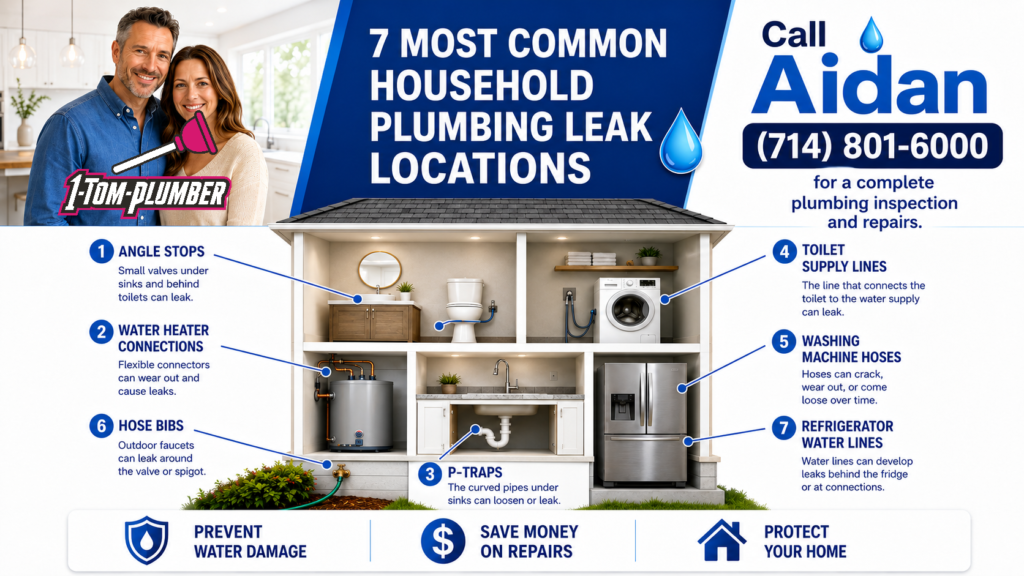
The seven most common plumbing leak locations include:
- Angle stops
- Water heater connectors
- P-traps
- Toilet supply lines
- Washing machine hoses
- Hose bibs
- Refrigerator water lines
Routine plumbing inspections can help homeowners catch small issues before they become major emergencies.