



Tankless Water Heater Descaling Anaheim: Why Annual Service Matters
Tankless Water Heater Descaling Anaheim homeowners need is one of the most important maintenance services for protecting efficiency, performance, and equipment lifespan. Hard water minerals commonly found in Anaheim can accumulate inside tankless water heaters, reducing efficiency, restricting water flow, and increasing the risk of costly repairs.
Why Tankless Water Heaters Need Annual Descaling
Tankless water heaters are extremely popular in Anaheim and nearby Orange County homes because they provide endless hot water, save space, and improve energy efficiency. But many homeowners do not realize one major issue affects almost every tankless system in Southern California:
Hard water scale buildup.
Even high-end tankless water heaters can suffer severe internal damage if not properly maintained.
Unlike traditional tank water heaters, tankless systems feature narrow internal heat-exchanger passages through which water flows continuously. Anaheim’s mineral-heavy hard water creates calcium deposits inside these tiny passages over time.
Without regular descaling, those deposits slowly choke the system from the inside.
That is why annual tankless water heater descaling in Anaheim is one of the most important plumbing maintenance services homeowners can water.
What Descaling Means
Descaling is the process of removing hard water minerals and calcium buildup from the heat exchanger inside the tankless water heater.
During professional tankless maintenance, a plumber typically:
- Isolates the water heater
- Connects service valves
- Circulates a descaling solution through the system
- Flushes calcium and mineral buildup
- Cleans inlet filters
- Inspects system performance
- Checks water pressure and flow
- Verifies proper venting and combustion
This process helps restore normal water flow and heat transfer efficiency.
Think of it like removing plaque from arteries.
The buildup happens slowly and invisibly until performance problems appear.
Why Southern California Hard Water Matters
Homes throughout Anaheim and Southern California commonly have hard water containing high levels of:
- Calcium
- Magnesium
- Lime minerals
- Sediment
Hard water leaves behind mineral deposits when heated.
Tankless water heaters are especially vulnerable because:
The Heat Exchanger Runs Extremely Hot
The hotter the metal surfaces become, the faster minerals separate from the water and stick to internal components.
Internal Water Passages Are Very Small
Tankless systems use compact, narrow heat exchanger channels to heat water quickly. These narrow passages can become restricted by scale buildup.
Anaheim Homes Often Have High Water Pressure
Many homes in Orange County experience elevated water pressure, which can increase stress on plumbing fixtures and accelerate wear inside tankless systems.
Southern California Water Is Consistently Mineral-Heavy
Even newer homes are affected. Hard water scale is not limited to older plumbing systems.
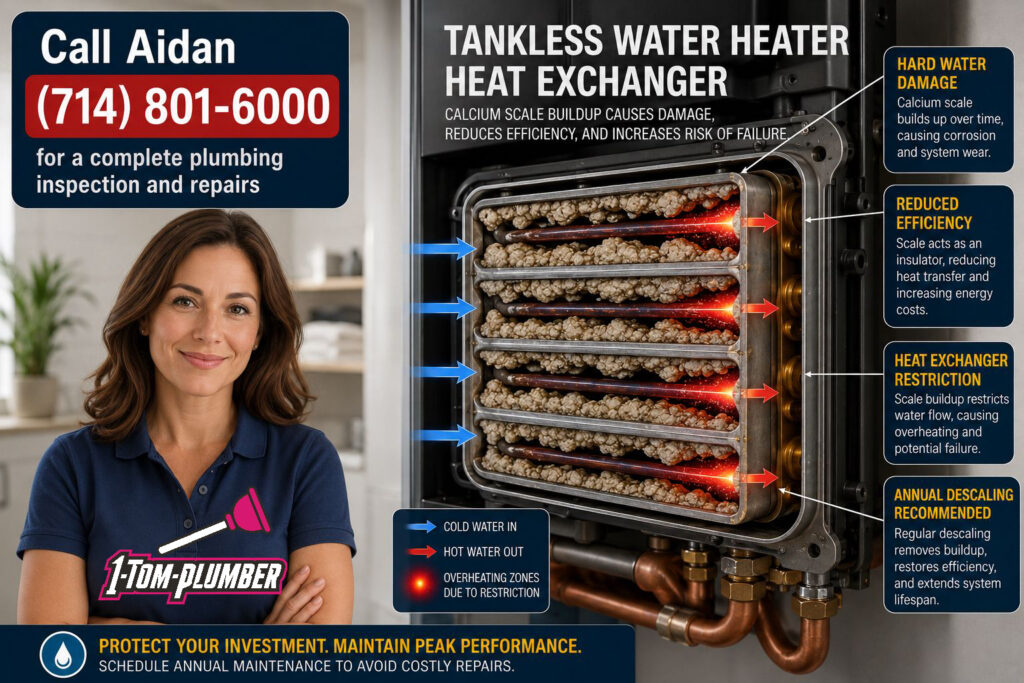
What Happens Inside the Heat Exchanger
Inside a tankless water heater, water flows through tiny metal passages while the burners rapidly heat it.
Over time, calcium deposits begin forming on the internal walls.
This causes several problems:
Reduced Water Flow
Scale buildup narrows the internal passages, making it harder for water to move through the system.
Reduced Heating Efficiency
Minerals act like insulation between the burner heat and the water.
The system must work harder and longer to heat water properly.
Overheating Damage
Restricted water flow can cause overheating inside the heat exchanger.
This may crack internal components or damage expensive parts.
Increased Energy Bills
The harder the unit works, the more gas or electricity it consumes.
Shortened Equipment Life
A neglected tankless water heater may fail years earlier than expected.
Many homeowners do not recognize early signs Like inconsistent hot water or error codes, but being aware helps them feel more confident in maintaining their system.
Many homeowners do not recognize the early signs of heat exchanger buildup.
Common warning signs include:
Inconsistent Hot Water
Water temperature constantly changes during showers.
Reduced Hot Water Volume
The system struggles to keep up with demand.
Error Codes
Many tankless systems display maintenance or flow restriction warnings.
Longer Wait for Hot Water
Mineral buildup slows system performance.
Strange Noises
You may hear rumbling, clicking, or whining sounds during operation.
Reduced Water Pressure
Especially noticeable at hot water fixtures.
Higher Utility Bills
Efficiency drops as scale buildup increases.
If you notice any of these warning signs, it is smart to schedule a tankless water heater service before major damage occurs.
What Happens If You Skip Maintenance
Skipping annual descaling can become extremely expensive repairs like heat exchanger failure or complete system replacement, which can cost thousands of dollars. Understanding these costs highlights the importance of regular maintenance.
Common long-term consequences include:
Heat Exchanger Failure
One of the most expensive tankless water heater repairs.
Complete System Replacement
Severe scaling can destroy the entire unit.
Loss of Manufacturer Warranty
Many manufacturers require annual maintenance documentation.
Water Leaks
Overheating and internal pressure stress can damage seals and fittings.
Reduced Appliance Lifespan
A properly maintained tankless system may last 15–20 years.
A neglected system may fail much sooner.
Emergency Plumbing Problems
Unexpected hot water loss often happens during peak demand times.
Expensive Efficiency Losses
Even if the system still works, efficiency drops significantly.
Preventive maintenance is a cost-effective way to avoid expensive repairs and give homeowners peace of mind about their system’s longevity.
How Often Should Descaling Be Done?
Most manufacturers recommend annual descaling for homes with hard water.
However, some Anaheim homes may require more frequent service depending on:
- Water hardness levels
- Household size
- Water usage
- Water pressure
- Presence of a water softener
- Existing plumbing conditions
Homes with very hard water may benefit from descaling every 6–9 months.
A professional water heater inspection can help determine the best schedule.
FAQ
1. How often should a tankless water heater be descaled?
Most tankless water heaters in Anaheim should be professionally descaled once per year due to Southern California’s hard water.
2. What happens if I do not descale my tankless water heater?
Mineral buildup can reduce efficiency, restrict water flow, damage the heat exchanger, increase energy bills, and eventually cause system failure.
3. Does hard water damage tankless water heaters?
Yes. Hard water creates calcium scale buildup inside the heat exchanger, which is one of the leading causes of tankless water heater problems in Southern California.
4. Can descaling improve hot water performance?
Absolutely. Professional descaling often restores:
- Better hot water flow
- Faster heating
- More stable temperatures
- Improved efficiency
5. Is tankless descaling a DIY job?
While some homeowners attempt DIY descaling, improper flushing or using incorrect chemicals can damage your system. Professional service ensures thorough cleaning, safety, and peace of mind, making it the best choice for maintaining your tankless water heater.
6. When should I call a plumber?
Call a plumber if you notice:
- Temperature fluctuations
- Reduced hot water
- Error codes
- Strange noises
- Low pressure
- Visible leaks
- Rising utility bills
Annual maintenance is the best way to prevent expensive repairs.
Summary
Tankless water heaters are excellent systems for Anaheim homeowners, but Southern California’s hard water creates serious long-term mineral buildup inside the heat exchanger.
Without regular annual descaling, homeowners may experience:
- Reduced efficiency
- Inconsistent hot water
- Higher energy bills
- Internal overheating
- Expensive repairs
- Premature replacement
Professional tankless water heater maintenance helps protect your plumbing system, extend equipment life, improve efficiency, and reduce the risk of unexpected breakdowns.
Routine preventative maintenance is far less expensive than replacing a damaged tankless system.